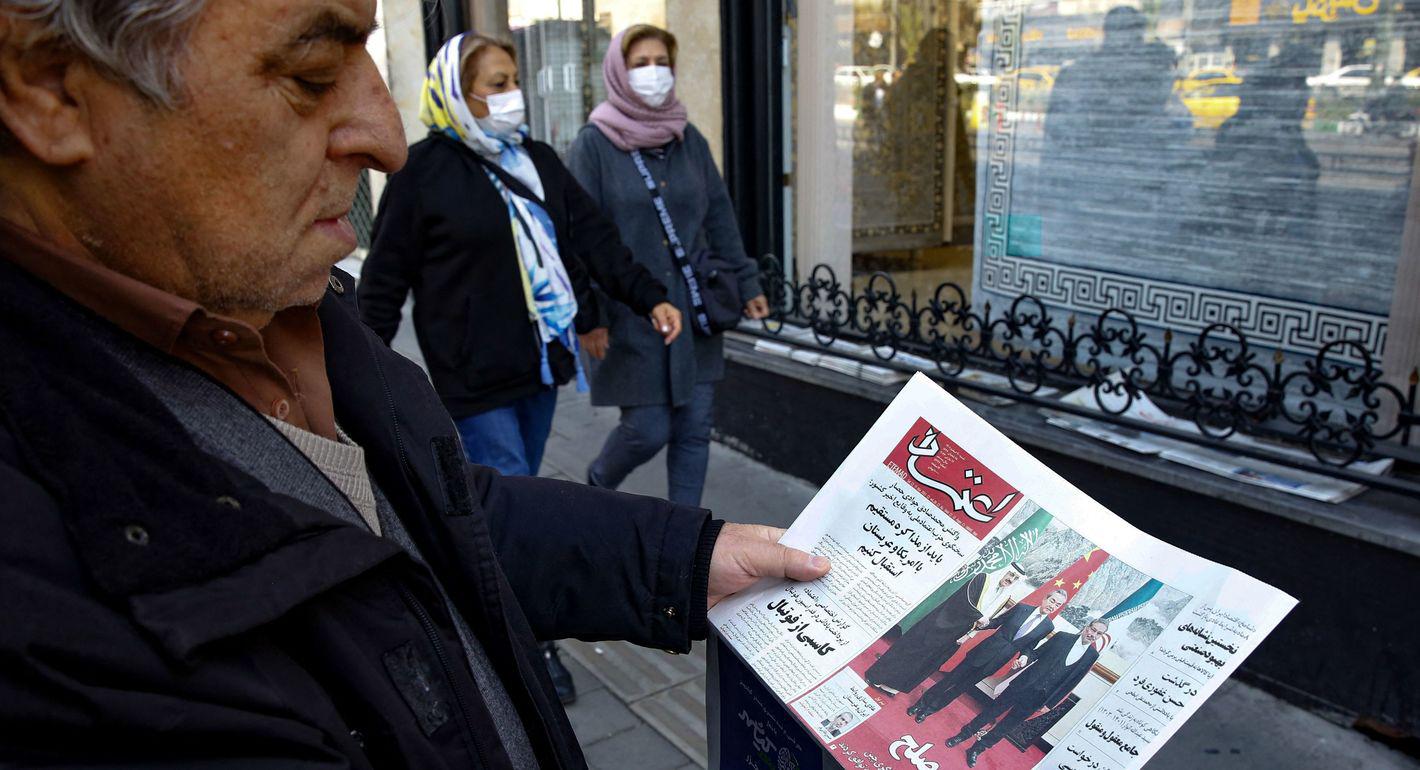
One year after Iran was shaken by massive street demonstrations to protest the results of the presidential elections, the political, social, and economic malaise that led to those demonstrations remains strong.
SCOTT SIMON, host: A year ago today Iran's green movement took to the streets and captured the attention of the world. Opposition leaders contested the election results that returned President Mahmoud Ahmadinejad to power, saying the election was rigged. Huge street protests erupted and were crushed, often violently, by government security forces.
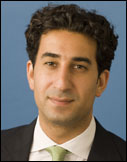
Karim Sadjadpour joins us now, one year later. He's associate in the Middle Eastern program at the Carnegie Endowment for International Peace and joins us from their offices there in Washington, D.C. Mr. Sadjadpour, thanks so much for being with us.
Mr. KARIM SADJADPOUR (Carnegie Endowment for International Peace): It is my great pleasure, Scott.
SIMON: A year later, has what a lot of people called a revolution been quashed?
Mr. SADJADPOUR: You know, I think it was never - a revolution was never the right term. The green movement, I think, is really a civil rights movement. It's this amorphous mass of people who have common goals of free elections, human rights, freeing of political prisoners.
But as opposed to the 1979 revolution, which was really about usurping power from the shah, this movement is much more focused on civil ideals, and they have a longer timeframe. They say this is a marathon, not a sprint. And I think the leadership of the green movement is simply trying to wear down the regime over time.
SIMON: Is Iran different a year later?
Mr. SADJADPOUR: Absolutely. I think the best line of last summer was from the late Grand Ayatollah Montazeri, who said the Islamic Republic of Iran is no longer Islamic nor is it a republic. I think, Scott, when you have three million people take the streets last June, June 15th, three days after the elections, three million people took the streets, I think that to be able to carry out a protest like that - peacefully, non-violently, silently, without any looting - is a tremendous show of the maturity of the Iranian public. And I think that there's a calm in the streets in Iran, but at the same time the political, social and above all economic malaise that led to last year's tumult has certainly not gone away.
SIMON: We refer to the government as a regime. Is it in fact a regime? Is it unified or are there rifts?
Mr. SADJADPOUR: Well, what's happened in the aftermath of last year's election is that any remaining moderates or pragmatists who were part of the Iranian government's decision-making structure have really been purged from the system. And there's a common phrase to hear, that - ruling clerics in Iran - but in fact what's happened is that the institution of the Revolutionary Guards have really eclipsed the institution of the clergy in terms of their political and economic influence.
So I think that even within this ruling cartel which is ruling the country, there is internal dissent. And I would argue that the Islamic Republic has more narrow political base than any time since the 1979 revolution.
SIMON: And what about the opposition?
Mr. SADJADPOUR: Well, you know, Scott, there is an adage from American politics that candidates campaign in poetry and they must govern in prose. And I think this is the challenge that the opposition faces. They need to start agitating in prose rather than poetry. So I think the opposition leadership of the green movement is going to have to do a better job articulating to working-class Iranians - you know, again to borrow from the 2008 U.S. presidential elections - they're going to have to start talking to Mohammed the plumber in Tehran and making it clear to Mohammed the plumber why a green Iran would be in his interest.
So I think what the green movement has to do is then to start targeting the major arteries of the Iranian economy, whether it's major labor unions, transportation unions, bazaar merchants. And in order to do that, I think they have to do a better job articulating to them why they would be better off in a green Iran.
SIMON: United Nations this week, the Security Council issued a fourth round of sanctions against Iran's nuclear program. Do increased sanctions have any effect on Iran or the reform movement?
Mr. SADJADPOUR: Well, there's no empirical evidence to suggest that sanctions will play a role in altering Iran's nuclear calculations. We have 30 years of evidence that it hasn't altered Iran's behavior. And, you know, I would argue that Iran's economic malaise and isolation is, above all, self-inflicted. So I joke that further sanctioning Iran is kind of like sentencing a recluse to house arrest.
But I think that the U.N. Security Council sanctions can be useful to the opposition because it's not simply the West, the United States and Europe, which are sanctioning Iran, and it deprives the regime's ability to frame this as a conflict between the Muslim world and the West. And the leadership of the opposition can rightfully say to people that Ahmadinejad and Ayatollah Khamenei's foreign policy has earned Iran international condemnation and isolation.
SIMON: Karim Sadjadpour, associate in the Middle East Program at the Carnegie Endowment for International Peace. Karim, thank you so much.
Karim Sadjadpour is a senior fellow at the Carnegie Endowment for International Peace, where he focuses on Iran and U.S. foreign policy toward the Middle East.
Carnegie does not take institutional positions on public policy issues; the views represented herein are those of the author(s) and do not necessarily reflect the views of Carnegie, its staff, or its trustees.
The nuclear relationship between China and the United States is increasingly shaped by widening perception gaps rather than deliberate strategic design.
Faced with an increase in strategic maneuvering by Moscow and Pyongyang, Beijing will not sit idly by and allow Putin and Kim to shape the security environment on its behalf.
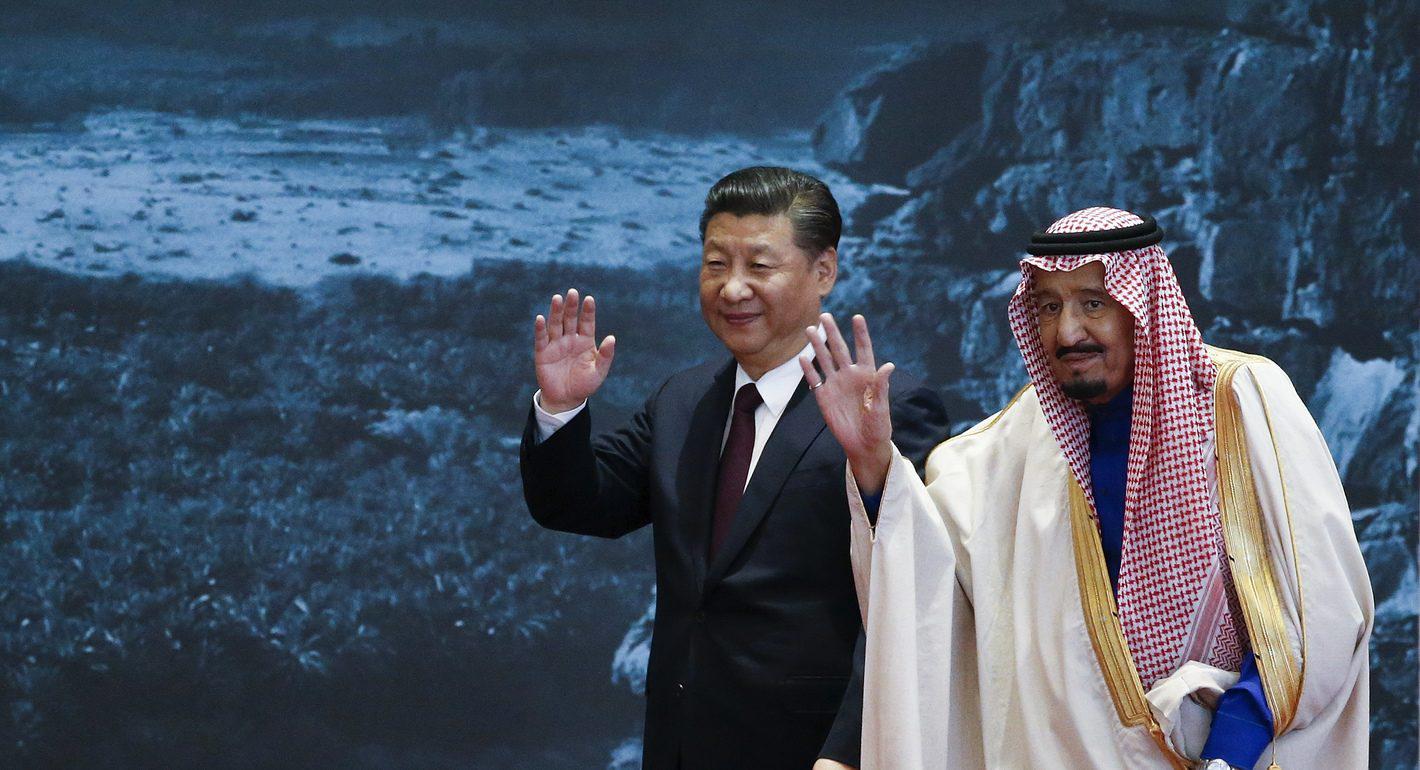
The advantage that China has over other global powers, especially America, is that its foreign policy is closely aligned with those of many of the Middle Eastern countries.