• Commentary
  • Research
  • Experts
  • Events
Carnegie China logoCarnegie lettermark logo
{
  "authors": [
    "Michele Dunne"
  ],
  "type": "legacyinthemedia",
  "centerAffiliationAll": "dc",
  "centers": [
    "Carnegie Endowment for International Peace",
    "Malcolm H. Kerr Carnegie Middle East Center"
  ],
  "collections": [],
  "englishNewsletterAll": "menaTransitions",
  "nonEnglishNewsletterAll": "",
  "primaryCenter": "Carnegie Endowment for International Peace",
  "programAffiliation": "MEP",
  "programs": [
    "Middle East"
  ],
  "projects": [],
  "regions": [
    "North Africa",
    "Egypt"
  ],
  "topics": [
    "Political Reform"
  ]
}

Source: Getty

In The Media

U.S. Senate Resolution Urges Political Change in Egypt

A recent U.S. Senate resolution that addresses human rights and civil liberties in Egypt is meant to pressure the regime ahead of upcoming elections, but it is symbolic and not binding.

Link Copied
By Michele Dunne
Published on Jul 29, 2010

Source: VOA News


The U.S. Senate is considering a new resolution that addresses human rights and civil liberties in Egypt.  Senate Resolution 586 was introduced last week by Democratic Senator Russell Feingold and Republican Senator John McCain.  It calls on the government of Hosni Mubarak to repeal the state of emergency and to take steps to ensure free and fair parliamentary and presidential elections.

It also calls on the White House to stress democratic reform in its dealings with Egypt and to support Egyptian human rights and reform groups.
 
Dr. Michele Dunne is a senior associate at the Washington-based Carnegie Endowment for International Peace and editor of the online journal, the Arab Reform Bulletin.  She told us the resolution is symbolic and not binding.
 
Dunne:  "The timing of the resolution is related to the upcoming elections in Egypt.  Egypt is going to have important elections for the lower house of Parliament in November and a Presidential election next year.
 
I think there is a sense in the Congress that the United States has to pay more attention to this.
 
The Obama administration wanted to kind of reset the relationship with Egypt and improve relations with the government, which it did—and yet somehow, concerns about human rights and democracy kind of got lost, for awhile, at least.
 
Now, I think, there are a number of things that have been happening in Egypt.  There are the upcoming elections.   The government recently renewed this state of emergency under which the country has been living for more than thirty years.  And there is also this human rights case recently, where a young man was beaten to death by the police.  There’s a lot going on in Egypt, and I think we see now the Hill—and also the Administration starting to take more of an interest."
 
Hilleary:  What good can a Senate resolution do?  What kind of a signal does it send and where does it go from here?
 
Dunne:  "Right.  I mean, this resolution is really just an expression of interest on the part of the Senate in conditions in Egypt.
 
It shows that members of the Senate are aware of what’s going on in Egypt and consider that human rights and democracy have to be part of the U.S. relationship and dialogue with Egypt.  And it urges the Egyptian government to take certain steps.  And it also urges the administration—the president and the secretary of state—to sort of put these issues a little higher on the U.S. agenda with Egypt.
 
But there’s nothing binding about it.  There are no punishments or threats or anything like that in the Resolution."
 
Hilleary:  What has been the reception in Egypt?
 
Dunne:  "It has appeared in the Egyptian press over the last couple of days.  There have been some articles about it.  So far, it’s pretty much sort of straight-forward reporting of this Senate Resolution, and I think we’ll see the reaction if the Resolution passes."

About the Author

Michele Dunne

Former Nonresident Scholar, Middle East Program

Michele Dunne was a nonresident scholar in Carnegie’s Middle East Program, where her research focuses on political and economic change in Arab countries, particularly Egypt, as well as U.S. policy in the Middle East.

    Recent Work

  • Research
    Islamic Institutions in Arab States: Mapping the Dynamics of Control, Co-option, and Contention
      • +6

      Yasmine Farouk, Nathan J. Brown, Maysaa Shuja Al-Deen, …
  • Research
    From Hardware to Holism: Rebalancing America’s Security Engagement With Arab States
      • +8

      Robert Springborg, Emile Hokayem, Becca Wasser, …

Michele Dunne
Former Nonresident Scholar, Middle East Program
Michele Dunne
Political ReformNorth AfricaEgypt

Carnegie does not take institutional positions on public policy issues; the views represented herein are those of the author(s) and do not necessarily reflect the views of Carnegie, its staff, or its trustees.

More Work from Carnegie China

  • Commentary
    China’s Rising Influence in the Middle East

    Transactional relationships are stable but can be shallow.

      • +1

      Paul Haenle, Maha Yahya, Benjamin Ho, …

  • Commentary
    What the Russian War in Ukraine Means for the Middle East

    It’s about managing oil prices, bread prices, and strategic partnerships.

      • +8

      Amr Hamzawy, Karim Sadjadpour, Aaron David Miller, …
  • Commentary
    A Message to the Carnegie Endowment Community

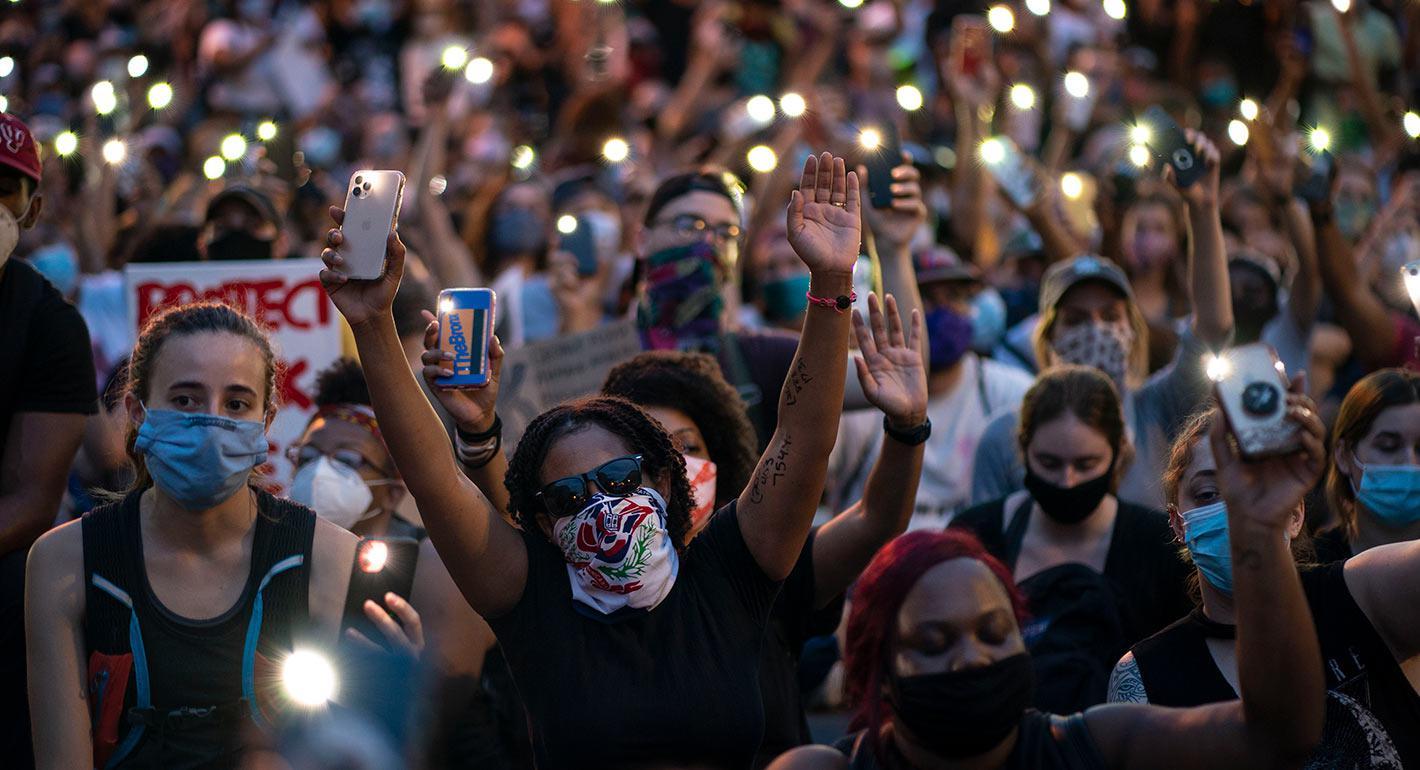
    The murder of George Floyd has underscored the deep inequities that have long plagued American society. In a note to the Carnegie community, Bill Burns reflects on Carnegie’s commitment to build a more just future here at home and around the world, without which peace will remain beyond our grasp.
      William J. Burns

  • Commentary
    U.S., China Should Pursue Peace, Not Military Brinkmanship

    While the world hoped this pandemic might lead to more cooperation between these two great powers, American and Chinese leaders instead fell into a blame game and allowed their increasing suspicions to guide their decision-making.

      Lyu Jinghua

  • Commentary
    Travails of an Interconnected World: From Pandemics to the Digital Economy

    Biological viruses and computer malware differ in important respects. They have considerable potential to spread widely, invading, disrupting and destroying their targets.

      Ariel (Eli) Levite, Lyu Jinghua

Get more news and analysis from
Carnegie China
Carnegie China logo, white
  • Research
  • About
  • Experts
  • Events
  • Contact
  • Careers
  • Privacy
  • For Media
Get more news and analysis from
Carnegie China
© 2026 Carnegie Endowment for International Peace. All rights reserved.






