

Paper
- +2
George Perkovich, Malcolm Chalmers, Steven Pifer, …
{
  "authors": [
    "Paul Schulte"
  ],
  "type": "other",
  "centerAffiliationAll": "dc",
  "centers": [
    "Carnegie Endowment for International Peace",
    "Carnegie Europe",
    "Carnegie Russia Eurasia Center"
  ],
  "collections": [
    "Transatlantic Cooperation",
    "U.S. Nuclear Policy"
  ],
  "englishNewsletterAll": "ctw",
  "nonEnglishNewsletterAll": "",
  "primaryCenter": "Carnegie Endowment for International Peace",
  "programAffiliation": "NPP",
  "programs": [
    "Nuclear Policy"
  ],
  "projects": [],
  "regions": [
    "North America",
    "United States",
    "Western Europe",
    "Europe"
  ],
  "topics": [
    "Foreign Policy",
    "Nuclear Policy",
    "Global Governance"
  ]
}
Source: Getty
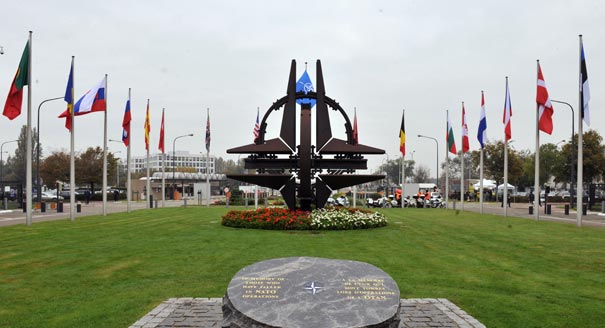
As NATO grapples with the future of its deterrence posture, it faces the contentious question of whether reducing or withdrawing forward-based U.S. nuclear weapons in Europe would unacceptably reduce the security of its member states.
The Cold War left a nuclear landscape whose remnants must still be sensitively managed. As NATO grapples with the future of its deterrence posture, it faces the contentious question of whether reducing or withdrawing forward-based U.S. nuclear weapons in Europe would unacceptably reduce the security of its member states. The weapons were intended to promote nuclear burden sharing through an Alliance-wide decision process. But the European aircraft that would drop them are aging and will need replacement or refitting. Decisions are needed soon on whether this should occur.
The United States favors still greater nuclear restraint, as it declared in its recent Nuclear Posture Review. But it is reluctant to change in Europe without the agreement of all its allies. Some member states, especially on NATO’s periphery, seek the continued assurance that they believe these theater weapons offer. Other allies see the decision as an urgent opportunity to advance the goal of the abolition of nuclear weapons. So the upcoming debate in Lisbon will require a rare combination of determination, political sophistication, and analytical clarity—and issues will likely still require resolution long after the summit.
Although significant differences between member states exist, most agree NATO should:
To foster lasting consensus on the future shape and basing of nuclear deterrence, NATO’s leadership must pay close attention to the internal political pressures within key member states, as well as others’ perceptions of external insecurity. Both result from long-term geographical, historical, and cultural factors. A good decision on nuclear arrangements will safeguard both the Alliance’s credibility and its cohesion—and enable NATO to focus on new and emerging threats without distraction.

Former Nonresident Senior Associate, Nuclear Policy Program
Schulte was a nonresident senior associate in the Carnegie Nuclear Policy Program, where his research focuses on the future of deterrence, nuclear strategy, nuclear nonproliferation, cybersecurity, and their political implications.
Recent Work

George Perkovich, Malcolm Chalmers, Steven Pifer, …
Carnegie does not take institutional positions on public policy issues; the views represented herein are those of the author(s) and do not necessarily reflect the views of Carnegie, its staff, or its trustees.

The nuclear relationship between China and the United States is increasingly shaped by widening perception gaps rather than deliberate strategic design.

Tong Zhao

But their "principal to principal" model will only be as effective as the political strength of each leader back home.

Damien Ma

U.S. unpredictability has allowed China to capitalize on its positioning as the “responsible great power”. Paradoxically, the more China wins the perception game, the more likely expectations will rise for Beijing to deliver not just words but to demonstrate with its deeds.

Chong Ja Ian

Hanoi and Beijing have long treated each other as distant cousins rather than comrades in arms. That might be changing as both sides draw closer to hedge against uncertainty and America’s erratic behavior.

Nguyễn Khắc Giang

Across Asia, China is better positioned to withstand energy shocks from the fallout of the Iran war. Its abundant coal capacity can ensure stability in the near term. Yet at the same time, the country’s energy transition away from coal will make it even less vulnerable during the next shock.
Damien Ma