

Article
- +1
Toby Dalton, Mark Hibbs, Nicole Grajewski, …
{
  "authors": [
    "Mark Hibbs"
  ],
  "type": "legacyinthemedia",
  "centerAffiliationAll": "dc",
  "centers": [
    "Carnegie Endowment for International Peace",
    "Carnegie Russia Eurasia Center"
  ],
  "collections": [],
  "englishNewsletterAll": "ctw",
  "nonEnglishNewsletterAll": "",
  "primaryCenter": "Carnegie Endowment for International Peace",
  "programAffiliation": "NPP",
  "programs": [
    "Nuclear Policy"
  ],
  "projects": [],
  "regions": [
    "East Asia",
    "Japan"
  ],
  "topics": [
    "Nuclear Policy",
    "Nuclear Energy"
  ]
}
Source: Getty
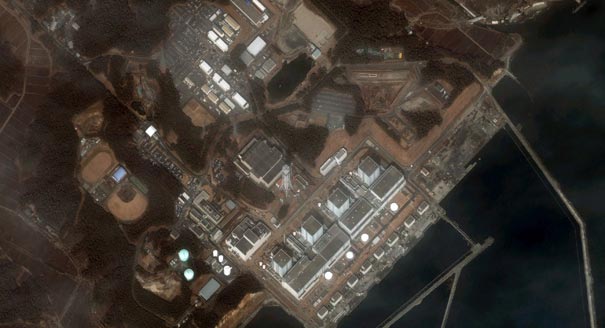
As Japan struggles to find ways to cool its damaged nuclear reactors, it is increasingly clear that it is in the world’s best interest to ensure that nuclear operators can effectively handle unpredictable and even extreme external events that might impact their installations.
Source: CNN

A similar accident happened at one reactor at Three Mile Island many years ago, but Japan's rescue effort is taking place in near-battlefield conditions on a site that is truly a no-man's-land.
The nuclear reactors at the Fukushima Daiichi and Fukushima Daini power stations were automatically shut off after the earthquake. But with external power lost and local backups damaged by the tsunami, emergency cooling systems failed to work. This has forced Japanese authorities to improvise and find other ways to keep the reactors cool, prevent pressure from building up inside the vessels holding the fuel, and prevent the reactor cores from melting significantly.
Without full knowledge of everything Japanese authorities have done since the crisis began, it is too early to properly evaluate the country's response. But even as we wait for all the facts, there are early lessons that we all can take from the nuclear crisis in Japan:
Given the global impact of nuclear disasters, it is in all of our best interests to ensure that nuclear operators can effectively handle unpredictable and even extreme external events that impact their installations. It will take time to fully understand the extent of the crisis in Japan, but there are steps that can be taken today that will make the world's nuclear programs safer.

Nonresident Senior Fellow, Nuclear Policy Program
Hibbs is a Germany-based nonresident senior fellow in Carnegie’s Nuclear Policy Program. His areas of expertise are nuclear verification and safeguards, multilateral nuclear trade policy, international nuclear cooperation, and nonproliferation arrangements.
Recent Work


Toby Dalton, Mark Hibbs, Nicole Grajewski, …
Mark Hibbs
Carnegie does not take institutional positions on public policy issues; the views represented herein are those of the author(s) and do not necessarily reflect the views of Carnegie, its staff, or its trustees.

China’s political future will be shaped between now and next October. As the Communist Party enters its intense “campaign season” to prepare for a major political transition in 2027, reading Beijing's actions and responses may become more difficult as domestic politics weigh on its behavior more than usual.

Damien Ma
China has showcased its engineering prowess with small modular reactor demonstration projects. But turning these technological achievements into commercial success will be a greater challenge.

Tong Zhao

The Plaza Accord was not an externally imposed punishment of Japan but part of a broader restructuring that Japanese economists and policymakers themselves recognized was necessary. Its effects were undermined, however, when Tokyo responded to the resulting slowdown with policies that exacerbated investment, credit expansion, and the very imbalances the adjustment was intended to resolve.

Michael Pettis

The nuclear relationship between China and the United States is increasingly shaped by widening perception gaps rather than deliberate strategic design.
Tong Zhao

Chinese biotech companies have been on the receiving end of U.S. economic coercion. Yet their responses have differed significantly because firm and state interests are not uniformly aligned. For Washington, treating all Chinese tech firms the same, irrespective of their actual interests, risks pushing them farther into Beijing’s corner.

Xue Gong