

Paper
James M. Acton, Ankit Panda
{
  "authors": [
    "James M. Acton"
  ],
  "type": "legacyinthemedia",
  "centerAffiliationAll": "dc",
  "centers": [
    "Carnegie Endowment for International Peace"
  ],
  "collections": [],
  "englishNewsletterAll": "ctw",
  "nonEnglishNewsletterAll": "",
  "primaryCenter": "Carnegie Endowment for International Peace",
  "programAffiliation": "NPP",
  "programs": [
    "Nuclear Policy"
  ],
  "projects": [],
  "regions": [
    "East Asia",
    "Japan"
  ],
  "topics": [
    "Nuclear Policy",
    "Nuclear Energy"
  ]
}
Source: Getty
In Japan’s damaged Fukushima nuclear plant, six spent fuel pools and three reactor cores have the potential to release significant radiation into the atmosphere.
Source: CBS
KATIE COURIC, CBS ANCHOR: James Acton in Washington is a nuclear safety expert with the Carnegie Endowment. James, what is the biggest cause for concern at this point?
JAMES ACTON, CARNEGIE ENDOWMENT: Well, Katie right now the biggest cause for concern is probably the highly radioactive used nuclear fuel, because that material is sitting outside of the heavily reinforced containment building. And all that`s standing between it and the outside world is a big pool of water, and a weak outer containment shell.
COURIC: The head of the Nuclear Regulatory Commission said today that it believes that around the reactor site, there are high levels of radiation, potentially lethal doses that may prevent emergency workers from getting near the reactors. What is your reaction to that?
ACTON: It is clearly deeply concerning. But we’ve seen in the limited history of nuclear disasters some extraordinary acts of heroism, and I’m thinking here in particular of the Soviet workers during the Chernobyl accident who after that massive explosion that blew a hole in the roof, went up on the roof and literally with shovels, put used nuclear fuel back down into the reactor core. And I have no doubt whatsoever that if the need calls -- and we very much hope it doesn`t -- but if the need calls for those Japanese workers they`re going to show every bit the same level of bravery.
COURIC: If the situation doesn`t improve, James, what is the worst- case scenario here?
ACTON: You know, we now have nine different areas of concern. We have six spent fuel pools, and we have three reactor cores. And all of those have the potential to lead to significant releases of radiation into the environment. I think the worst case here, which is very serious, is long-term, it would be an increase in the rate of cancer as a result of radiation. But I think, again, it`s worth emphasizing -- we`re unlikely to see a catastrophic release of radiation on the scale of Chernobyl, and the number of deaths that result from this reactor incident is likely to be far below the number killed in the tsunami.
COURIC: James Acton.

Jessica T. Mathews Chair, Co-director, Nuclear Policy Program
Acton holds the Jessica T. Mathews Chair and is co-director of the Nuclear Policy Program at the Carnegie Endowment for International Peace.
Recent Work
James M. Acton, Ankit Panda
James M. Acton
Carnegie does not take institutional positions on public policy issues; the views represented herein are those of the author(s) and do not necessarily reflect the views of Carnegie, its staff, or its trustees.

Chinese biotech companies have been on the receiving end of U.S. economic coercion. Yet their responses have differed significantly because firm and state interests are not uniformly aligned. For Washington, treating all Chinese tech firms the same, irrespective of their actual interests, risks pushing them farther into Beijing’s corner.

Xue Gong

Across Asia, China is better positioned to withstand energy shocks from the fallout of the Iran war. Its abundant coal capacity can ensure stability in the near term. Yet at the same time, the country’s energy transition away from coal will make it even less vulnerable during the next shock.

Damien Ma
GDP growth means something fundamentally different in China than in most countries.

Michael Pettis
The Trump administration’s effort to reshape the global trading system and reset overseas security commitments is creating an historic inflection point. Less clear is how far China will be able to capitalize on these dynamics.
Li Mingjiang, Le Hong Hiep, Ngeow Chow Bing, …
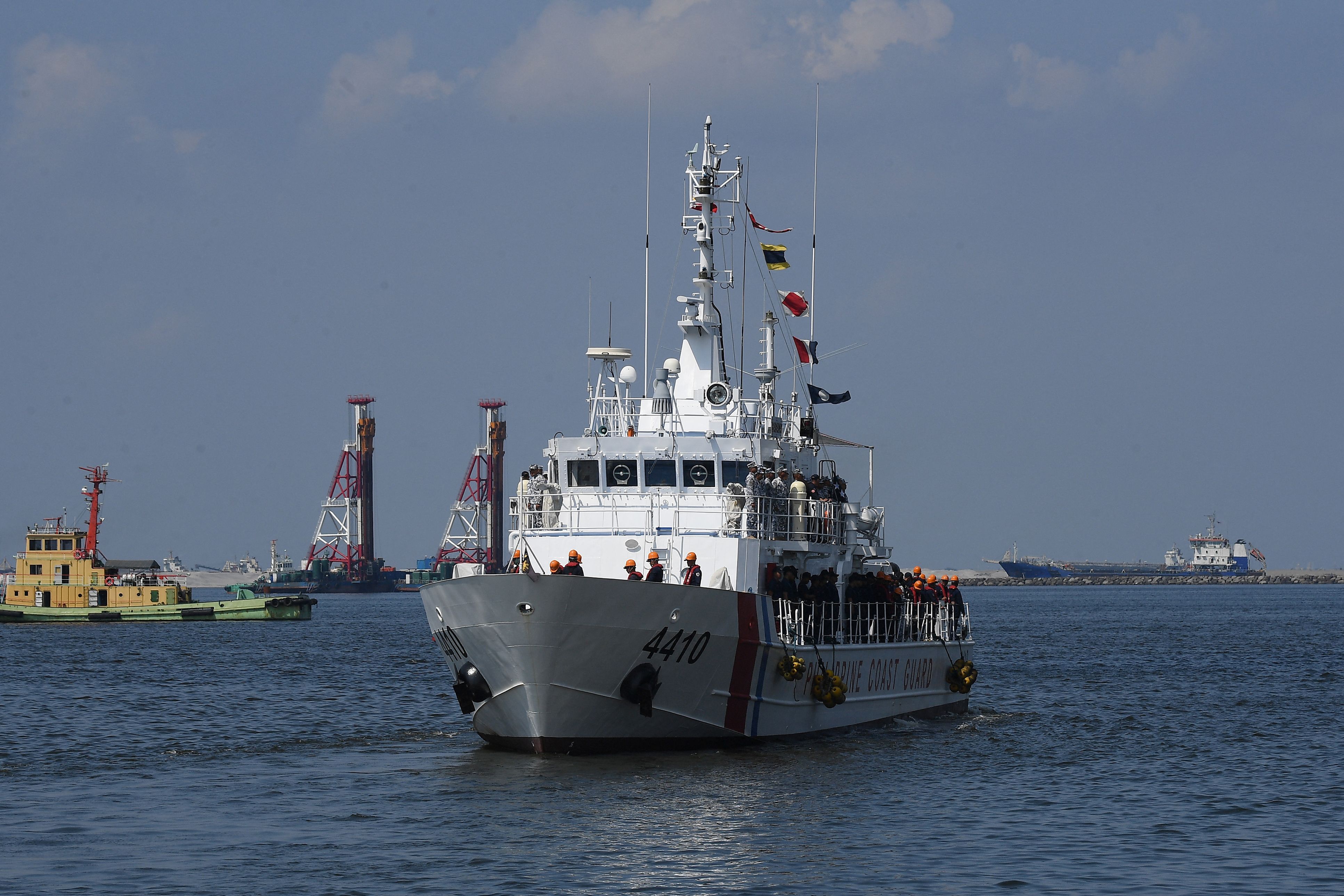
Most Southeast Asian states behave as if the actions of their Northeast Asian neighbors and the Philippines will be sufficient to maintain a regional status quo from which they can benefit.

Chong Ja Ian