

Commentary
Michael Pettis
{
  "authors": [
    "Michael Pettis"
  ],
  "type": "legacyinthemedia",
  "centerAffiliationAll": "dc",
  "centers": [
    "Carnegie Endowment for International Peace"
  ],
  "collections": [],
  "englishNewsletterAll": "asia",
  "nonEnglishNewsletterAll": "",
  "primaryCenter": "Carnegie Endowment for International Peace",
  "programAffiliation": "AP",
  "programs": [
    "Asia"
  ],
  "projects": [],
  "regions": [
    "North America",
    "United States",
    "East Asia",
    "China"
  ],
  "topics": [
    "Economy",
    "Trade"
  ]
}
Source: Getty
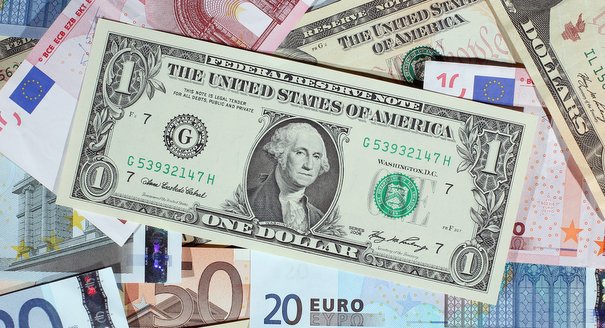
The costs of the dollar's status as the international reserve currency now outweigh the benefits, and the United States should take the lead in moving to multi-currency reserves.
Source: Financial Times

Reserve currency status is a global public good that comes with a cost. With the exception perhaps of the euro, which may emerge in the next decade, no other currency has the necessary characteristics to allow it plausibly to serve the needs of the global economy. And neither any other country nor Europe will be willing to pay the cost. If the dollar’s status is to decline in the future, it will require that Washington itself take the lead in forcing the world gradually to disengage.
Ironically, this is exactly what Washington should be doing. Conspiracy theory notwithstanding, claims that the reserve status of the dollar unfairly benefits the US are no longer true. On the contrary, it has become a burden, both for America and the world.
During the first few decades of the post-war period, the cost of maintaining the dollar’s status could be justified by the incremental benefits to the US of a stable and growing world economy, within cold war constraints. But beginning in the 1980s, trade policies abroad have sharply raised the cost to the US, while the end of the cold war has limited the benefits.
This cost comes as a choice between rising unemployment and rising debt. The mechanism is fairly straightforward. Countries that seek to supercharge domestic growth by acquiring a larger share of global demand can do so by gaming the global system and actively stockpiling foreign currency, mainly in the form of, but not limited to, central bank reserves.
In practice, dollar liquidity, limited Washington intervention, and the size and flexibility of US financial markets ensure that countries such as China stockpile dollars. There is no alternative, and most other governments would discourage substantial purchases of their own currencies. But foreign acquisition of dollars automatically forces the US into running a corresponding current account deficit. Active trade intervention abroad, in other words, is accommodated by rising trade deficits in the US.
This importing of US demand by other countries forces the US economy to respond in one of two ways. Either American unemployment must rise as demand is diverted abroad, or Americans must counteract the employment impact by increasing domestic consumption or investment.
Without government intervention, there is no reason for domestic investment to rise in response to policies abroad. On the contrary, with the diversion of domestic demand private investment may even decline. So in order to limit the impact on jobs, capital flows into the US must finance additional US consumption. Americans, in other words, must choose between higher unemployment and higher debt. In the past the Federal Reserve has chosen to encourage higher debt.
But what about the benefits to the US of reserve currency status? Analysts argue that the predominance of the dollar gives the US two: reduced cost of imports and lower government borrowing costs. Both arguments are flawed. Americans over-consume, and don’t need lower consumption costs, especially at the expense of employment. And if cheaper consumption is really such a gift, it is hard to explain why attempts by the US to return the gift – by demanding that foreigners revalue their currencies and so reduce costs for their own consumers – are always so indignantly rejected.
As for borrowing, creditworthiness matters more than currency status. Reserve status increases US borrowing, and thus undermines the ability of the US Treasury to finance itself cheaply more than would losing reserve status.
The large imbalances that this system has permitted now destabilise the world. If forced to give up the dollar, the world might reduce global trade somewhat, and it would probably spell the end of the Asian growth model. But it would also lower long-term costs for the US, and reduce dangerous global imbalances.
The US should therefore take the lead in shifting to multi-currency reserves, in which the dollar is simply first among equals.

Nonresident Senior Fellow, Carnegie China
Michael Pettis is a nonresident senior fellow at the Carnegie Endowment for International Peace. An expert on China’s economy, Pettis is professor of finance at Peking University’s Guanghua School of Management, where he specializes in Chinese financial markets.
Recent Work
Michael Pettis
Michael Pettis
Carnegie does not take institutional positions on public policy issues; the views represented herein are those of the author(s) and do not necessarily reflect the views of Carnegie, its staff, or its trustees.

The Plaza Accord was not an externally imposed punishment of Japan but part of a broader restructuring that Japanese economists and policymakers themselves recognized was necessary. Its effects were undermined, however, when Tokyo responded to the resulting slowdown with policies that exacerbated investment, credit expansion, and the very imbalances the adjustment was intended to resolve.
Michael Pettis

The nuclear relationship between China and the United States is increasingly shaped by widening perception gaps rather than deliberate strategic design.

Tong Zhao
China’s banking crisis in the 2000s was resolved by transferring the costs to households through financial repression—a decision that recapitalized the banks while exacerbating the structural imbalances that continue to shape the Chinese economy today.
Michael Pettis

Chinese biotech companies have been on the receiving end of U.S. economic coercion. Yet their responses have differed significantly because firm and state interests are not uniformly aligned. For Washington, treating all Chinese tech firms the same, irrespective of their actual interests, risks pushing them farther into Beijing’s corner.

Xue Gong

China’s latest energy plan explicitly calls for integrating data centers into the electricity system, particularly connecting them to green energy. It appears Beijing wants to use compute as a source of domestic demand to absorb renewables excess capacity.

Damien Ma