

Q&A
- +1
Sheena Chestnut Greitens, Oriana Skylar Mastro, Yukon Huang, …
{
  "authors": [
    "Yukon Huang"
  ],
  "type": "legacyinthemedia",
  "centerAffiliationAll": "dc",
  "centers": [
    "Carnegie Endowment for International Peace",
    "Carnegie China"
  ],
  "collections": [],
  "englishNewsletterAll": "asia",
  "nonEnglishNewsletterAll": "",
  "primaryCenter": "Carnegie Endowment for International Peace",
  "programAffiliation": "AP",
  "programs": [
    "Asia"
  ],
  "projects": [],
  "regions": [
    "East Asia",
    "China"
  ],
  "topics": [
    "Political Reform",
    "Economy"
  ]
}
Source: Getty
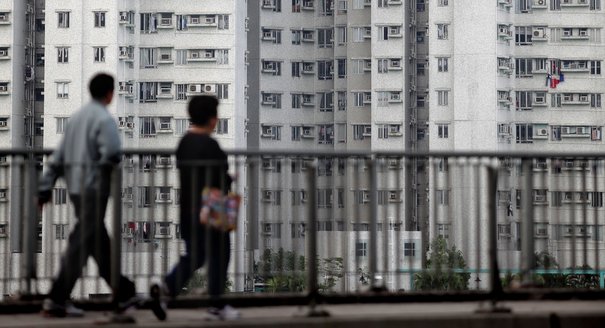
In order to reduce rural-urban inequality and prevent widespread unrest, China needs to invest its citizens with greater mobility and property rights by reforming its system for household registration.
Source: Financial Times

Beijing’s grand strategy assumes that with economic progress, political liberalisation can wait. But with a mounting sense of unequal opportunities, estimates suggest that the number of “mass incidents” has doubled in recent years. Despite pronouncements signalling the need for more responsive approaches, these are also more likely to incur the wrath of security officials.
Equality lies at the heart of this. China’s inequality is high, and rising. Yet the level alone is not the problem: China is as unequal as Singapore and the U.S., but more equal than both Brazil and South Africa. Rather, it is the speed and geography of the rise that matter. Location matters in particular: unlike other Asian countries, China’s inequality stems mainly from differences between urban and rural areas, rather than within them.
With two-thirds of China’s population in interior provinces and more than half in rural areas, this regional differentiation is now a major contributor to internal instability. There are no quick fixes for Beijing here but one solution could be increasing household mobility – a step that would also fundamentally transform China’s economic and social landscape.
China’s equality problem stems from its regionally unbalanced growth strategy, which concentrated resources along the coast, to spur manufactured exports but restricted the movement of labour. This created a pool of 200m temporary migrant workers, to whom China’s hukou system restricts residency rights, access to social services and employment. It also encourages them to leave their dependents behind when they find jobs in cities.
Policymakers are reluctant to liberalise this system for fear that China’s large cities would become unmanageable in the face of unrestricted labour inflows. Instead they hope that fairer spending, along with cosmetic suggestions to raise minimum wages and curb higher salaries, will do the job. This seems unlikely, given that more productive activities will still gravitate to the major coastal cities. Instead, given the size of the population relative to arable land and resources, China’s urbanisation rate should be much higher and its major cities should be much larger.
Legal barriers that inhibit changes in residency therefore need to be eliminated, allowing rural and urban areas to be better connected. More formal property rights are important. In order to move to cities, families need to be able to cash in their farm land. Since all land is owned by the state, markets to allow farmers to sell or rent are essential. In urban areas, meanwhile, redevelopment of plots formerly used for traditional housing is a major source of state revenue in the absence of property taxes. More must be done to lessen pressures to seize such holdings so as to curb rising housing prices.
This seems challenging but South Korea has shown just how a country can move rapidly from low to high income and grow more equal. South Korea succeeded not just by moving away from manufacturing but also with rising internal migration and urbanisation. Without hukou-type restrictions, its urbanisation rate went from about 30 per cent in 1960 to almost 80 per cent by 1990. Korean inequality now also compares favourably with China’s.
This process of rapid urbanisation generates its own tensions, not least among Chinese citizens who will want to know that they are taken seriously by authorities when they vent their frustrations. But that is a problem for the future. In the interim, by increasing the mobility of labour, China can fundamentally reverse decades of rising disparities and foster the more just society in which its leaders claim to believe.

Senior Fellow, Asia Program
Huang is a senior fellow in the Carnegie Asia Program where his research focuses on China’s economy and its regional and global impact.
Recent Work


Sheena Chestnut Greitens, Oriana Skylar Mastro, Yukon Huang, …


Yukon Huang, Isaac B. Kardon, Matt Sheehan
Carnegie does not take institutional positions on public policy issues; the views represented herein are those of the author(s) and do not necessarily reflect the views of Carnegie, its staff, or its trustees.

The Plaza Accord was not an externally imposed punishment of Japan but part of a broader restructuring that Japanese economists and policymakers themselves recognized was necessary. Its effects were undermined, however, when Tokyo responded to the resulting slowdown with policies that exacerbated investment, credit expansion, and the very imbalances the adjustment was intended to resolve.

Michael Pettis

The nuclear relationship between China and the United States is increasingly shaped by widening perception gaps rather than deliberate strategic design.

Tong Zhao
China’s banking crisis in the 2000s was resolved by transferring the costs to households through financial repression—a decision that recapitalized the banks while exacerbating the structural imbalances that continue to shape the Chinese economy today.
Michael Pettis

Chinese biotech companies have been on the receiving end of U.S. economic coercion. Yet their responses have differed significantly because firm and state interests are not uniformly aligned. For Washington, treating all Chinese tech firms the same, irrespective of their actual interests, risks pushing them farther into Beijing’s corner.

Xue Gong

China’s latest energy plan explicitly calls for integrating data centers into the electricity system, particularly connecting them to green energy. It appears Beijing wants to use compute as a source of domestic demand to absorb renewables excess capacity.

Damien Ma