

Q&A
Stephen Tankel
{
  "authors": [
    "Stephen Tankel"
  ],
  "type": "legacyinthemedia",
  "centerAffiliationAll": "dc",
  "centers": [
    "Carnegie Endowment for International Peace"
  ],
  "collections": [],
  "englishNewsletterAll": "ctw",
  "nonEnglishNewsletterAll": "",
  "primaryCenter": "Carnegie Endowment for International Peace",
  "programAffiliation": "SAP",
  "programs": [
    "South Asia"
  ],
  "projects": [],
  "regions": [
    "South Asia",
    "Pakistan"
  ],
  "topics": [
    "Political Reform",
    "Security"
  ]
}
Source: Getty
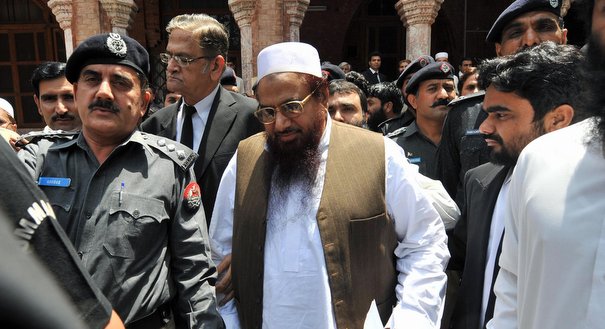
Lashkar-e-Taiba is one of Pakistan’s oldest and most powerful jihadi groups, whose global reach has only expanded since it launched a multi-target attack on the Indian city of Mumbai in November 2008.
Source: New America Foundation

The boldness of the Mumbai attacks and target selection suggested LeT continued to prioritize jihad against India, but was moving deeper into al-Qaeda’s orbit. Approximately one year after Mumbai, U.S. President Barack Obama wrote a letter to his Pakistani counterpart, President Asif Ali Zardari, in which he specifically mentioned LeT as one of the militant groups against which the government should act. A chorus of U.S. diplomats, security officials and military officers reiterated this call for action, pressuring Pakistan publicly as well as privately to move against LeT. Yet LeT’s position remains relatively secure. There are two main reasons. First, the country is facing a serious insurgency and the group remains one of the few militant outfits that officially refrain from launching attacks in Pakistan. The security establishment has determined that to avoid additional instability it must not take any action that could lead LeT to change this position. Second, the Pakistani army and its powerful Inter-Services Intelligence Directorate (ISI) have long considered LeT to be the country’s most reliable proxy against India and the group still provides utility in this regard as well as the potential for leverage at the negotiating table. Thus, the consensus is that, at least in the short-term, taking steps to dismantle the group would chiefly benefit India, while Pakistan would be left to deal with the costs.

Former Nonresident Scholar, South Asia Program
Tankel was a nonresident scholar at the Carnegie Endowment, where his research focuses on insurgency, terrorism, and the evolution of nonstate armed groups.
Recent Work
Stephen Tankel
Stephen Tankel
Carnegie does not take institutional positions on public policy issues; the views represented herein are those of the author(s) and do not necessarily reflect the views of Carnegie, its staff, or its trustees.

China’s political future will be shaped between now and next October. As the Communist Party enters its intense “campaign season” to prepare for a major political transition in 2027, reading Beijing's actions and responses may become more difficult as domestic politics weigh on its behavior more than usual.

Damien Ma
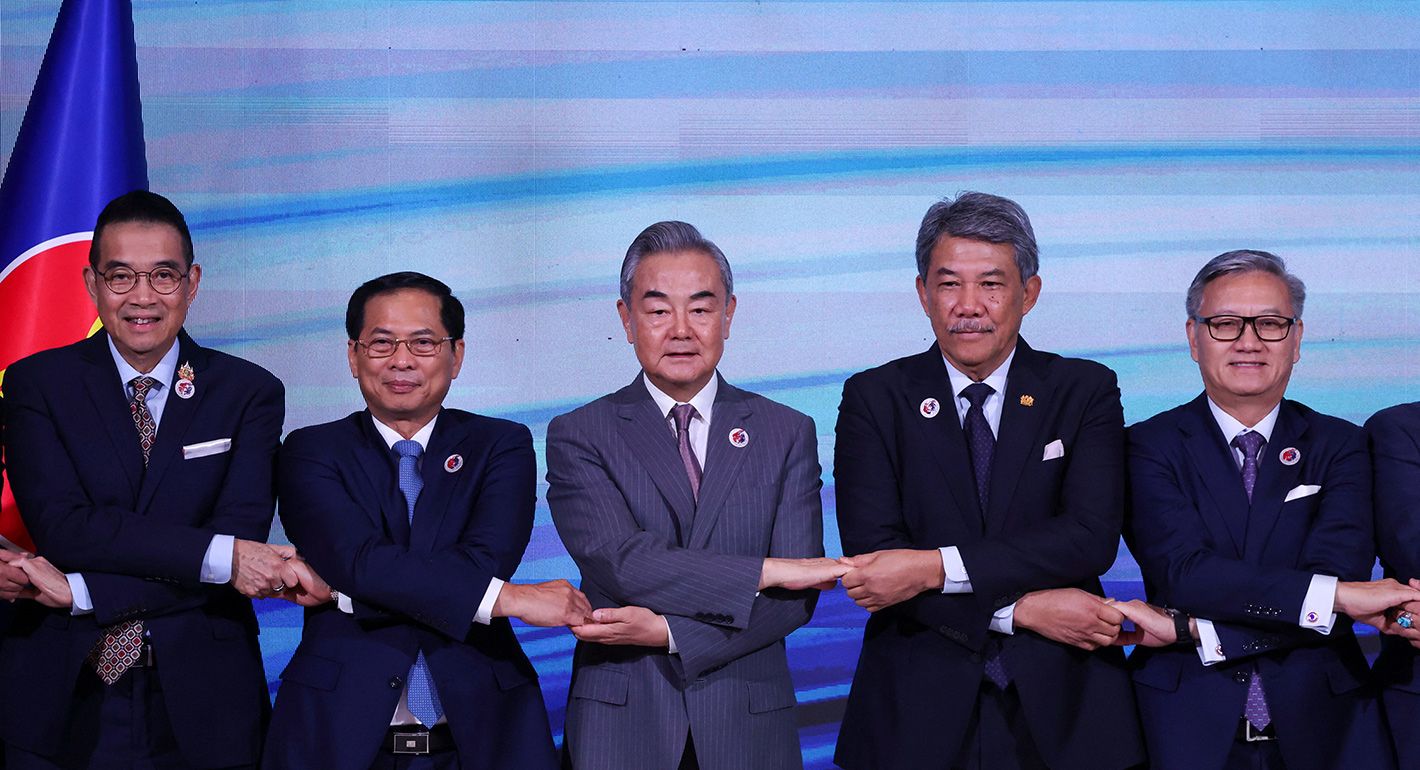
The Thai-Cambodian conflict highlights the limits to China's peacemaker ambition and the significance of this role on Southeast Asia’s balance of power.

Pongphisoot (Paul) Busbarat
Beijing believes that Washington is overestimating its own leverage and its ability to handle the trade war’s impacts.


Rick Waters, Sheena Chestnut Greitens
Tapping our network of China experts in the region, Carnegie China offers this latest “China Through a Southeast Asian Lens” report to offer preliminary assessments of whether the U.S. effort to reshape the global trading order will lead countries in the region to tilt toward Beijing.



Selina Ho, Khin Khin Kyaw Kyee, Joseph Ching Velasco, …
Because strategic, economic, and ideological perceptions of China contain multiple, sometimes contradictory facets in Southeast Asia, receptions of and responses to Beijing diverge across and within state lines.



Evan A. Feigenbaum, Chong Ja Ian, Elina Noor