

Paper
Adam Baczko, Gilles Dorronsoro, Arthur Quesnay
{
  "authors": [
    "Gilles Dorronsoro"
  ],
  "type": "legacyinthemedia",
  "centerAffiliationAll": "dc",
  "centers": [
    "Carnegie Endowment for International Peace"
  ],
  "collections": [],
  "englishNewsletterAll": "ctw",
  "nonEnglishNewsletterAll": "",
  "primaryCenter": "Carnegie Endowment for International Peace",
  "programAffiliation": "SAP",
  "programs": [
    "South Asia"
  ],
  "projects": [],
  "regions": [
    "South Asia",
    "Afghanistan"
  ],
  "topics": [
    "Security",
    "Military",
    "Foreign Policy"
  ]
}
Source: Getty
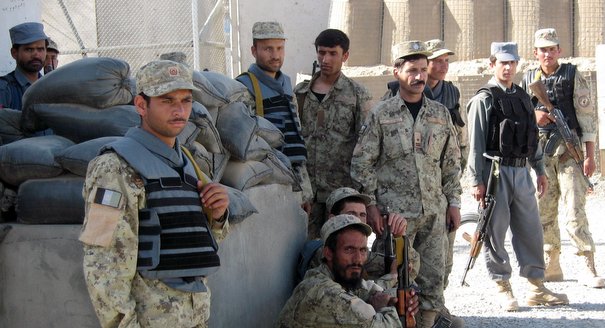
The recent mass escape from the main prison in Kandahar demonstrates that the insurgency in Afghanistan is growing more sophisticated and more active.
Source: New York Times

First, Kandahar was supposed to be the success story of the coalition and the gains in this province were to compensate for the deterioration of the security in the rest of the country. But these developments paint another story about progress on the ground.
The complexity of the attack shows that the insurgents have a strong presence in the city and clearly indicates that the police have not been able to fundamentally improve security at the prison, despite an attack there two years ago.
The prison break will have a strong psychological impact, discouraging people who were ready to work with the coalition. This is especially true since Kandahar’s police chief, an important local figure, was recently killed.
It is yet another indication that the targeted eliminations conducted by the coalition have not seriously disrupted the insurgents — most likely because the leadership is more in Pakistan than in Afghanistan. The few dozen cadres who escaped from Kandahar prison will reinforce, even if only marginally, the local leadership.
Second, this attack is part of a national trend indicating a more sophisticated and aggressive insurgency this year. The coalition is peaking in terms of resources and soldiers on the ground. The last few weeks have demonstrated the insurgents’ ability to organize complex attacks. The number of attacks against the coalition is at record levels and everything indicates that their offensive will be especially aggressive this year. Since the coalition doesn’t have the resources to launch another large-scale operation, the insurgency will likely make significant progress in the coming months.
In this context, the transfer of security operations and responsibilities to the Afghan national army before 2014 seems like a fantasy. Military withdrawal without negotiating with the Taliban leadership is impossible.
Former Nonresident Scholar, South Asia Program
Dorronsoro’s research focuses on security and political development in Afghanistan. He was a professor of political science at the Sorbonne in Paris and the Institute of Political Studies of Rennes.
Recent Work
Adam Baczko, Gilles Dorronsoro, Arthur Quesnay
Gilles Dorronsoro
Carnegie does not take institutional positions on public policy issues; the views represented herein are those of the author(s) and do not necessarily reflect the views of Carnegie, its staff, or its trustees.

But their "principal to principal" model will only be as effective as the political strength of each leader back home.

Damien Ma

U.S. unpredictability has allowed China to capitalize on its positioning as the “responsible great power”. Paradoxically, the more China wins the perception game, the more likely expectations will rise for Beijing to deliver not just words but to demonstrate with its deeds.

Chong Ja Ian

Hanoi and Beijing have long treated each other as distant cousins rather than comrades in arms. That might be changing as both sides draw closer to hedge against uncertainty and America’s erratic behavior.

Nguyễn Khắc Giang

Across Asia, China is better positioned to withstand energy shocks from the fallout of the Iran war. Its abundant coal capacity can ensure stability in the near term. Yet at the same time, the country’s energy transition away from coal will make it even less vulnerable during the next shock.
Damien Ma

Malaysia’s chairmanship sought to fend off short-term challenges while laying the groundwork for minimizing ASEAN’s longer-term exposure to external stresses.

Elina Noor