• Commentary
  • Research
  • Experts
  • Events
Carnegie China logoCarnegie lettermark logo
{
  "authors": [
    "Michele Dunne"
  ],
  "type": "legacyinthemedia",
  "centerAffiliationAll": "dc",
  "centers": [
    "Carnegie Endowment for International Peace",
    "Malcolm H. Kerr Carnegie Middle East Center"
  ],
  "collections": [],
  "englishNewsletterAll": "menaTransitions",
  "nonEnglishNewsletterAll": "",
  "primaryCenter": "Carnegie Endowment for International Peace",
  "programAffiliation": "MEP",
  "programs": [
    "Middle East"
  ],
  "projects": [],
  "regions": [
    "Middle East",
    "Israel",
    "Palestine",
    "Levant"
  ],
  "topics": [
    "Foreign Policy"
  ]
}
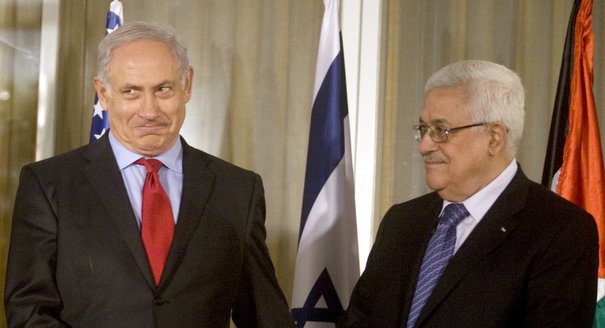
Source: Getty

In The Media

Obama Needs a Strategy for Israeli-Palestinian Diplomacy

President Obama needs to reengage in Israeli-Palestinian diplomacy by more clearly articulating U.S. positions on the key issues, thinking seriously about what incentives and disincentives the United States can offer both parties, and visiting the region as soon as possible.

Link Copied
By Michele Dunne
Published on May 18, 2011

Source: New York Times

Obama Needs a Strategy for Israeli-Palestinian DipPresident Obama needs to reengage in Israeli-Palestinian diplomacy, not because there is an easy solution to the conflict at hand but because the Palestinians and Israelis tend to create new obstacles to a solution when left to themselves for too long.

Consider the Fatah-Hamas agreement of May 4, in which the two feuding Palestinian factions were driven into each other’s arms by President Mahmoud Abbas’s lack of faith in his U.S. ally (as well as the falling out that the Hamas leader Khaled Meshal had with his Syrian sponsor). Similarly, the Palestinian effort to seek international recognition for a state at the United Nations in September is a unilateral move that promises to create uncomfortable choices for the United States, which is on the record favoring a Palestinian state.
 
On the Israeli side any number of unilateral actions are possible. One member of Israeli Prime Minister Netanyahu’s Likud Party, for instance, is advocating extension of Israeli sovereignty over settlement blocs in the West Bank.
 
But reengaging does not mean that President Obama himself should take resigned Special Envoy George Mitchell’s place. The conflict is too far from resolution to justify his involvement, and in any case it is hard to imagine Obama engaging in diplomatic arm twisting just as he heads into a presidential reelection campaign.
 
It would be better for Obama to do three things now. First, articulate more clearly U.S. positions on how the key issues dividing Israelis and Palestinians (borders, security, Jerusalem, refugees, settlements) might be resolved to show seriousness of purpose.
 
Second, think seriously about which incentives and disincentives he could bring to bear in a more energetic post-election negotiating effort; the lack of such a strategy has doomed to failure Obama’s efforts in the Israeli-Palestinian arena so far.
 
And finally, Obama should visit Israel and the Palestinian territories as soon as possible. He should reach out to Israeli and Palestinian leaders and their people in an effort to earn their trust and respect, find sources of leverage, and use his powers of persuasion to shape their debates.

About the Author

Michele Dunne

Former Nonresident Scholar, Middle East Program

Michele Dunne was a nonresident scholar in Carnegie’s Middle East Program, where her research focuses on political and economic change in Arab countries, particularly Egypt, as well as U.S. policy in the Middle East.

    Recent Work

  • Research
    Islamic Institutions in Arab States: Mapping the Dynamics of Control, Co-option, and Contention
      • +6

      Yasmine Farouk, Nathan J. Brown, Maysaa Shuja Al-Deen, …
  • Research
    From Hardware to Holism: Rebalancing America’s Security Engagement With Arab States
      • +8

      Robert Springborg, Emile Hokayem, Becca Wasser, …

Michele Dunne
Former Nonresident Scholar, Middle East Program
Michele Dunne
Foreign PolicyMiddle EastIsraelPalestineLevant

Carnegie does not take institutional positions on public policy issues; the views represented herein are those of the author(s) and do not necessarily reflect the views of Carnegie, its staff, or its trustees.

More Work from Carnegie China

  • Commentary
    China’s Energy Security Doesn’t Run Through Hormuz but Through the Electrification of Everything

    Across Asia, China is better positioned to withstand energy shocks from the fallout of the Iran war. Its abundant coal capacity can ensure stability in the near term. Yet at the same time, the country’s energy transition away from coal will make it even less vulnerable during the next shock.


      • Damien Ma

      Damien Ma

  • Commentary
    Malaysia’s Year as ASEAN Chair: Managing Disorder

    Malaysia’s chairmanship sought to fend off short-term challenges while laying the groundwork for minimizing ASEAN’s longer-term exposure to external stresses.

      Elina Noor

  • Commentary
    When It Comes to Superpower Geopolitics, Malaysia Is Staunchly Nonpartisan

    For Malaysia, the conjunction that works is “and” not “or” when it comes to the United States and China.

      Elina Noor

  • Commentary
    Neither Comrade nor Ally: Decoding Vietnam’s First Army Drill with China

    In July 2025, Vietnam and China held their first joint army drill, a modest but symbolic move reflecting Hanoi’s strategic hedging amid U.S.–China rivalry.

      • Nguyen-khac-giang

      Nguyễn Khắc Giang

  • Commentary
    China’s Mediation Offer in the Thailand-Cambodia Border Dispute Sheds Light on Beijing’s Security Role in Southeast Asia

    The Thai-Cambodian conflict highlights the limits to China's peacemaker ambition and the significance of this role on Southeast Asia’s balance of power.

      Pongphisoot (Paul) Busbarat

Get more news and analysis from
Carnegie China
Carnegie China logo, white
Keck Seng Tower133 Cecil Street #10-01ASingapore, 069535Phone: +65 9650 7648
  • Research
  • About
  • Experts
  • Events
  • Contact
  • Careers
  • Privacy
  • For Media
Get more news and analysis from
Carnegie China
© 2026 Carnegie Endowment for International Peace. All rights reserved.