



• Commentary
  • Research
  • Experts
  • Events
Carnegie China logoCarnegie lettermark logo
{
  "authors": [
    "Toby Dalton",
    "Mark Hibbs",
    "George Perkovich"
  ],
  "type": "other",
  "centerAffiliationAll": "dc",
  "centers": [
    "Carnegie Endowment for International Peace",
    "Carnegie Europe",
    "Carnegie China"
  ],
  "collections": [],
  "englishNewsletterAll": "ctw",
  "nonEnglishNewsletterAll": "",
  "primaryCenter": "Carnegie Endowment for International Peace",
  "programAffiliation": "NPP",
  "programs": [
    "Nuclear Policy"
  ],
  "projects": [],
  "regions": [
    "South Asia",
    "Pakistan",
    "East Asia",
    "China",
    "Asia"
  ],
  "topics": [
    "Nuclear Policy",
    "Nuclear Energy",
    "Arms Control",
    "Security"
  ]
}

Source: Getty

Other

A Criteria-Based Approach to Nuclear Cooperation With Pakistan

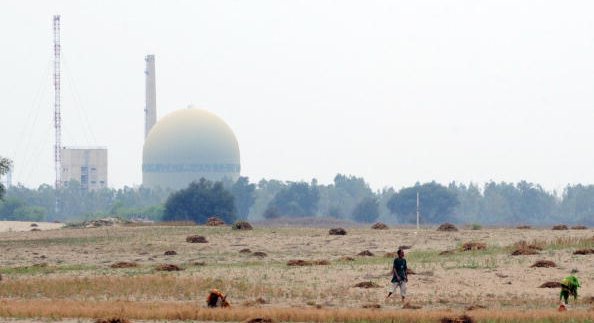
The Fukushima nuclear disaster in Japan provides Beijing with an opportunity to pause and contemplate conditioning its nuclear cooperation with Pakistan on improvements in nuclear safety and security.

Link Copied
By Toby Dalton, Mark Hibbs, George Perkovich
Published on Jun 22, 2011

In the wake of the Fukushima nuclear disaster, Beijing decided to review its plans for expanding nuclear power in China. It appears likely that China will shift its ambitious nuclear construction program away from older designs to modern technology provided by foreign vendors. 

Although there are no indications that China is reconsidering its decision to build two additional nuclear power reactors in Pakistan—which are based on technology Beijing will probably abandon domestically—the accident in Japan provides Beijing with an opportunity to pause and contemplate conditioning its cooperation with Pakistan on improvements in nuclear safety and security. During such a pause, Beijing could consider the possibility of developing within the Nuclear Suppliers Group (NSG) a criteria-based approach to nuclear cooperation with states lacking full-scope safeguards (FSS). This strategy would be invoked irrespective of other discussions about future NSG membership and criteria that might be considered in that context. 
 
A criteria-based approach would provide a roadmap for states without FSS, including Pakistan, to qualify for civil nuclear cooperation, thus placing China’s current and future nuclear cooperation with Pakistan in an NSG process. The lynchpin in this approach is incentivizing China through the licensing of foreign reactor technology, so that China sees greater economic potential in achieving its longer-term ambition of becoming a nuclear exporter than in its shorter-term deals with Pakistan. Such an approach could help resolve persistent questions about the NSG’s future, which were raised by the U.S.-India nuclear deal and by Russia’s previous nuclear commerce with India. This strategy thus has the potential to resolve this issue in a way that strengthens the NSG, provides China with incentives to reconsider its cooperation with Pakistan, and gives Pakistan the international legitimacy it desperately seeks.

About the Authors

Toby Dalton

Senior Fellow and Co-director, Nuclear Policy Program

Toby Dalton is a senior fellow and co-director of the Nuclear Policy Program at the Carnegie Endowment. An expert on nonproliferation and nuclear energy, his work addresses regional security challenges and the evolution of the global nuclear order.

Mark Hibbs

Nonresident Senior Fellow, Nuclear Policy Program

Hibbs is a Germany-based nonresident senior fellow in Carnegie’s Nuclear Policy Program. His areas of expertise are nuclear verification and safeguards, multilateral nuclear trade policy, international nuclear cooperation, and nonproliferation arrangements.

George Perkovich

Japan Chair for a World Without Nuclear Weapons, Senior Fellow

George Perkovich is the Japan Chair for a World Without Nuclear Weapons and a senior fellow in the Carnegie Endowment for International Peace’s Nuclear Policy Program. He works primarily on nuclear deterrence, nonproliferation, and disarmament issues, and is leading a study on nuclear signaling in the 21st century.

Authors

Toby Dalton
Senior Fellow and Co-director, Nuclear Policy Program
Toby Dalton
Mark Hibbs
Nonresident Senior Fellow, Nuclear Policy Program
Mark Hibbs
George Perkovich
Japan Chair for a World Without Nuclear Weapons, Senior Fellow
George Perkovich
Nuclear PolicyNuclear EnergyArms ControlSecuritySouth AsiaPakistanEast AsiaChinaAsia

Carnegie does not take institutional positions on public policy issues; the views represented herein are those of the author(s) and do not necessarily reflect the views of Carnegie, its staff, or its trustees.

More Work from Carnegie China

  • Commentary
    China Sells Stability Amid American Volatility

    US unpredictability has allowed China to capitalize on its positioning as the “responsible great power”. Paradoxically, the more China wins the perception game, the more likely expectations will rise for Beijing to deliver not just words but to demonstrate with its deeds.

      Chong Ja Ian

  • Vietnam's Top Leader To Lam meets with young representatives from China and Vietnam participating in the "Red Study Tours" at the Great Hall of the People on April 15, 2026 in Beijing, China. T
    Commentary
    Why Vietnam Is Swinging in China’s Direction

    Hanoi and Beijing have long treated each other as distant cousins rather than comrades in arms. That might be changing as both sides draw closer to hedge against uncertainty and America’s erratic behavior.

      • Nguyen-khac-giang

      Nguyễn Khắc Giang

  • Commentary
    China’s Energy Security Doesn’t Run Through Hormuz but Through the Electrification of Everything

    Across Asia, China is better positioned to withstand energy shocks from the fallout of the Iran war. Its abundant coal capacity can ensure stability in the near term. Yet at the same time, the country’s energy transition away from coal will make it even less vulnerable during the next shock.


      • Damien Ma

      Damien Ma

  • Xi walking into a room with people standing and applauding around him
    Commentary
    Emissary
    The Xi Doctrine Zeros in on “High-Quality Development” for China’s Economic Future

    In the latest Five-Year Plan, the Chinese president cements the shift to an innovation-driven economy over a consumption-driven one.

      • Damien Ma

      Damien Ma

  • Commentary
    When It Comes to Superpower Geopolitics, Malaysia Is Staunchly Nonpartisan

    For Malaysia, the conjunction that works is “and” not “or” when it comes to the United States and China.

      Elina Noor

Get more news and analysis from
Carnegie China
Carnegie China logo, white
Keck Seng Tower133 Cecil Street #10-01ASingapore, 069535Phone: +65 9650 7648
  • Research
  • About
  • Experts
  • Events
  • Contact
  • Careers
  • Privacy
  • For Media
Get more news and analysis from
Carnegie China
© 2026 Carnegie Endowment for International Peace. All rights reserved.





