

Commentary
Nathan J. Brown
{
  "authors": [
    "Nathan J. Brown"
  ],
  "type": "legacyinthemedia",
  "centerAffiliationAll": "dc",
  "centers": [
    "Carnegie Endowment for International Peace",
    "Malcolm H. Kerr Carnegie Middle East Center"
  ],
  "collections": [
    "Arab Awakening"
  ],
  "englishNewsletterAll": "menaTransitions",
  "nonEnglishNewsletterAll": "",
  "primaryCenter": "Carnegie Endowment for International Peace",
  "programAffiliation": "MEP",
  "programs": [
    "Middle East"
  ],
  "projects": [],
  "regions": [
    "North Africa",
    "Egypt"
  ],
  "topics": [
    "Political Reform",
    "Democracy"
  ]
}
Source: Getty
For Egyptians, the insistence on trying Mubarak in Egyptian courts serves several functions: it helps to maintain the revolution’s unity and can serve to goad the military leadership toward action on popular demands.
Source: New York Times

But that may be beside the point. To understand the issues in the abstract, isolated from the society and the political system in which they arose, may be unfair and unrealistic. Seen in an Egyptian context, the insistence on trying Mubarak in Egyptian courts has an unavoidable political logic.
First, the revolution itself succeeded precisely because Egyptians with a wide variety of political inclinations and beliefs were able to coalesce around a single demand: Mubarak must go. Having personalized the agenda in January they can hardly turn their backs on the identification of Mubarak as a villain now.
Second, the revolution was not simply motivated by a desire for freedom but also a feeling that many leaders were fleecing the country. In Egypt, leniency is taken to mean refusing to recover ill-gotten gains. While many Egyptians have wildly overestimated the sums involved, they are not likely to be satisfied with half-measures.

Nonresident Senior Fellow, Middle East Program
Nathan J. Brown, a professor of political science and international affairs at George Washington University, is a distinguished scholar and author of nine books on Arab politics and governance, as well as editor of five books.
Recent Work
Nathan J. Brown
Nathan J. Brown
Carnegie does not take institutional positions on public policy issues; the views represented herein are those of the author(s) and do not necessarily reflect the views of Carnegie, its staff, or its trustees.

Transactional relationships are stable but can be shallow.



Paul Haenle, Maha Yahya, Benjamin Ho, …

Beijing says that over 180 countries accept its “one China principle” regarding Taiwan, but the reality is more complicated.

Chong Ja Ian

Beijing must choose between preserving its pandemic narrative or facing more unrest.
Paul Haenle

It’s about managing oil prices, bread prices, and strategic partnerships.



Amr Hamzawy, Karim Sadjadpour, Aaron David Miller, …
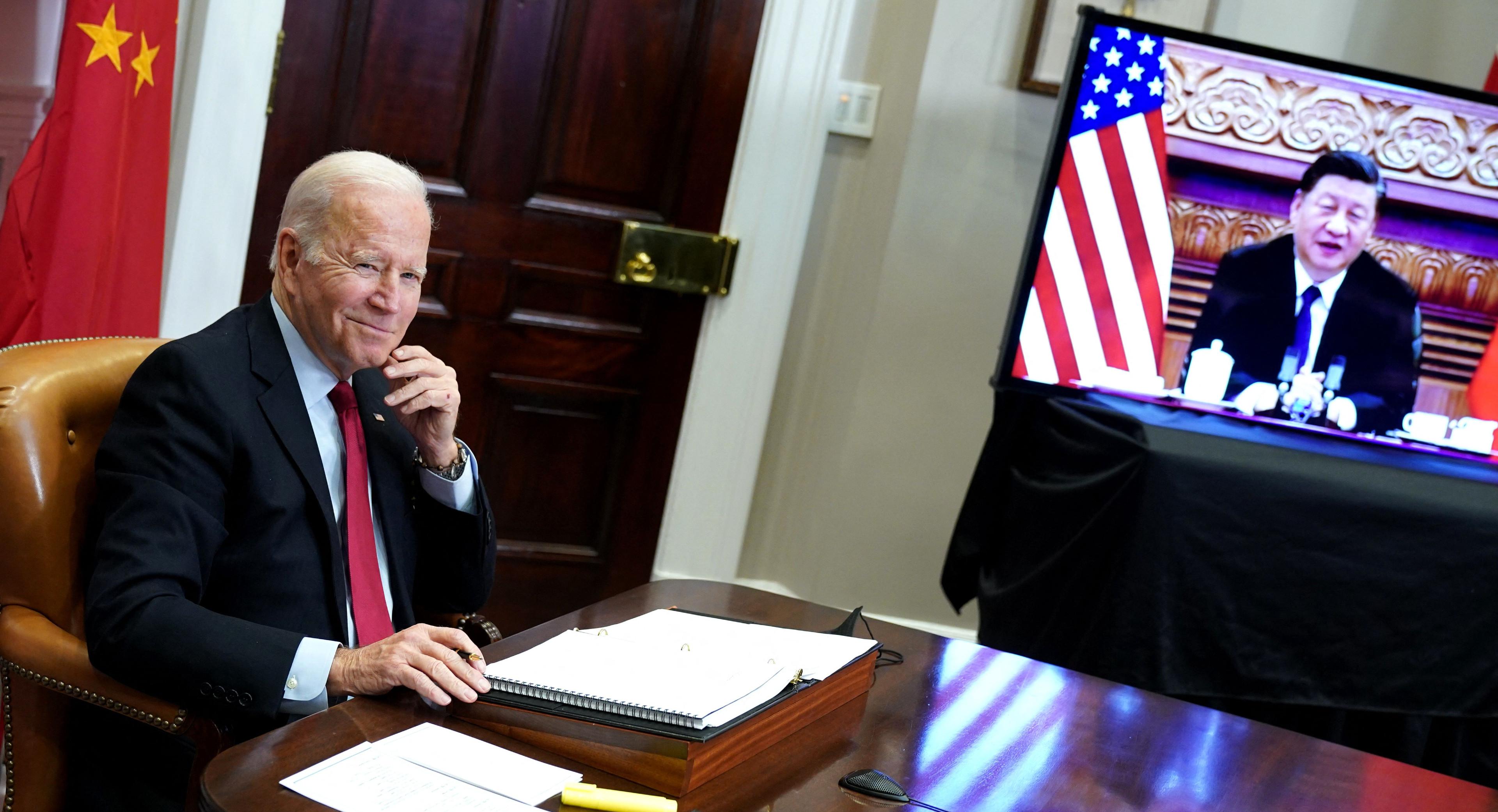
Three months after the Biden-Xi summit, the two sides’ divergent framings of the bilateral relationship are hindering progress.
Paul Haenle, Sam Bresnick