• Commentary
  • Research
  • Experts
  • Events
Carnegie China logoCarnegie lettermark logo
{
  "authors": [
    "Lora Saalman"
  ],
  "type": "legacyinthemedia",
  "centerAffiliationAll": "",
  "centers": [
    "Carnegie Endowment for International Peace",
    "Carnegie China"
  ],
  "collections": [
    "China’s Foreign Relations"
  ],
  "englishNewsletterAll": "",
  "nonEnglishNewsletterAll": "",
  "primaryCenter": "Carnegie China",
  "programAffiliation": "",
  "programs": [],
  "projects": [],
  "regions": [
    "South Asia",
    "India",
    "East Asia",
    "China"
  ],
  "topics": [
    "Security",
    "Arms Control"
  ]
}
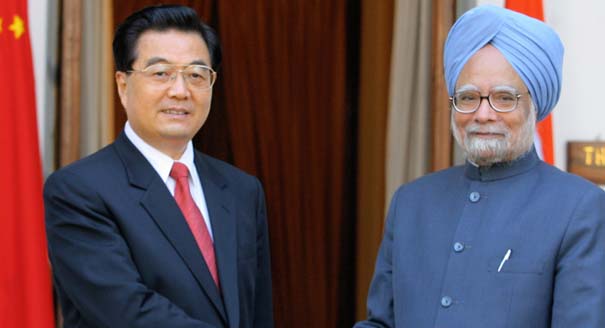
Source: Getty

In The Media
Carnegie China

Divergence, Similarity and Symmetry in Sino-Indian Threat Perceptions

A close comparison of the security perceptions of Chinese and Indian strategic, scientific, and academic experts reveals that the Sino-Indian security dilemma cannot be simply viewed through the prism of the border anymore.

Link Copied
By Lora Saalman
Published on Jul 7, 2011

Source: Journal of International Affairs

China and India remain locked in a stagnant embrace when it comes to the most intractable of security dilemmas: the Sino-Indian border issue. A closer look at Chinese and Indian strategic, scientific and academic experts' security perceptions vis-à-vis one another reveals that there is much more to the Sino-Indian security dynamic than meets the eye. Chinese and Indian strategic analysts hold divergent interests when evaluating each other's military modernization, the former preoccupied with India's naval development and the latter with China's army. Technical analysts in each country share a similar level of interest in the other's aviation and aerospace programs. Scholars exhibit a strong, if not symmetrical, level of focus on the other country's nuclear strategy and status. Using this tripartite discourse as a baseline, this essay provides both a quantitative and qualitative analysis of each group's perceptions to better understand Sino-Indian security relations and to propose measures within each arena to enhance mutual understanding. It shows that the Sino-Indian security dilemma cannot be simply viewed through the prism of the border anymore. 

About the Author

Lora Saalman

Former Nonresident Associate, Nuclear Policy Program

Saalman was a nonresident associate in the Nuclear Policy Program at the Carnegie Endowment for International Peace. Her research focuses on China’s nuclear and strategic policies toward India, Russia, and arms control.

    Recent Work

  • Paper
    Balancing Chinese Interests on North Korea and Iran

      Lora Saalman

  • In The Media
    Why Beijing Stands by Pyongyang

      Lora Saalman

Lora Saalman
Former Nonresident Associate, Nuclear Policy Program
Lora Saalman
SecurityArms ControlSouth AsiaIndiaEast AsiaChina

Carnegie does not take institutional positions on public policy issues; the views represented herein are those of the author(s) and do not necessarily reflect the views of Carnegie, its staff, or its trustees.
More Work from Carnegie China

  • Commentary
    The Spring and Autumn of Chinese Politics

    China’s political future will be shaped between now and next October. As the Communist Party enters its intense “campaign season” to prepare for a major political transition in 2027, reading Beijing's actions and responses may become more difficult as domestic politics weigh on its behavior more than usual.

      • Damien Ma

      Damien Ma

  • Article
    Can China Turn Its Small Modular Reactor Ambitions into Commercial Reality?

    China has showcased its engineering prowess with small modular reactor demonstration projects. But turning these technological achievements into commercial success will be a greater challenge.

      Tong Zhao

  • Commentary
    China Financial Markets
    The Plaza Accord and Its Relevance for China

    The Plaza Accord was not an externally imposed punishment of Japan but part of a broader restructuring that Japanese economists and policymakers themselves recognized was necessary. Its effects were undermined, however, when Tokyo responded to the resulting slowdown with policies that exacerbated investment, credit expansion, and the very imbalances the adjustment was intended to resolve.

      Michael Pettis
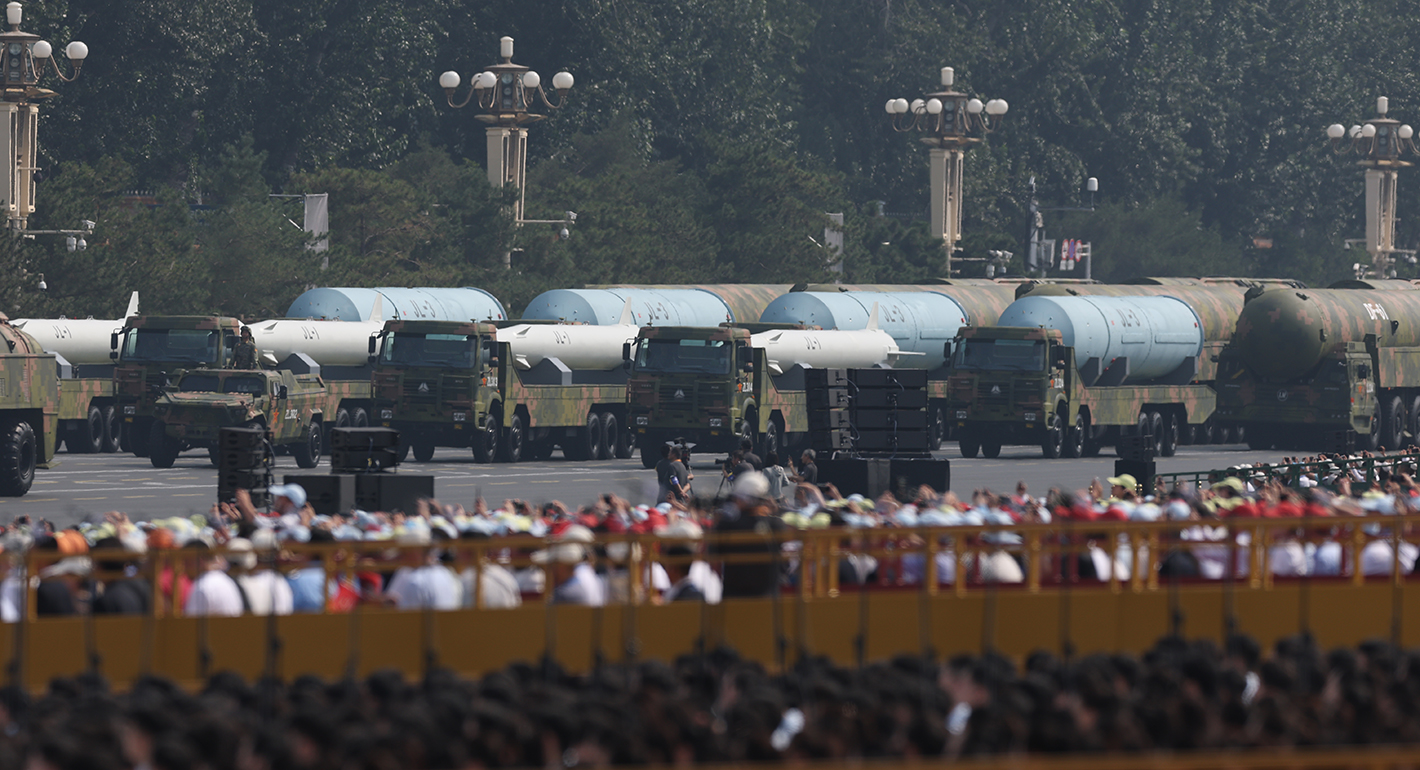
  • The nuclear missile formation passes through Tian'anmen Square during a military parade on September 3, 2025 in Beijing, China.
    Paper
    Untangling the Nuclear Knot: A Constructive Agenda for Managing China’s Nuclear Relations with the United States and Its Allies

    The nuclear relationship between China and the United States is increasingly shaped by widening perception gaps rather than deliberate strategic design.

      Tong Zhao

  • Commentary
    China Financial Markets
    Who Paid for China’s Last Debt Cleanup, and Who Will Pay for the Next?

    China’s banking crisis in the 2000s was resolved by transferring the costs to households through financial repression—a decision that recapitalized the banks while exacerbating the structural imbalances that continue to shape the Chinese economy today.

      Michael Pettis

Get more news and analysis from
Carnegie China
Carnegie China logo, white
Keck Seng Tower133 Cecil Street #10-01ASingapore, 069535Phone: +65 9650 7648
  • Research
  • About
  • Experts
  • Events
  • Contact
  • Careers
  • Privacy
  • For Media
Get more news and analysis from
Carnegie China
© 2026 Carnegie Endowment for International Peace. All rights reserved.