• Commentary
  • Research
  • Experts
  • Events
Carnegie China logoCarnegie lettermark logo
{
  "authors": [
    "Uri Dadush"
  ],
  "type": "other",
  "centerAffiliationAll": "",
  "centers": [
    "Carnegie Endowment for International Peace"
  ],
  "collections": [],
  "englishNewsletterAll": "",
  "nonEnglishNewsletterAll": "",
  "primaryCenter": "Carnegie Endowment for International Peace",
  "programAffiliation": "",
  "programs": [],
  "projects": [],
  "regions": [
    "Western Europe",
    "North America"
  ],
  "topics": [
    "Economy"
  ]
}

Source: Getty

Other

Safeguarding Financial Stability?

Any external infusion of funds would best be channeled through the IMF, which would then pose demanding conditions not just on the countries directly borrowing from it, but also find ways to demand changes in the eurozone’s institutional set up and monetary and fiscal policies in the healthy core, to ensure the euro’s long-term survival.

Link Copied
By Uri Dadush
Published on Nov 18, 2011
Is the European Financial Stability Facility (EFSF) proving a success?
Uri Dadush
No. The EFSF continues to be underfunded by a huge margin and does not today place a credible firewall around Italy and Spain. What’s more, it lacks credibility as a rescue facility because the countries that are underwriting it are themselves in trouble—including not only Italy and Spain, but also, more recently and even more worryingly, France. EFSF loans together with IMF/EU conditionality, advice, and monitoring have failed to stabilize the situation in Greece; they have done better in Ireland and Portugal, but the jury is still out on whether their programs will succeed.

The recent attempt to leverage the EFSF’s relatively meager resources by turning it into a partial guarantee, instead of allowing it to function as a lending facility, remains unimplemented and in any event has entirely failed to convince the markets. Moreover, the attempt to entice private investors, as well as China and other countries with large reserves, to contribute to the fund has also failed, in part because third parties want to see Germany, France, and others put more of their own money on the line and adopt a far more convincing and unified approach to deal with the crisis.

Read more

For the EFSF to succeed in stemming the crisis, it would need an additional 2 trillion dollars. The eurozone’s healthy core may be able to come up with about half of this sum without itself falling prey to a destructive crisis of confidence, but the rest would have to come from outside the eurozone. This external infusion of funds would best be channeled through the IMF, which would then pose demanding conditions not just on the countries directly borrowing from it, but also find ways to demand changes in the eurozone’s institutional set up and monetary and fiscal policies in the healthy core, to ensure the euro’s long-term survival.

About the Author

Uri Dadush

Former Senior Associate, International Economics Program

Dadush was a senior associate at the Carnegie Endowment for International Peace. He focuses on trends in the global economy and is currently tracking developments in the eurozone crisis.

    Recent Work

  • Commentary
    The Labors of Tsipras

      Uri Dadush

  • In The Media
    Greece, Complacency, and the Euro

      Uri Dadush

Uri Dadush
Former Senior Associate, International Economics Program
Uri Dadush
EconomyWestern EuropeNorth America

Carnegie does not take institutional positions on public policy issues; the views represented herein are those of the author(s) and do not necessarily reflect the views of Carnegie, its staff, or its trustees.

More Work from Carnegie China

  • Commentary
    How China’s Growth Model Determines Its Climate Performance

    Rather than climate ambitions, compatibility with investment and exports is why China supports both green and high-emission technologies.

      Mathias Larsen
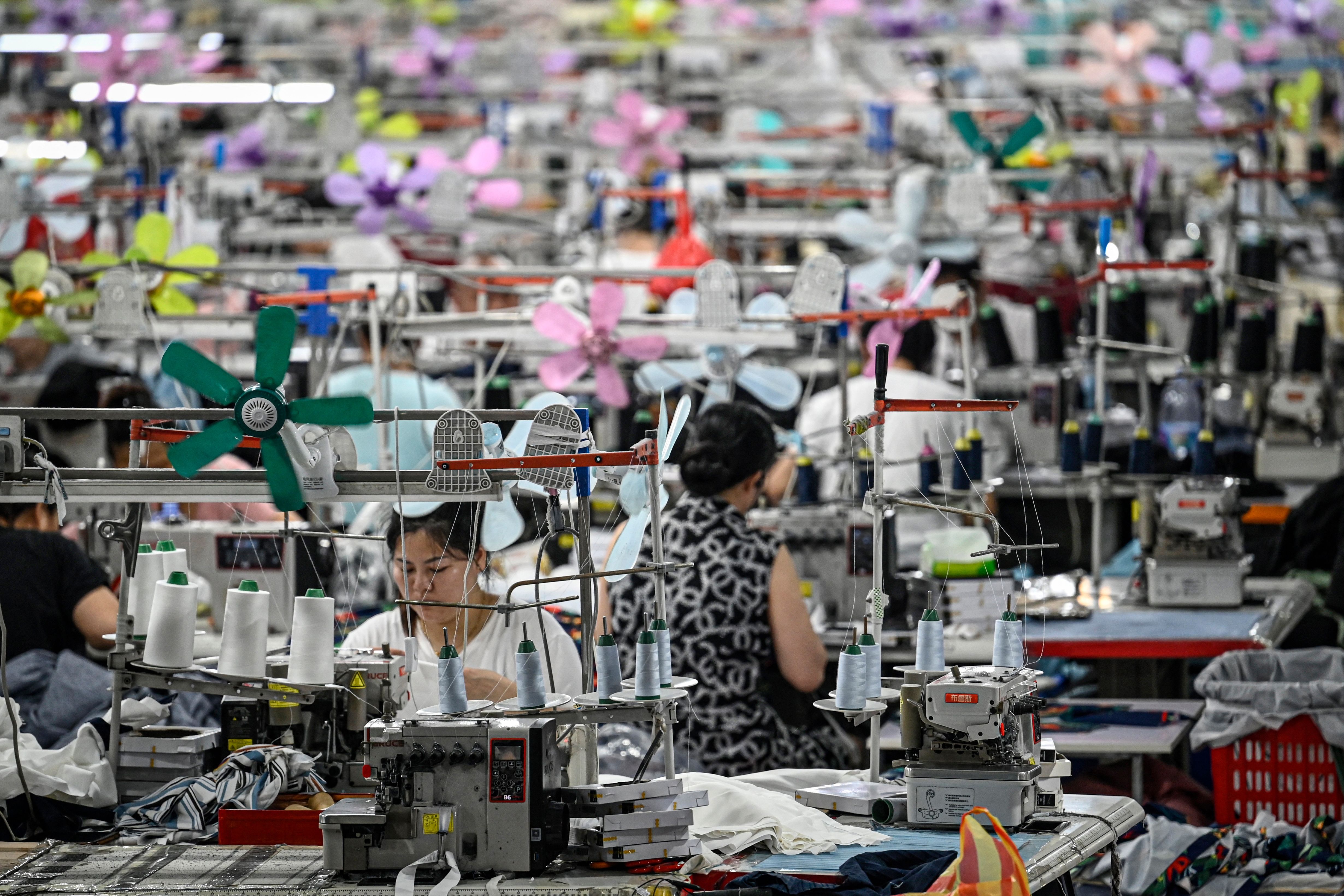
  • Overproduction in China
    Commentary
    What’s New about Involution?

    “Involution” is a new word for an old problem, and without a very different set of policies to rein it in, it is a problem that is likely to persist.

      Michael Pettis

  • Commentary
    The Chinese Investment Riddle: What Cities Reveal

    While China's investment story seems contradictory from the outside, the real answers to Beijing's high-quality growth ambitions are hiding in plain sight across the nation's cities.

      Yuhan Zhang

  • Commentary
    Using China’s Central Government Balance Sheet to “Clean up” Local Government Debt Is a Bad Idea

    China's stimulus addiction cannot go on forever. Beijing still has policy space to clean up the country's massive debt issue, but time is running short.

      Michael Pettis

  • Image of Chinese Yuan
    Commentary
    Why China Should Revalue the Renminbi—And Why It Can’t Easily Do So

    A quick look at the complexities behind Beijing’s enduring Catch-22 situation with revaluing the Renminbi, despite advantages of a stronger currency.

      Michael Pettis

Get more news and analysis from
Carnegie China
Carnegie China logo, white
  • Research
  • About
  • Experts
  • Events
  • Contact
  • Careers
  • Privacy
  • For Media
Get more news and analysis from
Carnegie China
© 2026 Carnegie Endowment for International Peace. All rights reserved.