• Commentary
  • Research
  • Experts
  • Events
Carnegie China logoCarnegie lettermark logo
{
  "authors": [
    "Michael Pettis"
  ],
  "type": "legacyinthemedia",
  "centerAffiliationAll": "dc",
  "centers": [
    "Carnegie Endowment for International Peace"
  ],
  "collections": [],
  "englishNewsletterAll": "asia",
  "nonEnglishNewsletterAll": "",
  "primaryCenter": "Carnegie Endowment for International Peace",
  "programAffiliation": "AP",
  "programs": [
    "Asia"
  ],
  "projects": [],
  "regions": [
    "Western Europe"
  ],
  "topics": [
    "Economy",
    "Trade"
  ]
}
Source: Getty

In The Media

A Deficit Driven by Excess Consumption Must Eventually Reverse

Trade deficits generated by credit-fueled consumption are unsustainable, and can be reversed by either shifts in the policies of surplus-producing countries abroad or by crippling austerity at home.

Link Copied
By Michael Pettis
Published on Dec 16, 2011

Source: Economist

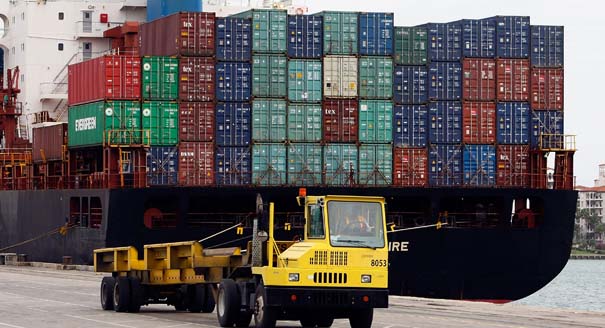
A Deficit Driven by Excess Consumption Must EventuTrade deficits, or more concretely current account deficits, have to be financed by net capital inflows, and it is really the cause of the deficit and the nature of the financing that determines whether or not persistent trade deficits are harmful. If a country is running a trade deficit mainly because domestic investment levels are very high, the high investment levels should generate enough growth in the economy that the costs of servicing the foreign capital inflow can easily be covered. In that case many years of trade deficits are unlikely to be a problem. 

If a country is running large and persistent trade deficits, however, because a surge in domestic credit has boosted consumption levels excessively and so reduced savings levels, then the resulting increase in debt is clearly unsustainable and will have eventually to be resolved by a reversal in the trade deficit. This is the problem countries like Spain are facing. What is often not recognised is that the credit-fueled consumer boom in Spain was actually caused as much by consumption-repressing policies in Germany as by domestic distortions, and so without a reversal in German polices (and surplus countries historically never accept their responsibility for having created trade distortions), the only way Spain can resolve the persistent trade deficits is via default, devaluation, or very high levels of unemployment for many years. This is a classic kind of "bad" persistent trade deficit.

About the Author

Michael Pettis

Nonresident Senior Fellow, Carnegie China

Michael Pettis is a nonresident senior fellow at the Carnegie Endowment for International Peace. An expert on China’s economy, Pettis is professor of finance at Peking University’s Guanghua School of Management, where he specializes in Chinese financial markets. 

    Recent Work

  • Commentary
    What’s New about Involution?

      Michael Pettis

  • Commentary
    Using China’s Central Government Balance Sheet to “Clean up” Local Government Debt Is a Bad Idea

      Michael Pettis

Michael Pettis
Nonresident Senior Fellow, Carnegie China
Michael Pettis
EconomyTradeWestern Europe

Carnegie does not take institutional positions on public policy issues; the views represented herein are those of the author(s) and do not necessarily reflect the views of Carnegie, its staff, or its trustees.

More Work from Carnegie China

  • Commentary
    Today’s Rare Earths Conflict Echoes the 1973 Oil Crisis — But It’s Not the Same

    Regulation, not embargo, allows Beijing to shape how other countries and firms adapt to its terms.

      Alvin Camba

  • Commentary
    How China’s Growth Model Determines Its Climate Performance

    Rather than climate ambitions, compatibility with investment and exports is why China supports both green and high-emission technologies.

      Mathias Larsen

  • Overproduction in China
    Commentary
    What’s New about Involution?

    “Involution” is a new word for an old problem, and without a very different set of policies to rein it in, it is a problem that is likely to persist.

      Michael Pettis

  • Commentary
    The Chinese Investment Riddle: What Cities Reveal

    While China's investment story seems contradictory from the outside, the real answers to Beijing's high-quality growth ambitions are hiding in plain sight across the nation's cities.

      Yuhan Zhang

  • Commentary
    Using China’s Central Government Balance Sheet to “Clean up” Local Government Debt Is a Bad Idea

    China's stimulus addiction cannot go on forever. Beijing still has policy space to clean up the country's massive debt issue, but time is running short.

      Michael Pettis

Get more news and analysis from
Carnegie China
Carnegie China logo, white
  • Research
  • About
  • Experts
  • Events
  • Contact
  • Careers
  • Privacy
  • For Media
Get more news and analysis from
Carnegie China
© 2026 Carnegie Endowment for International Peace. All rights reserved.