

In The Media
Martha Brill Olcott
{
  "authors": [
    "Martha Brill Olcott"
  ],
  "type": "legacyinthemedia",
  "centerAffiliationAll": "dc",
  "centers": [
    "Carnegie Endowment for International Peace"
  ],
  "collections": [],
  "englishNewsletterAll": "ctw",
  "nonEnglishNewsletterAll": "",
  "primaryCenter": "Carnegie Endowment for International Peace",
  "programAffiliation": "russia",
  "programs": [
    "Russia and Eurasia"
  ],
  "projects": [],
  "regions": [
    "Central Asia",
    "Kazakhstan"
  ],
  "topics": [
    "Political Reform",
    "Democracy",
    "Economy"
  ]
}
Source: Getty
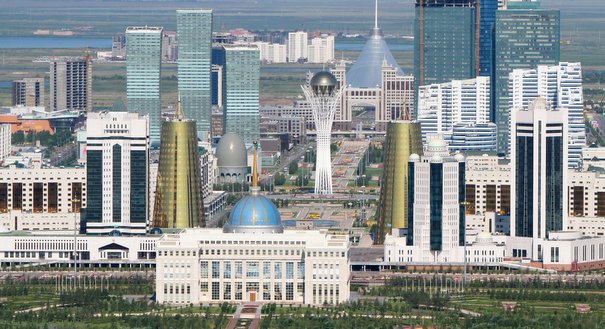
Twenty years after its independence from the Soviet Union, Kazakhstan has made a smooth transition to a middle income country and advanced a foreign policy that could make it a vital bridge between Europe and Asia.
Source: Diplomatic Courier

While sometimes frustrating Kazakhstan’s pro-democracy activists, under the leadership of its four-term president, Nursultan Nazarbayev, Kazakhstan has seen no major strife, despite its ethnic and religious diversity.
Kazakhstan was initially disadvantaged by being land locked. To compensate, it has taken advantage of all the bilateral and multilateral funding available for infrastructure improvements. These improved roads have made Kazakhstan an important transportation corridor in NATO’s Northern Distribution Network supporting military operations in Afghanistan.
Kazakhstan inherited the world’s fourth largest nuclear arsenal. President Nazarbayev’s decision to give up these weapons brought him international stature. His decision to dispose of them with Washington’s help served as a defining moment in the U.S.-Kazakh relationship. With U.S backing, Kazakhstan has remained a vocal supporter of nuclear disarmament and in the peaceful use of uranium.
Kazakhstan also inherited a Soviet-era social welfare system nearing collapse. In response, it overhauled its pension system, giving citizens the choice of private and public plans. It modernized health care and education systems, with private sector services now existing alongside public ones. The entire population has access to coverage from the social welfare net, although the quality of services is not yet uniform across the country.
Home to a hundred nationalities, Kazakhstan experienced no bloodshed at independence. The Kazakh government is committed to building a multi-ethnic and multi-confessional secular state in which Kazakh would be the national language, but in which Russian would remain a language of international communication.
Kazakhstan’s survival required a loyal citizenry, which accepted the legitimacy of Kazakhstan as a state and respected the authority of its government. But Kazakhstan’s citizens wanted very different and potentially conflicting things. For ethnic Kazakhs the creation of Kazakhstan was a form of nationhood restored, but for the rest, Kazakhstan was simply the territorial unit in which they lived. This has led to a go-slow approach to political and social change.
The division of assets at independence led to crony capitalism reaching up to the top echelons of power. But over the past decade Kazakhstan has sought to emulate many of the best practices of resource rich states. Prosecution of government officials for corruption has increased, although, as the Kazakh government itself admits, a lot more needs to be done.
Kazakhstan now has an international presence. In recent years Kazakhstan has chaired the OSCE (Organization of Security and Cooperation in Europe), the OIC (Islamic Cooperation Organization) and was the founder of CICA (Conference on Interaction and Confidence Building Measures in Asia), whose chairmanship is now exercised by Turkey. With a confidence sparked by the challenges already met, President Nazarbayev and Kazakhstan’s leadership have laid out an ambitious agenda for the next 10 years designed to make Kazakhstan one of the 50 top economies in the world.
Kazakhstan is sure to face further challenges in meeting these targets. Most striking is that of political transition. While the face of the governing Kazakh elite grows more youthful every year, power must still eventually pass from President Nazarbayev to a new leader and from the current elite to a generation raised in independent Kazakhstan. There are likely to be differences in values between generations, not just among the elite but within the population, and the kind of political institutional choices Kazakhstan makes in the next few years could make it easier for Kazakhstan to withstand a possible values gap.
A multi-party system, a stronger parliament, a Cabinet of Ministers and Prime Minister answerable to parliament, are all ways to smooth the process of generational change. President Nazarbayev and other key members of the country’s leadership are committed to the goal of expanding political competition. But it is not clear that they will develop into democratic institutions quickly enough to serve as effective counterweights for Kazakhstan’s future presidents, who are unlikely to enjoy the same political support as its founding leader.
Given its 20-year track record in successfully dealing with the unexpected, one can be optimistic that Kazakhstan’s leaders will find ways to manage any of the geopolitical, political, economic and social challenges that they may need to confront.
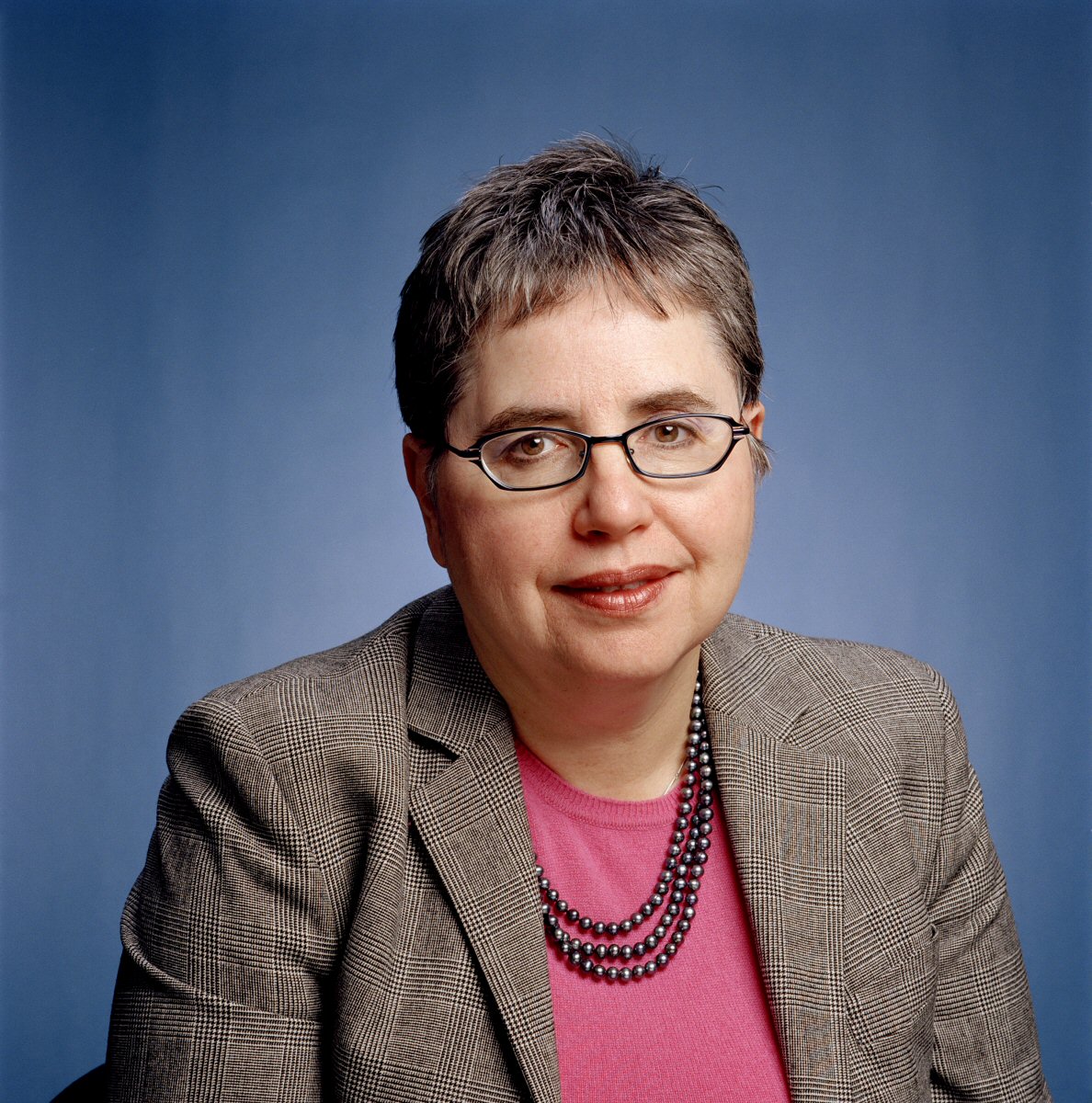
Former Senior Associate, Russia and Eurasia Program and, Co-director, al-Farabi Carnegie Program on Central Asia
Olcott is professor emerita at Colgate University, having taught political science there from 1974 to 2002. Prior to her work at the endowment, Olcott served as a special consultant to former secretary of state Lawrence Eagleburger.
Recent Work
Martha Brill Olcott
Martha Brill Olcott
Carnegie does not take institutional positions on public policy issues; the views represented herein are those of the author(s) and do not necessarily reflect the views of Carnegie, its staff, or its trustees.

China’s political future will be shaped between now and next October. As the Communist Party enters its intense “campaign season” to prepare for a major political transition in 2027, reading Beijing's actions and responses may become more difficult as domestic politics weigh on its behavior more than usual.

Damien Ma

China has showcased its engineering prowess with small modular reactor demonstration projects. But turning these technological achievements into commercial success will be a greater challenge.

Tong Zhao

The Plaza Accord was not an externally imposed punishment of Japan but part of a broader restructuring that Japanese economists and policymakers themselves recognized was necessary. Its effects were undermined, however, when Tokyo responded to the resulting slowdown with policies that exacerbated investment, credit expansion, and the very imbalances the adjustment was intended to resolve.

Michael Pettis
China’s banking crisis in the 2000s was resolved by transferring the costs to households through financial repression—a decision that recapitalized the banks while exacerbating the structural imbalances that continue to shape the Chinese economy today.
Michael Pettis
In the latest Five-Year Plan, the Chinese president cements the shift to an innovation-driven economy over a consumption-driven one.
Damien Ma