

In The Media
Lilia Shevtsova
{
  "authors": [
    "Lilia Shevtsova"
  ],
  "type": "legacyinthemedia",
  "centerAffiliationAll": "",
  "centers": [
    "Carnegie Endowment for International Peace",
    "Carnegie Russia Eurasia Center"
  ],
  "collections": [],
  "englishNewsletterAll": "",
  "nonEnglishNewsletterAll": "",
  "primaryCenter": "Carnegie Russia Eurasia Center",
  "programAffiliation": "",
  "programs": [],
  "projects": [],
  "regions": [],
  "topics": []
}
Source: Getty
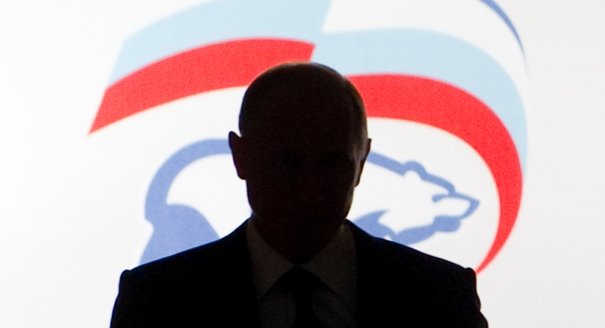
Without major political and social changes, Russia risks complete disintegration. Transforming Russia requires eliminating personalized power, the merger of state and business, and the country's imperial ambitions.
Source: Chatham House

The protests following the Russian parliamentary elections in December 2011, the largest since the collapse of the Soviet Union, shattered a status quo that had taken shape over the last decade and signalled that the country is entering turbulent waters. Russia finds itself caught in a trap: the 2011–12 parliamentary and presidential elections are intended to perpetuate a personalized power system that has become the source of decay. However, the top-down model of rule and its ‘personifier’ – Vladimir Putin – are already rejected by the most dynamic and educated urban sectors of the population.
It is hard to predict what consequences this will have: will it lead to the system’s disintegration and even to the collapse of the state through growing rot and atrophy, or will the last gasp of personalized power end with a transformation that sets Russia on a new foundation? One thing is apparent: transformation will not happen in the shape of reform from above or within the system; if it does occur it will be the result of the deepening crisis and pressure from society.Over the years, Russia’s ruling elite under Boris Yeltsin, Vladimir Putin and Dmitry Medvedev has put together what looks superficially like a very effective model for preserving the traditional Russian system resting upon three pillars – personalized power, its merger with property and an imperial outlook. This ‘trinity’ has been adapted to the new global and domestic reality, and to limited state resources. A number of mechanisms are used today to keep the personalized power system in place. Chief among them are:
Former Senior Associate, Russian Domestic Politics and Political Institutions Program, Moscow Center
Shevtsova chaired the Russian Domestic Politics and Political Institutions Program at the Carnegie Moscow Center, dividing her time between Carnegie’s offices in Washington, DC, and Moscow. She had been with Carnegie since 1995.
Recent Work
Lilia Shevtsova
Lilia Shevtsova
Carnegie does not take institutional positions on public policy issues; the views represented herein are those of the author(s) and do not necessarily reflect the views of Carnegie, its staff, or its trustees.