

Report
Shin-pei Tsay, Victoria Herrmann
{
  "authors": [
    "Shin-pei Tsay"
  ],
  "type": "legacyinthemedia",
  "centerAffiliationAll": "dc",
  "centers": [
    "Carnegie Endowment for International Peace"
  ],
  "collections": [],
  "englishNewsletterAll": "ctw",
  "nonEnglishNewsletterAll": "",
  "primaryCenter": "Carnegie Endowment for International Peace",
  "programAffiliation": "SCP",
  "programs": [
    "Sustainability, Climate, and Geopolitics"
  ],
  "projects": [],
  "regions": [
    "North America",
    "United States"
  ],
  "topics": [
    "Climate Change"
  ]
}
Source: Getty
Ushering in a low-carbon, integrated transportation system is the key to navigating the pitfalls of global oil markets.
Source: Hill

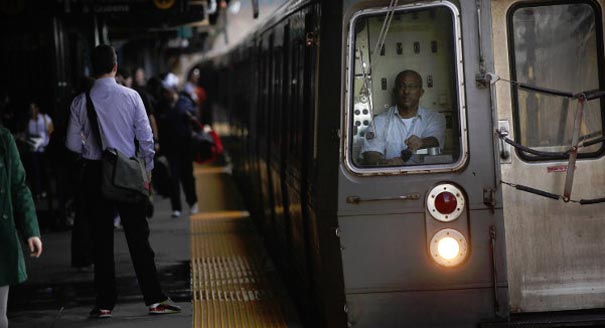
The connection between transportation and oil is undeniable. The U.S. transportation system is 94-percent dependent on oil, and the sector burns through 70 percent of U.S. oil consumption and 15 percent of world oil consumption. The inefficiency of the transportation system makes U.S. businesses and all Americans particularly vulnerable to gas prices.
Despite claims that increasing oil drilling in the United States would bring down the price at the pump, more than 80 percent of the price of gas is determined by the global market. That is why, even though domestic oil production has actually increased by 723,000 barrels per day on an annual average between 2008 and 2011, U.S. gas prices have gone up.Given the scale of the world oil market, government policy can best reduce the burden of gas prices by providing options to reduce oil consumption—period. Though Washington has taken steps to incentivize the development of more fuel-efficient, low-carbon vehicles and a broader range of alternative fuels at the same time as stepping up domestic oil production, it has so far ignored a major opportunity: increasing public transit investments.
Broad signs of support for public transit proliferate. A new study conducted by the American Public Transportation Association found that public transit ridership has increased across the country, even in rural areas. Last year, Americans took 10.4 billion trips on public transit, the second highest year of annual ridership since 1957 (the highest was in 2008, at the start of the recession). This increase occurred even though only 46 percent of the American public has access to public transit.
Consumers have signaled other pro-transit trends. Vehicle miles traveled is on a downward trend: on a per capita basis this figure was 10,100 in 2004 compared to 9,500 in 2009. In 2009, teens between the ages of 16 and 19 held 200,000 fewer drivers licenses than teens of the same age in 2000. More and more people are moving to urban areas, where compact land uses and higher density facilitate transit service. Location efficiency -- where there is a high concentration of housing, jobs and amenities in a geographic area -- have been shown to save households up to $2,500 per year in transportation and housing costs compared to places with weaker location efficiency.
Economic benefits aren’t limited to individuals. Property values and retail rents tend to increase faster in areas with transit access. Times Square in Manhattan, a transit hub in the region bringing 300,000 daily commuters into a central business district, was one of the few neighborhoods in New York City that did not see its rent per square foot decrease during the economic recession. In fact, in line with the notion that every transit trip starts with a walking trip, the recent pedestrianization of Times Square helped local businesses with the uptick in foot traffic as much as it contributed to raising property values.
And all this happened with a lack of attention to improving public transit nationally.
Not everyone needs to live or work in a neighborhood like Times Square, but every U.S. citizen deserves mobility options that don’t lock them into high transportation costs and anchor the country to oil. A 2007 study found that if public transit investments were expanded so that ridership doubled, total national oil savings could be as much as 147 million barrels of oil per year.
With a standing opportunity to pass a new transportation bill, Congress can ill afford to miss this chance. Even the best case political scenario of maintaining transit funding at current levels is inadequate. The United States needs to unlock America’s hidden energy reserve—and this can only be found in a wholly integrated twenty-first century transportation system built on the bedrock of public transit.
It’s not about finding new sources of oil, but using oil more efficiently -- this is what will actually help the average American.

Former Nonresident Associate, Energy and Climate Program
Shin-pei Tsay was a nonresident associate in the Energy and Climate Program at the Carnegie Endowment for International Peace.
Recent Work
Shin-pei Tsay, Victoria Herrmann
Shin-pei Tsay, Victoria Herrmann
Carnegie does not take institutional positions on public policy issues; the views represented herein are those of the author(s) and do not necessarily reflect the views of Carnegie, its staff, or its trustees.

But their "principal to principal" model will only be as effective as the political strength of each leader back home.

Damien Ma

U.S. unpredictability has allowed China to capitalize on its positioning as the “responsible great power”. Paradoxically, the more China wins the perception game, the more likely expectations will rise for Beijing to deliver not just words but to demonstrate with its deeds.

Chong Ja Ian

For Malaysia, the conjunction that works is “and” not “or” when it comes to the United States and China.

Elina Noor
Regulation, not embargo, allows Beijing to shape how other countries and firms adapt to its terms.

Alvin Camba
Beijing believes that Washington is overestimating its own leverage and its ability to handle the trade war’s impacts.


Rick Waters, Sheena Chestnut Greitens