

Q&A
- +1
Sheena Chestnut Greitens, Oriana Skylar Mastro, Yukon Huang, …
{
  "authors": [
    "Yukon Huang"
  ],
  "type": "legacyinthemedia",
  "centerAffiliationAll": "dc",
  "centers": [
    "Carnegie Endowment for International Peace",
    "Carnegie China"
  ],
  "collections": [],
  "englishNewsletterAll": "asia",
  "nonEnglishNewsletterAll": "",
  "primaryCenter": "Carnegie China",
  "programAffiliation": "AP",
  "programs": [
    "Asia"
  ],
  "projects": [],
  "regions": [
    "East Asia",
    "China"
  ],
  "topics": [
    "Political Reform",
    "Economy"
  ]
}
Source: Getty
China needs to tap the repressed potential in its private sector and speed urbanization.
Source: Wall Street Journal

Beijing is wavering because this would be the third major stimulus in 15 years and the previous two yielded different results. The first, in the aftermath of the 1997 Asian crisis, was a major success. China then moved quickly to build infrastructure in the interior regions and also implement structural reforms that boosted productivity. In contrast, the 2008 package of 4 trillion yuan ($630 billion) pushed credit above sustainable levels, exacerbated inflation and created a property bubble.
There are some signs Beijing is attempting another 2008-style effort, and that has the China bears already pouncing on these policies. Officials are accelerating new mega-projects, which critics point out are hardly needed. This is exemplified by the recent approval of a $10 billion steel plant in Guangdong province at a time when this industry suffers from excess capacity. Reports also suggest another credit surge.These moves only spur investment, critics say, when what China needs is a consumption-based approach. Yet this rejoinder is predicated on the widespread belief that growth is unbalanced: The share of consumption in the economy is too low, and that of investment—nearly 50% of GDP—too high.
The critics are misplaced in their recommendation, because their assumption is off the mark. The objective here should not be about the share of consumption in the economy but its sustained growth over time. On this metric, China has done well. High investment rates coupled with rapid growth have actually allowed household consumption to rise 8% a year for two decades. This is the highest sustained rate of consumption increase in any major economy.
So consumption is by no means repressed, hence the authorities shouldn't go out of their way to artificially pump it up. China is likely to grow 6-7% the next two decades. If this future growth is of a higher quality— more efficient, environmentally sustainable and equitable—consumption can continue to grow at 8% annually. What's more, China's labor force is shrinking and wage increases are running at 15% annually, which means the country's much-vaunted workers could soon become bigger consumers.
This isn't to say that Beijing would be right to revive the economy with a credit-fueled stimulus, a la 2008. The above-mentioned labor trends also suggest the government shouldn't be as concerned with employment as it used to be. Senseless loans for new luxury residences won't help anyone. Rather it could bring the inflation and property-bubble genie back out of the bottle.
China should instead be selectively focusing on structural reforms, along with related expenditures that support these reforms. It took this tack after 1997 and successfully helped the country's longer-term requirements.
This time, what China needs in the long term is to make the economy more efficient and improve the standard of living. Two themes are hence strategic: tapping the repressed potential in the private sector and allowing urbanization to speed up.
It's true that the post-1997 reforms and preparation for WTO accession created a competitive economy, but mostly for the private sector. State-owned enterprises are still insulated from pressures and hence earn monopoly profits. Some activities are reserved for the state even if they are not really of national strategic importance. It's time to do away with the regulatory barriers as well as limited access to financing and land that essentially make it difficult, if not impossible, for private firms to enter these activities.
In this regard, recent announcements about providing credit to small- and medium-sized companies—the so-called Wenzhou pilot—are in the right direction. But rather than just providing temporary financial help, addressing fundamental issues through deregulation would establish a permanent incentive for private investment.
Next, Beijing can help with urbanization. This is one of the most long-lasting trends of Chinese growth, yet the hukou system of permits still forbids most rural workers from permanently migrating to urban areas. By removing such restrictions, the government can increase worker productivity and stimulate consumption. It will also reduce income disparities since urban incomes are more than three times that of rural households—extreme by international standards.
Beijing should also strengthen urban land management to rationalize the location of commercial activities and housing development. A more ambitious urbanization initiative would include more affordable housing programs, as well as fiscal support for health insurance and pension systems that are portable enough to not impede labor movement.
China has grown impressively so far, but now it needs an extra push to keep pulling its citizens out of poverty. Without pushing unnecessary buttons like "domestic demand," a mix of these reforms opens up the possibility for China to move quickly to a sustainable growth trajectory.
This article was originally published in the Wall Street Journal.

Senior Fellow, Asia Program
Huang is a senior fellow in the Carnegie Asia Program where his research focuses on China’s economy and its regional and global impact.
Recent Work


Sheena Chestnut Greitens, Oriana Skylar Mastro, Yukon Huang, …


Yukon Huang, Isaac B. Kardon, Matt Sheehan
Carnegie does not take institutional positions on public policy issues; the views represented herein are those of the author(s) and do not necessarily reflect the views of Carnegie, its staff, or its trustees.

The Plaza Accord was not an externally imposed punishment of Japan but part of a broader restructuring that Japanese economists and policymakers themselves recognized was necessary. Its effects were undermined, however, when Tokyo responded to the resulting slowdown with policies that exacerbated investment, credit expansion, and the very imbalances the adjustment was intended to resolve.

Michael Pettis

The nuclear relationship between China and the United States is increasingly shaped by widening perception gaps rather than deliberate strategic design.

Tong Zhao
China’s banking crisis in the 2000s was resolved by transferring the costs to households through financial repression—a decision that recapitalized the banks while exacerbating the structural imbalances that continue to shape the Chinese economy today.
Michael Pettis

Chinese biotech companies have been on the receiving end of U.S. economic coercion. Yet their responses have differed significantly because firm and state interests are not uniformly aligned. For Washington, treating all Chinese tech firms the same, irrespective of their actual interests, risks pushing them farther into Beijing’s corner.

Xue Gong
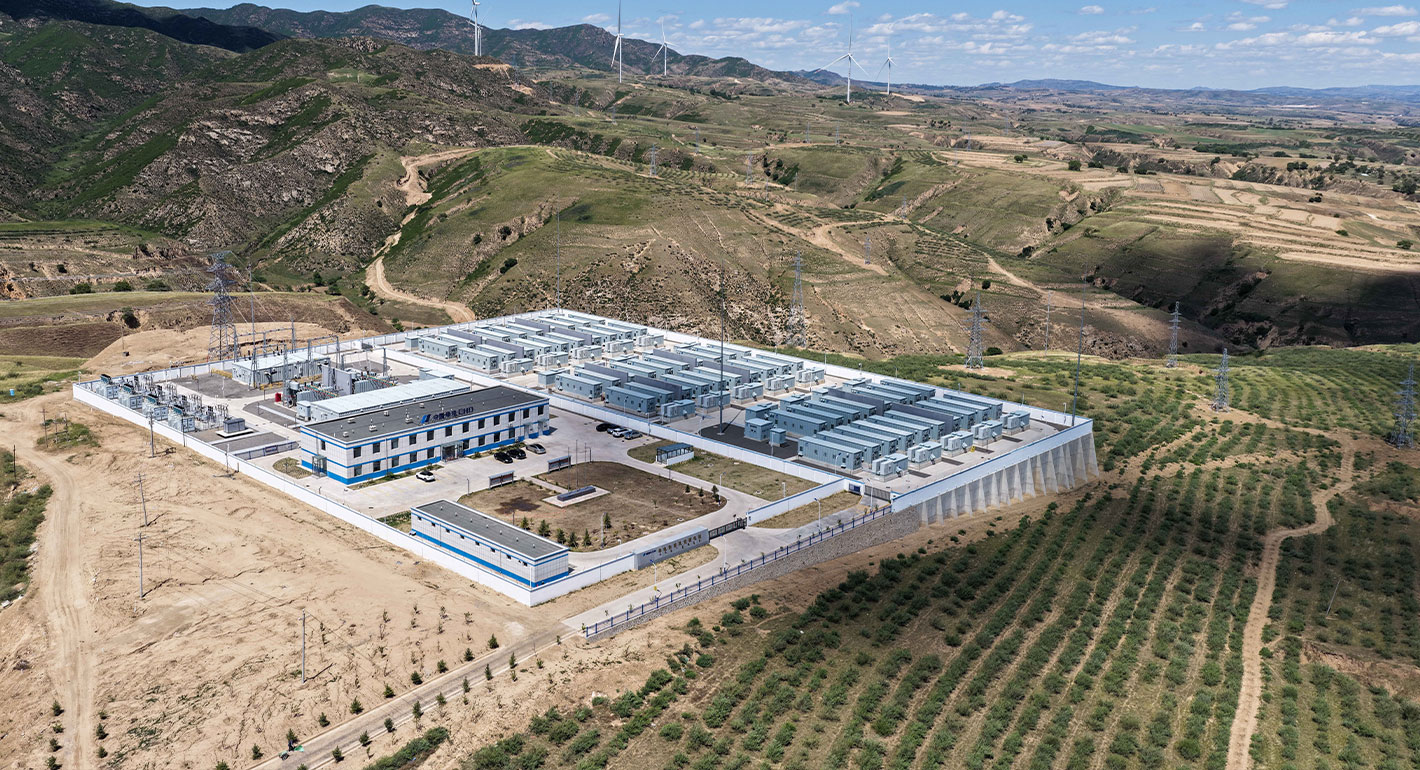
China’s latest energy plan explicitly calls for integrating data centers into the electricity system, particularly connecting them to green energy. It appears Beijing wants to use compute as a source of domestic demand to absorb renewables excess capacity.

Damien Ma