

Paper
The nuclear relationship between China and the United States is increasingly shaped by widening perception gaps rather than deliberate strategic design.
Tong Zhao
{
  "authors": [
    "David Burwell",
    "Deborah Gordon"
  ],
  "type": "commentary",
  "centerAffiliationAll": "dc",
  "centers": [
    "Carnegie Endowment for International Peace"
  ],
  "collections": [
    "Global Ten: Challenges and Opportunities for the President in 2013"
  ],
  "englishNewsletterAll": "ctw",
  "nonEnglishNewsletterAll": "",
  "primaryCenter": "Carnegie Endowment for International Peace",
  "programAffiliation": "SCP",
  "programs": [
    "Sustainability, Climate, and Geopolitics"
  ],
  "projects": [
    "Carnegie Oil Initiative"
  ],
  "regions": [
    "North America",
    "United States"
  ],
  "topics": [
    "Climate Change"
  ]
}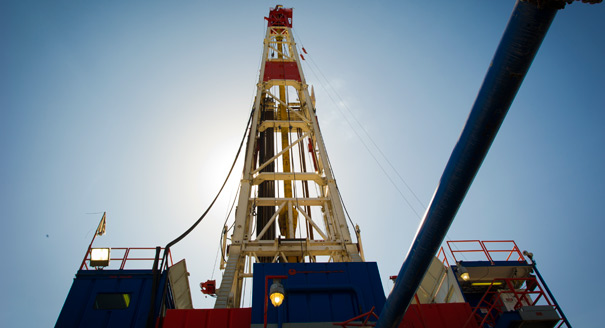
Source: Getty
President Obama must work with private, public, and nongovernmental organization leaders to develop a transparent carbon-pricing structure that advances national energy, economic, and climate security.
The United States is awash with new energy. But previously untapped sources of oil and gas can have long-term impacts on climate if their development is not properly managed. Strong and effective presidential leadership is necessary if the United States is to make the most of its new resources. President Obama must work with private, public, and nongovernmental organization leaders to develop a transparent carbon-pricing structure that advances national energy, economic, and climate security.
Technological breakthroughs in energy development are creating access to more domestic oil and gas resources than at any time in U.S. history. Optimism about the nation’s energy future is soaring as new opportunities emerge to obtain fuel from previously untapped unconventional oil and gas. Using only known energy development technologies, there is at least as much unconventional oil and gas accessible today as there is conventional supply.
U.S. net recoverable shale gas reserves in particular have expanded from enough for about a decade to well over one hundred years at current rates of consumption. Oil sources in the United States and Canada are now estimated at over 3.5 trillion barrels. Recovering these new oils—many of them unconventional in either their makeup (such as oil sands) or location (such as oil trapped in shale rock)—is tied to the future price of oil.
This new oil and gas wealth presents the United States with a significant opportunity to create jobs, stimulate its economy, reduce the trade deficit, and improve its global economic competitiveness. However, realizing the full potential of these new energy sources and reaping the short-term economic rewards of this energy bonanza require presidential leadership and new policies. The highest levels of government must prioritize efforts to address these public objectives while ensuring market stability, protecting national security, and addressing climate change.
There is at least as much unconventional oil and gas accessible today as there is conventional supply.
Historically, energy has been a policy priority only during moments of crisis, such as the Organization of the Petroleum Exporting Countries’ oil embargo and the Iranian Revolution of the 1970s. But the United States must focus on national energy policy now, when times are good, to make sure it is closely aligned with the imperative of climate protection. Policy attention in times of plenty affords more room for maneuver in the short term and more careful development of long-term strategies to advance key national objectives.
America has meaningful new oil and gas choices. Establishing climate objectives for the U.S. energy bonanza will require a durable policy framework backed by presidential leadership.
America is experiencing what is termed a “shale gale.” From 2005 to the present, natural gas production has increased by 28 percent, with shale gas the largest contributor to this growth. In the 2012 Annual Energy Outlook, the Energy Information Administration forecasts that U.S. gas resources could swell to 2,203 trillion cubic feet by 2035. One-half of these massive gas reserves are expected to be shale gas (see figure 1).

Beyond the United States, initial estimates put the quantity of technically recoverable shale gas at 5,760 trillion cubic feet. To put this resource estimate into perspective, as of 2010, world proven natural gas reserves amounted to 6,600 trillion cubic feet. The addition of just identified shale gas alone more than doubles proven gas reserves.
In the past couple of years there have also been surprising discoveries of new tight oil resources throughout the United States—continuous, nonpooled oil trapped in source rock that is difficult to extract and must be liberated by hydraulic fracturing, a procedure in which fluids force rock formations open, allowing oil (and gas) to flow out. Over the next decade, sustained development of these tight oils, in combination with the ongoing development of ultradeep offshore resources, is expected to push domestic crude oil production to nearly 7 million barrels per day (mbpd) by 2020—a level not seen in decades. By 2035, if high oil prices prevail ($187–200 per barrel in 2010 dollars), U.S. oil production could rise to 15 mbpd. If prices are low ($53–62 per barrel in 2010 dollars), U.S. oil production is projected to be 11 mbpd. Despite the uncertainty driving the wide range of future oil prices, the U.S. Energy Information Administration’s oil production projections are relatively narrow. Moreover, the prospect for new oil is upward of 20 mbpd when Canada’s heterogeneous oil supply potential is factored in (see figure 2).

This rapid increase in diverse unconventional oil and gas resources, which are found on federal and private lands, presents the United States with important new energy choices. With this vast and varied array of oil and gas options comes the need to prioritize prudently. Which resources merit early development, and which energy sources need more assessment to manage safely? Which oil and gas resources have the greatest climate tradeoffs? Which reserves are best saved for future generations? America’s future security depends on selecting wisely in exploiting this new oil and gas wealth.
Undertaking that kind of planning in the good times, and not in the midst of a crisis, opens up a whole new set of possibilities. For example, resolving boundary disputes and oil and gas development issues among countries bordering the Arctic Ocean in ways consistent with the terms of the United Nations Convention on the Law of the Sea can preempt future conflicts in this new energy frontier. America’s leaders can take the long view and work to sustain the health, diversity, and productivity of public lands for the use and enjoyment of present and future generations. And a slower economy takes the pressure off hasty oil and gas production decisions, opening the door for prudent oversight before demands ramp back up.
Thanks to this new energy bonanza, U.S. leaders have the time to consider the wisest courses of action. With more time and more energy resources, policymakers can choose how much access to provide to public lands, which royalty rates to apply, which infrastructure to permit, which global governance structures to put in place, and which conditions to put on energy resource extraction. The pressure to rush decisions is not a driving factor in the face of oil and gas abundance.
Fossil fuels are the largest contributors to global carbon emissions. So while new energy resources present tremendous economic opportunities, their full benefits can only be realized if total carbon emissions continue to be reduced from present levels as production increases.
Global warming is a primary threat to personal security, economic stability, and public health. It also contributes to sea-level rise, which increases storm surge along U.S. coastlines with potentially catastrophic results. It raises surface temperatures, leading to more wildfires, tornadoes, and windstorms. It causes tropical diseases to migrate northward, infecting both ecosystems and people with little or no resistance to these new pests and microbes. More heat also means more energy in the atmosphere and oceans, thus increasing the velocity, and devastation, of both inland and coastal storms.
America’s future security depends on selecting wisely in exploiting its new oil and gas wealth.
The phenomenon is predominantly the result of the accumulation of carbon dioxide (CO2) emissions in the atmosphere, and fossil fuel combustion is responsible for the majority of those emissions. There is no scientific debate on the facts. According to the Carbon Dioxide Information and Analysis Center, pre-industrial CO2 levels were about 280 parts per million (ppm) while current levels are greater than 390 ppm, far exceeding the natural range over the last six hundred and fifty thousand years. Once released, carbon dioxide emissions last for hundreds of years, and the climate recovers only slightly over thousands of years. This effectively permanent influence—in terms of human lifespans—underscores why reducing carbon emissions is a necessity.
Accelerated U.S. and global production and use of new stores of unconventional oil and gas will further increase the amount of carbon dioxide in the atmosphere at a time when climate science indicates that deep reductions are imperative to avoid a catastrophic rise in global temperatures.
Moreover, unconventional oils and gases have widely varying carbon footprints due to their different carbon contents, energy-intensive extraction methods, and extensive processing requirements. For instance, extra-heavy oils contain carbon residues that form coal-like products that when combusted emit 40 percent more carbon dioxide than gasoline and 10 percent more than coal. Their development has effects outside of U.S. borders as well, as co-products like petroleum coke (also referred to as pet coke) are exported to Asia, often with disastrous environmental consequences.
The only alternative is a carbon tax. Now, more than ever, this tax policy is needed to regulate the development of these resources. By adding a surcharge on the carbon created in producing, processing, transporting, and burning different types of oil and gas, priorities can be set for which fossil fuels to extract and which to keep safely stored underground—the more carbon intensive the fossil fuel, the higher the price of development. Carbon pricing also helps manage emissions leakage—through pet coke production, hydrogen addition, methane venting, flaring, or otherwise—from oil and gas. A carbon tax must be implemented before massive infrastructure investments and the unbridled development of these resources reach a point of no return.
A carbon tax must be implemented before massive infrastructure investments and the unbridled development of new oil and gas resources reach a point of no return.
Today’s oil and gas markets do not efficiently allocate these energy resources because the social costs of fossil fuel development are presently overlooked. Carbon pricing protects public health and welfare, bolsters national security, mitigates ecological risks, reduces waste throughout the value chain, encourages more efficient fuel use, advances commercialization of renewable fuels, assigns the most carbon-intensive fuels to noncombustion uses, and rewards carbon-efficient, sustainable land development.
A simple yet sophisticated pricing structure must be carefully crafted to assure advancement of these important national goals. The United States cannot afford to sacrifice the long-term objectives of sustainable development and environmental security for short-term economic gain. Getting carbon prices right can advance both objectives.
The United States has much to gain from its new energy wealth provided it is managed effectively. New oil and gas reserves offer economic opportunities for industry while also providing much-needed jobs in states that suffered significant employment losses over the past few decades. Already, states with tight oil and shale gas are among those with the lowest unemployment rates—just 5 percent in Oklahoma and 3 percent in North Dakota. The gas bonanza is reported to have created tens of thousands of jobs throughout the gas-rich Appalachian states, including Pennsylvania and Ohio. Thousands more could follow.
Recent technological innovations that tap tight oils not only create jobs but also vastly increase the amount of petrochemical feedstock that can help revive the domestic chemicals industry. This could motivate a new wave of American industrial development, increasing competitiveness in international markets.
These real, durable benefits of the United States’ new energy wealth could lift the entire U.S. economy at a time when world economic growth is decelerating. Sound energy policy is needed to fully realize these benefits.
Today, America produces more natural gas than it consumes. If this trend holds, the United States could become a net exporter of liquefied natural gas within a decade. The same is true of diesel fuel, which together with pet coke has made the United States a net producer of petroleum products for the first time since 1949. A policy structure that considers the energy, economic, and climate impacts, as well as U.S. energy security and the energy needs of our trading partners, is required to make wise decisions on permit requests, export allowances, and public subsidies.
Despite potential economic benefits, challenges loom. Oil and gas prices may be increasingly volatile given the pace of technological innovation and the growing uncertainty of future global energy demands. The rush to build risks investment miscalculations—whether they involve oil and gas pipelines, heavy-oil refineries, or liquefied natural gas marine terminals. Oversupplying oil and gas capacity can push energy costs lower, while stranded infrastructure investments can push energy costs even higher.
The latter part of the twentieth century was marked by relatively stable oil and gas prices. Over the coming decades, global energy markets will become more crowded and complex, and global energy prices are likely to become less certain. Greater energy reserves could help to assuage global tensions that mount in times of real or anticipated energy imbalances.
But the new geography of oil and gas supplies—together with the changing energy infrastructure landscape—will need to realign with the dynamic nature of fuel, petrochemical, and other hydrocarbon product demands. Future economic growth in non–Organization for Economic Cooperation and Development (OECD) countries in particular will drive up demand for oil and gas, especially in the transportation sector, which is in the process of rapid motorization in such major developing economies as India, China, Brazil, and Indonesia. This, in turn, could force more production from expensive to extract and to process, though abundant, unconventional sources.
Therefore, despite growing supplies, world oil and domestic gas prices are projected by the Energy Information Administration to trend slightly upward as the cost to produce new fossil fuels rises along with global energy demands (see figures 3 and 4). The energy price trajectories will not be smooth as price uncertainty in world energy markets is expected to continue over the long term.


Energy infrastructure is highly capital intensive. Drilling rigs, refineries, pipelines, marine fleets, and other industrial equipment must be amortized over several decades to be profitable. Investing rapidly in energy infrastructure in times of energy price uncertainty raises the stakes because it is unclear whether oil and gas demand will rise or fall in the near term. This is yet another reason why thorough planning should take place in times of stability, not crisis.
The fast-paced development of unconventional oil and gas markets raises further questions about whether, in the absence of policy guidance, the private sector can maximize benefits and serve America’s broad economic interests. The private sector has developed some of these resources in a haphazard manner, leading to misguided investment. U.S. refineries, for example, were recently retrofitted to process extra-heavy oil sands from Canada and Venezuela. But these costly investments cannot handle other types of unconventional oil, such as the abundant tight oils and the condensates from the Bakken, Eagle Ford, and other new tight oil plays. This creates a mismatch between infrastructure capacities and needs.
Incompatible infrastructure is wasteful for investors. But oversupplied infrastructure can also be harmful to communities. States and localities are being required to make substantial investments in public infrastructure such as roads, water supplies, and other public services to support these projects. These ancillary public investments should be very carefully considered, through a self-reflective public process that is closely coordinated with state and federal regulatory processes. This all takes policy oversight and time.
Changes in global energy markets are raising questions about the appropriateness of continued U.S. fossil fuel subsidies. Several of these subsidies were originally enacted to stimulate oil and gas development for military needs during World War I. A century later, they are inefficient, unaffordable, and unnecessary, especially in a deficit-burdened economy. As an additional subsidy, the United States has some of the lowest royalty rates in the world.
Price volatility, infrastructure misalignment, and obsolete energy subsidies all have the potential to raise the cost of accessing, producing, processing, transporting, and refining these new unconventional energy resources. Policy is needed to provide incentives for industry to exploit these resources in a manner that increases productivity and competitiveness within the energy sector while maximizing long-term public benefits.
Reliable access to energy is a key driver of both national and international security. From a global perspective, increasing the total supply—and geographic balance—of abundant oil and gas reserves can relieve tensions between nations: it becomes one less thing to fight over. Energy reserves also expand a nation’s ability to advance its security interests in the world. The sanctions on Iran, for example, would be much more difficult for the United States to impose in the absence of its ample domestic energy supplies. From a national perspective, growing domestic energy supplies reduce oil and gas imports, thus shrinking America’s trade deficit, minimizing its need to protect far-flung energy supply lines, and leaving more U.S. dollars in domestic circulation.
Reliable access to energy is a key driver of both national and international security.
Imported oil, which reached 60 percent of U.S. consumption in 2005 before falling to 45 percent in 2011, is expected to continue to fall to 36 percent in 2035 according to the Energy Information Administration’s base case (see figure 5). Despite technological uncertainties, U.S. production of natural gas is expected to exceed consumption by early in the next decade, leading to a surplus of 5 percent by 2035 (see figure 6).


These are real benefits to U.S. energy, economic, and national security directly attributable to this new domestic energy abundance. However, these trends do not impart true energy “independence.” The United States will remain a central part of complicated global oil and gas relationships.
The security associated with new oil and gas is threatened by the paradox of plenty. It is easy to waste abundance when there are no constraints. Overdevelopment of resources can make the United States less—not more—secure. Unbridled fossil fuel extraction and consumption will elevate climate security concerns. Left in place, the hydrocarbons contained in fossil fuel resources are nature’s most effective carbon capture and sequestration mechanism, and, once tapped, the carbon dioxide released presents certain climate security challenges.
North American oil and gas discoveries enabled by recent technological breakthroughs are likely to be replicated worldwide. The rush to produce and burn newly identified stores of fossil fuels would present a major challenge to climate security as massive fossil fuel stores are developed to advance individual nations’ energy and economic agendas. This would have severe consequences in the form of rising global temperatures and would affect global security by, for example, wreaking havoc on food production and furthering the spread of disease.
For forty years, “energy independence” has been the lodestar of American politicians of every stripe. Yet, the new U.S. energy abundance should be embraced as an opportunity to integrate with—not disconnect from—expanding domestic energy markets. This will require the United States to reduce its domestic energy consumption, build up renewable energy assets, and moderate production and consumption of higher-carbon oils and their associated petroleum products. All of these goals can be achieved with a carbon tax.
These actions at home are necessary. Americans consume 17 barrels of oil annually per capita—compared to an average of 13 barrels per year across all OECD states—and 7,650 cubic feet of natural gas annually per capita—compared to 3,700 cubic feet annually per capita in the rest of the OECD. That makes the United States a top total consumer of these fossil fuels. By shrinking U.S. oil and gas imports, reducing the U.S. trade deficit, and strengthening the dollar, American policymakers will open up the opportunity to invest at home, rebuild energy-efficient infrastructure, and help protect the United States and other countries from possible climate-driven damage, including loss of life, dislocation, and property destruction.
The full promise of America’s rich, new energy endowment can only be realized through strong and effective policy leadership. Otherwise, production uncertainty and price volatility will increase as new oil and gas supplies with vastly different energy cost structures, product yields, and carbon footprints come onto the market. This price volatility could sacrifice energy diversification by crushing nascent renewable energy markets that are vitally needed to complement (and eventually compete with) fossil fuels as the world seeks to avoid potentially catastrophic impacts of climate disruption.
The full promise of America’s rich, new energy endowment can only be realized through strong and effective policy leadership.
With the space afforded by the ongoing energy boom, now is an appropriate time to develop pathways to sustainably manage America’s abundant resources. President Obama, whose administration presides over the greatest renewable and nonrenewable energy boom in U.S. history, has a unique opportunity to transform and improve America’s collective energy future. There are a number of energy policy initiatives the president could undertake:
As one of the world’s fastest-growing oil and gas producers, the United States has the opportunity and responsibility to be a global leader in the energy sector. A strong, balanced energy policy is needed to guide energy decisionmaking in ways that satisfy the energy needs of U.S. consumers, strengthen the American economy, protect the climate, and enhance national and global energy security. Guided by presidential leadership, this policy framework can deliver on the promise of new energy abundance.
Former Nonresident Senior Fellow, Energy and Climate Program
Burwell focused on the intersection between energy, transportation, and climate issues, as well as policies and practice reforms to reduce global dependence on fossil fuels.

Former Director and Senior Fellow, Energy and Climate Program
Gordon was director of Carnegie’s Energy and Climate Program, where her research focuses on oil and climate change issues in North America and globally.
Carnegie does not take institutional positions on public policy issues; the views represented herein are those of the author(s) and do not necessarily reflect the views of Carnegie, its staff, or its trustees.

The nuclear relationship between China and the United States is increasingly shaped by widening perception gaps rather than deliberate strategic design.

Tong Zhao

But their "principal to principal" model will only be as effective as the political strength of each leader back home.

Damien Ma

U.S. unpredictability has allowed China to capitalize on its positioning as the “responsible great power”. Paradoxically, the more China wins the perception game, the more likely expectations will rise for Beijing to deliver not just words but to demonstrate with its deeds.

Chong Ja Ian

For Malaysia, the conjunction that works is “and” not “or” when it comes to the United States and China.

Elina Noor

Regulation, not embargo, allows Beijing to shape how other countries and firms adapt to its terms.

Alvin Camba