

Paper
James L. Schoff, Douglas E. Rake, Joshua Levy
{
  "authors": [
    "James L. Schoff"
  ],
  "type": "legacyinthemedia",
  "centerAffiliationAll": "dc",
  "centers": [
    "Carnegie Endowment for International Peace"
  ],
  "collections": [],
  "englishNewsletterAll": "asia",
  "nonEnglishNewsletterAll": "",
  "primaryCenter": "Carnegie Endowment for International Peace",
  "programAffiliation": "AP",
  "programs": [
    "Asia"
  ],
  "projects": [],
  "regions": [
    "East Asia",
    "Japan"
  ],
  "topics": [
    "Political Reform"
  ]
}
Source: Getty
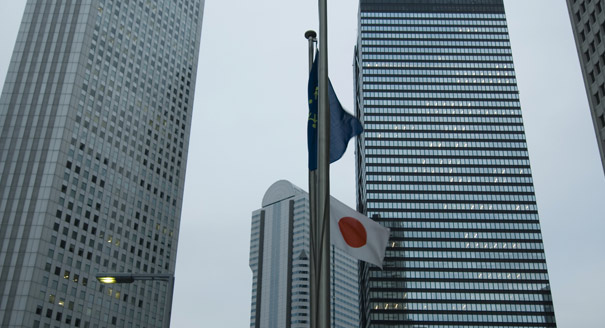
Even if the Liberal Democratic Party of Japan wins in the upcoming elections, it will be more of an overwhelming defeat for the Democratic Party of Japan than a victory for the Liberal Democratic Party.
Source: CNBC
Speaking to CNBC, Carnegie's James Schoff explained why he expected to see the Liberal Democratic Part of Japan (LDP) win the upcoming parliamentary elections. However, he added, a win for the LDP is really more of an overwhelming defeat for the Democratic Party of Japan than a victory for the LDP.

Former Senior Fellow, Asia Program
James L. Schoff was a senior fellow in the Carnegie Asia Program. His research focuses on U.S.-Japan relations and regional engagement, Japanese technology innovation, and regional trade and security dynamics.
Recent Work
James L. Schoff, Douglas E. Rake, Joshua Levy
James L. Schoff
Carnegie does not take institutional positions on public policy issues; the views represented herein are those of the author(s) and do not necessarily reflect the views of Carnegie, its staff, or its trustees.

The Plaza Accord was not an externally imposed punishment of Japan but part of a broader restructuring that Japanese economists and policymakers themselves recognized was necessary. Its effects were undermined, however, when Tokyo responded to the resulting slowdown with policies that exacerbated investment, credit expansion, and the very imbalances the adjustment was intended to resolve.

Michael Pettis

The nuclear relationship between China and the United States is increasingly shaped by widening perception gaps rather than deliberate strategic design.

Tong Zhao

Chinese biotech companies have been on the receiving end of U.S. economic coercion. Yet their responses have differed significantly because firm and state interests are not uniformly aligned. For Washington, treating all Chinese tech firms the same, irrespective of their actual interests, risks pushing them farther into Beijing’s corner.

Xue Gong

Across Asia, China is better positioned to withstand energy shocks from the fallout of the Iran war. Its abundant coal capacity can ensure stability in the near term. Yet at the same time, the country’s energy transition away from coal will make it even less vulnerable during the next shock.

Damien Ma

GDP growth means something fundamentally different in China than in most countries.
Michael Pettis