

Research
- +10
Rosa Balfour, Frances Z. Brown, Yasmine Farouk, …
{
  "authors": [
    "Moisés Naím"
  ],
  "type": "legacyinthemedia",
  "centerAffiliationAll": "",
  "centers": [
    "Carnegie Endowment for International Peace"
  ],
  "collections": [],
  "englishNewsletterAll": "",
  "nonEnglishNewsletterAll": "",
  "primaryCenter": "Carnegie Endowment for International Peace",
  "programAffiliation": "",
  "programs": [],
  "projects": [],
  "regions": [
    "North America"
  ],
  "topics": [
    "Political Reform",
    "Economy",
    "Global Governance"
  ]
}
Source: Getty
Although the change in power dynamics has led to increased competition and advanced opportunities for voters, citizens, workers, and entrepreneurs, it is also tied to the political gridlock taking place around the world.
Source: Yahoo's Daily Ticker
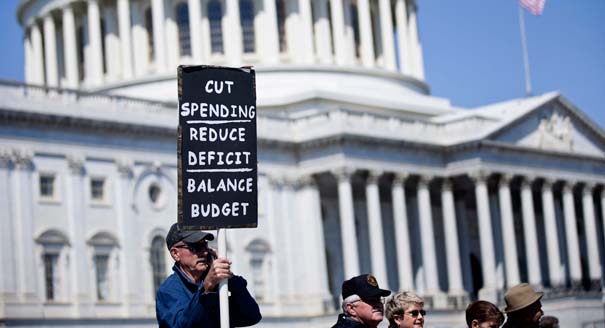
Speaking on Yahoo's Daily Ticker, Carnegie's Moisés Naím discussed the fleeting nature of power. Chief executives in 30 of 34 democracies are dealing with a parliament controlled by the opposition, as landslide victories are becoming "endangered species." Political gridlock has been observed at home in Washington, D.C. with the sequester, as well as abroad with the outcome of the Italian elections. The trend is evidenced in corporations as well, asserted Naím. Although the financial sector continues to be powerful, the use and the capacity of their power are constrained.
Although this change in power dynamics seems beneficial and a shift to celebrate, there are risks, Naím continued. Aside from the increased competition, more intense scrutiny, and advanced opportunities for voters, citizens, workers, and entrepreneurs, the downside is manifesting in the gridlock observed in politics. Gridlock is creating weaker democracies with governments incapable of delivering timely decisions effectively. This is in turn making decisions on a global level more difficult. Furthermore, the capacity for countries to work collaboratively to tackle issues is declining, explained Naím.
It would be too simple to say the Internet, media, and other IT revolutionary technologies are the driving forces, Naím added. These are simply tools that are being used by users. But these users are being driven, directed, and motivated by tertiary factors. These tectonic changes, as Naím described them, include changes in demographics as well as the international distribution of assets and activities. The forces behind the shift in power can be categorized as either the More revolution, the Mobility revolution, and the Mentality revolution.
This interview was originally broadcast on Yahoo's Daily Ticker.

Distinguished Fellow
Moisés Naím is a distinguished fellow at the Carnegie Endowment for International Peace, a best-selling author, and an internationally syndicated columnist.
Recent Work



Rosa Balfour, Frances Z. Brown, Yasmine Farouk, …
Moisés Naím
Carnegie does not take institutional positions on public policy issues; the views represented herein are those of the author(s) and do not necessarily reflect the views of Carnegie, its staff, or its trustees.

China’s banking crisis in the 2000s was resolved by transferring the costs to households through financial repression—a decision that recapitalized the banks while exacerbating the structural imbalances that continue to shape the Chinese economy today.

Michael Pettis

In the latest Five-Year Plan, the Chinese president cements the shift to an innovation-driven economy over a consumption-driven one.

Damien Ma
Rather than climate ambitions, compatibility with investment and exports is why China supports both green and high-emission technologies.

Mathias Larsen
“Involution” is a new word for an old problem, and without a very different set of policies to rein it in, it is a problem that is likely to persist.
Michael Pettis

While China's investment story seems contradictory from the outside, the real answers to Beijing's high-quality growth ambitions are hiding in plain sight across the nation's cities.
Yuhan Zhang