

In The Media
John Judis
{
  "authors": [
    "John Judis"
  ],
  "type": "legacyinthemedia",
  "centerAffiliationAll": "",
  "centers": [
    "Carnegie Endowment for International Peace"
  ],
  "collections": [],
  "englishNewsletterAll": "",
  "nonEnglishNewsletterAll": "",
  "primaryCenter": "Carnegie Endowment for International Peace",
  "programAffiliation": "",
  "programs": [],
  "projects": [],
  "regions": [
    "North America",
    "United States"
  ],
  "topics": [
    "Political Reform",
    "Economy"
  ]
}
Source: Getty
The United States is headed into a political and economic cul-de-sac. Obama needs to make clear to the country that budget cuts are threatening the recovery.
Source: New Republic
The country is headed into a political and economic cul-de-sac. It’s mostly the fault of the House Republicans, who insist on policies that undermine the recovery, but it’s also the fault of the Obama administration for failing to dramatize the choices that Americans face.
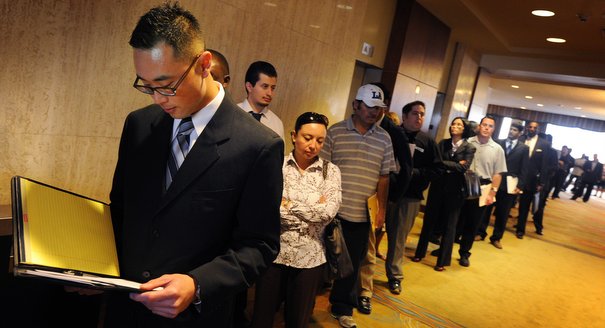
The recovery’s stalling was made only more evident from the employment figures released Friday. Don’t pay attention to the official unemployment rate, which fell from 7.7 to 7.6 percent, largely because more Americans who were out of work stopped looking for jobs and weren’t counted among the unemployed. If you look at the labor participation rate from 1984 to the present, it fell to an all-time low of 63.3 percent last month.I’ve written at length about why I think the recovery has faltered. In the Great Recession, like the Great Depression of the 1930s, the accumulation of debt has held down the recovery in the private sector. In addition to that, the introduction of automation has held down employment even among businesses that are expanding their output. The only way to create and preserve jobs, while the private economy is sloughing off its backlog of debt, is through government spending—which creates jobs directly or subsidizes private sector jobs in fields like health care. But the Obama administration and Congressional Democrats have acceded to the demands of Congressional Republicans to cut government spending. After increasing in 2009, government spending as a percentage of gross domestic product has fallen each year. That has created a drag on job creation.
The Obama administration and Congressional Democrats need to do something about this. It’s more important than gun control or immigration. If the economy is allowed to stall, it’s likely that the party in power—the Democrats—will suffer, as they did in 2010. And if the current Republicans can keep the House and, perhaps, win back the Senate, they’ll be in a position to do even more damage to the economy and to undo whatever advances the Democrats think they have won on gun control and other social issues.
The economy is fundamental. Obama seemed to understand this after the awful fiasco in the summer of 2011 when he caved during the battle over the debt ceiling. He won re-election by carrying the fight over spending cuts and taxes on the wealthy to the Republicans. After the election, he forced the Republicans to agree to tax increases on the wealthy. But the President appears to have let down his guard. He is not focused on the economy and hasn’t been for weeks. If you look at what he was doing this week, he spent Wednesday promoting gun control in Denver and Thursday championing climate control in San Francisco. And Friday—in the wake of stories that the sequester is denying cancer patients their treatments under Medicare—he is said to be contemplating a budget that cuts Medicare and Social Security. That’s just plain wrong—morally and politically.
When Obama takes an issue to the country, as he did financial reform in the spring of 2010, or as he did during the debate over the fiscal cliff, conservative Republicans complain vociferously that he is degrading the office of the president—forgetting, of course, that Ronald Reagan and George W. Bush campaigned energetically for their policies. And lo and behold, the pressure works. Obama needs to get back out there and fight the budget battle. He has to make clear to the country that the cuts are threatening the recovery, and he has to make clear that what Republicans want to do is make further cuts to Medicare and Social Security. These are popular programs. These are not Solyndra or the Post Office. Obama can win this fight, but he has to get out of the White House and carry it on.

Former Visiting Scholar
As a visiting scholar at Carnegie, Judis wrote The Folly of Empire: What George W. Bush Could Learn from Theodore Roosevelt and Woodrow Wilson.
Recent Work
John Judis
John Judis
Carnegie does not take institutional positions on public policy issues; the views represented herein are those of the author(s) and do not necessarily reflect the views of Carnegie, its staff, or its trustees.

China’s banking crisis in the 2000s was resolved by transferring the costs to households through financial repression—a decision that recapitalized the banks while exacerbating the structural imbalances that continue to shape the Chinese economy today.

Michael Pettis

But their "principal to principal" model will only be as effective as the political strength of each leader back home.

Damien Ma

U.S. unpredictability has allowed China to capitalize on its positioning as the “responsible great power”. Paradoxically, the more China wins the perception game, the more likely expectations will rise for Beijing to deliver not just words but to demonstrate with its deeds.

Chong Ja Ian

In the latest Five-Year Plan, the Chinese president cements the shift to an innovation-driven economy over a consumption-driven one.
Damien Ma

For Malaysia, the conjunction that works is “and” not “or” when it comes to the United States and China.

Elina Noor