

Paper
James M. Acton, Ankit Panda
{
  "authors": [
    "James M. Acton"
  ],
  "type": "legacyinthemedia",
  "centerAffiliationAll": "dc",
  "centers": [
    "Carnegie Endowment for International Peace",
    "Carnegie China"
  ],
  "collections": [
    "China’s Foreign Relations",
    "U.S. Nuclear Policy",
    "Korean Peninsula"
  ],
  "englishNewsletterAll": "ctw",
  "nonEnglishNewsletterAll": "",
  "primaryCenter": "Carnegie Endowment for International Peace",
  "programAffiliation": "NPP",
  "programs": [
    "Nuclear Policy"
  ],
  "projects": [],
  "regions": [
    "North America",
    "United States",
    "East Asia",
    "South Korea",
    "North Korea"
  ],
  "topics": [
    "Nuclear Policy",
    "Security",
    "Arms Control"
  ]
}
Source: Getty
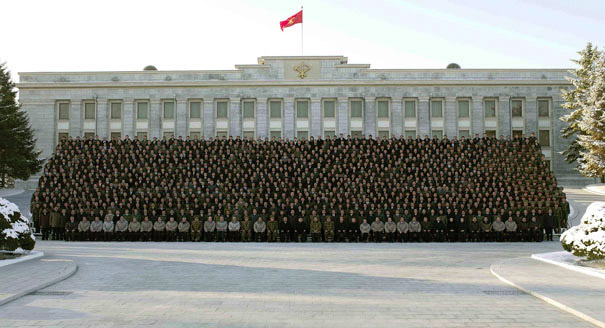
North Korea has issued new threats against South Korea and has demanded an apology for protests in the South.
Source: CTV News
North Korea has issued new threats against South Korea and has demanded an apology for recent protests in the South. Carnegie's James Acton spoke to CTV News about the latest developments.
"Anytime one country threatens another country with the use of nuclear weapons, which North Korea has done, you have to take those threats seriously," Acton pointed out, adding, "that said, do not think that North Korea or Kim Jong-un is about to wake up tomorrow morning and use a nuclear weapon against the United States."
Acton said that he is more worried about an accident, even at sea, that escalates into the use of nuclear weapons. "I think that there are a number of factors going on here," said Acton, "the first point to make is that the truth is that we don't know what is going on inside North Korea, it is widely regarded as being one of the toughest intelligence targets in the world."
"That said," Acton added, "some of what is going on in North Korea is presumably about the young, inexperienced leader, Kim Jong-un, asserting himself amongst his miiltary and perhaps his own population."
On China's position, Acton said that nothing new has come out of Secretary Kerry's visit to China. "If there is a shift in Chinese policy, I wouldn't expect to see much publicly, in general I would expect China to do its diplomacy quietly, behind the scenes," concluded Acton.

Jessica T. Mathews Chair, Co-director, Nuclear Policy Program
Acton holds the Jessica T. Mathews Chair and is co-director of the Nuclear Policy Program at the Carnegie Endowment for International Peace.
Recent Work

James M. Acton, Ankit Panda
James M. Acton
Carnegie does not take institutional positions on public policy issues; the views represented herein are those of the author(s) and do not necessarily reflect the views of Carnegie, its staff, or its trustees.

The nuclear relationship between China and the United States is increasingly shaped by widening perception gaps rather than deliberate strategic design.

Tong Zhao

Chinese biotech companies have been on the receiving end of U.S. economic coercion. Yet their responses have differed significantly because firm and state interests are not uniformly aligned. For Washington, treating all Chinese tech firms the same, irrespective of their actual interests, risks pushing them farther into Beijing’s corner.

Xue Gong

But their "principal to principal" model will only be as effective as the political strength of each leader back home.

Damien Ma

U.S. unpredictability has allowed China to capitalize on its positioning as the “responsible great power”. Paradoxically, the more China wins the perception game, the more likely expectations will rise for Beijing to deliver not just words but to demonstrate with its deeds.

Chong Ja Ian

Across Asia, China is better positioned to withstand energy shocks from the fallout of the Iran war. Its abundant coal capacity can ensure stability in the near term. Yet at the same time, the country’s energy transition away from coal will make it even less vulnerable during the next shock.
Damien Ma