

Commentary
Marc Pierini
{
  "authors": [
    "Marc Pierini"
  ],
  "type": "legacyinthemedia",
  "centerAffiliationAll": "",
  "centers": [
    "Carnegie Endowment for International Peace",
    "Carnegie Europe",
    "Malcolm H. Kerr Carnegie Middle East Center"
  ],
  "collections": [
    "Turkey’s Transformation"
  ],
  "englishNewsletterAll": "",
  "nonEnglishNewsletterAll": "",
  "primaryCenter": "Carnegie Europe",
  "programAffiliation": "",
  "programs": [],
  "projects": [],
  "regions": [
    "Middle East",
    "Europe",
    "Türkiye"
  ],
  "topics": [
    "Security"
  ]
}
Source: Getty
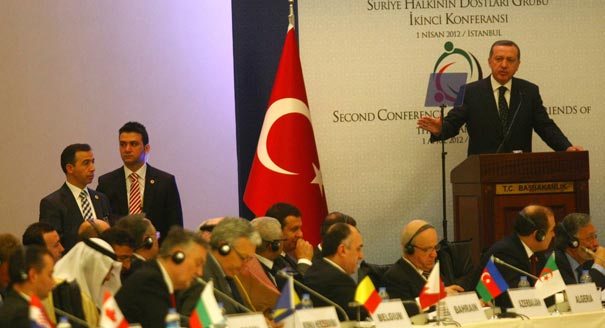
Turkey’s troubled environment sets the agenda for Turkish Prime Minister Erdogan’s upcoming visit to Washington. The impending discussions will help outline Turkey’s regional policy for years to come.
Source: Hurriyet Daily News
In a few days, Turkey’s prime minister, Recep Tayyip Erdoğan, will visit Washington, a significant step for the country which has NATO’s second largest conventional army. The visit will also take place after a deeply troubled Turkish-Israeli relationship will have been reset at a proper level, after President Barack Obama’s successful intermediation.
By itself, Turkey’s troubled environment sets the agenda for such a visit: Syria, Iran, Israel, Palestine, Cyprus, Armenia – all these subjects will no doubt be discussed. The position Turkey will express in Washington on each of them will craft its image as a regional foreign policy actor. This is a circumstance where carefully chosen words and subtle equilibriums, not proclamations or emotions, will delineate Turkey’s policy line for the years to come and its standing among key actors in its complex region.
The Middle Eastern region, rife with tensions, historical grievances, but also opportunities, is not a place where attempts at agenda-setting initiatives are much welcome. The region has rather been a lesson in modesty for world leaders for at least half a century. In such a delicate environment, it is worth looking at where Turkey stands today on some of the issues at hand.Syria is by far the most dangerous situation for Turkey given the chaos in which the country is now drifting. Turkey wisely chose last summer to call for NATO’s protection and its legitimate demand was honored in short order. At this point in time, the narrow possibility for stopping the bloodshed lies with the U.S. and Russia, at best with the five permanent members of the United Nations’ Security Council. Other players such as Turkey or Qatar will play a helpful role if they align themselves with the consensus that was set to emerge from an international conference on May 7.
The Turkish-Israeli relationship is being restored: the never-interrupted economic links will take off again, compensations in the Mavi Marmara case will be paid, diplomatic relations will resume and even foreign policy discussions will take place, including on Palestine. In all these compartments, relations will thrive all the more that both sides will avoid an excessively public diplomacy, especially on Syria and Palestine. Turkey’s analyses will be heard, not clamor. Beyond this, gas exports from both the Israeli and Cypriot fields will, in the coming years, constitute the real game-changer between Turkey and Israel. Subject to studies, such gas resources could be exported directly from the offshore fields to Turkey via submarine pipelines and onwards to the European Union, a truly strategic prospect for both countries as well as for the EU.
Sooner than later, the comprehensive talks in Cyprus will come back to the fore. In the current economic context, the division of the island makes less sense than ever. The prospect of tapping large offshore gas resources to the benefit of both Cypriot communities is another game-changer for the divided island’s leaders, and therefore for Turkey as well. As much as Turkey’s current position on Cyprus is rooted in the past four decades of history, a profound evolution is unavoidable and should be carefully nurtured.
On a more general level, the transformation process which is affecting so many Arab countries is an important element for Turkey as a regional foreign policy actor. Most of these countries are grappling with issues such as constitutional reform, judiciary reform, the place of the various ethnicities within society, press freedom, the role of women, equilibrium between ballot-box democracy and dialogue (in other words, the role of civil society and the virtue of consensus) – all issues where work is in progress in Turkey. The more Turkey resolves these issues in line with European and Western standards, the more it will stand out as a respected regional actor.
Where does the European Union fit into this snapshot? Everywhere, is the short answer. Two EU countries contribute to Turkey’s security with Patriots missile batteries, another is now involved in reinforcing its energy security. The EU provides for nearly 50 percent of Turkey’s trade and more than 75 percent of the foreign direct investment it receives. Albeit slow, progress is being made in accession negotiations, which provides for a Turkey modernized in line with the world’s best economic and governance standards. If Turkey strikes a deal with the United States on free trade, in parallel with the future U.S.-EU free trade accord, it will incorporate itself into the world’s major trade and services entity. The EU is a major driver of Turkey’s prosperity.
This article was written before the May 11 bombings in Hatay province.
This article was originally published in the Hurriyet Daily News.

Senior Fellow, Carnegie Europe
Marc Pierini is a senior fellow at Carnegie Europe, where his research focuses on developments in the Middle East and Turkey from a European perspective.
Recent Work
Marc Pierini
Marc Pierini
Carnegie does not take institutional positions on public policy issues; the views represented herein are those of the author(s) and do not necessarily reflect the views of Carnegie, its staff, or its trustees.
The Thai-Cambodian conflict highlights the limits to China's peacemaker ambition and the significance of this role on Southeast Asia’s balance of power.

Pongphisoot (Paul) Busbarat
Beijing believes that Washington is overestimating its own leverage and its ability to handle the trade war’s impacts.


Rick Waters, Sheena Chestnut Greitens
Tapping our network of China experts in the region, Carnegie China offers this latest “China Through a Southeast Asian Lens” report to offer preliminary assessments of whether the U.S. effort to reshape the global trading order will lead countries in the region to tilt toward Beijing.


Selina Ho, Khin Khin Kyaw Kyee, Joseph Ching Velasco, …
Because strategic, economic, and ideological perceptions of China contain multiple, sometimes contradictory facets in Southeast Asia, receptions of and responses to Beijing diverge across and within state lines.



Evan A. Feigenbaum, Chong Ja Ian, Elina Noor
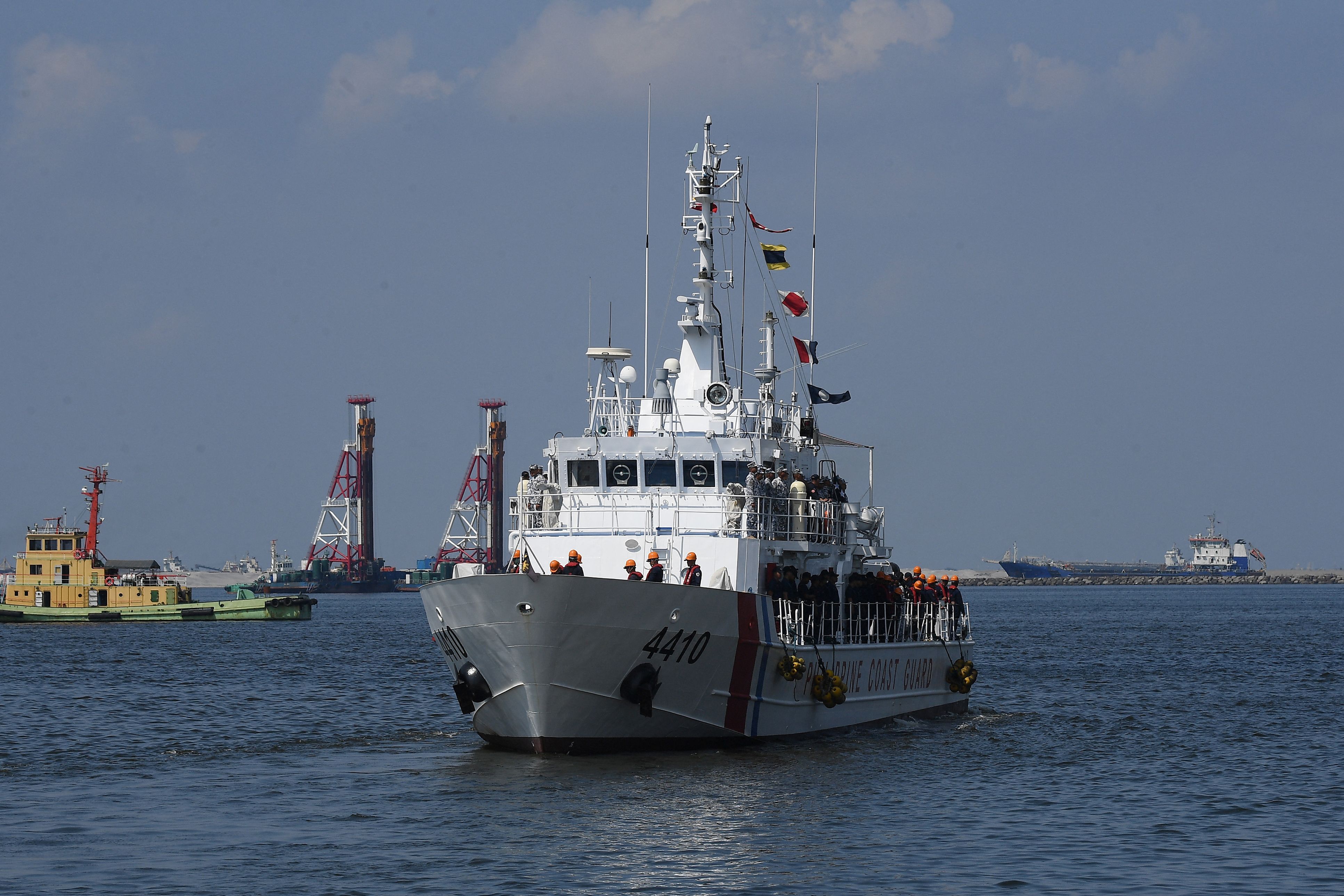
Most Southeast Asian states behave as if the actions of their Northeast Asian neighbors and the Philippines will be sufficient to maintain a regional status quo from which they can benefit.
Chong Ja Ian