

Research
- +4
Milan Vaishnav, Rahul Verma, Rukmini S., …
{
  "authors": [
    "Christophe Jaffrelot"
  ],
  "type": "legacyinthemedia",
  "centerAffiliationAll": "dc",
  "centers": [
    "Carnegie Endowment for International Peace"
  ],
  "collections": [],
  "englishNewsletterAll": "ctw",
  "nonEnglishNewsletterAll": "",
  "primaryCenter": "Carnegie Endowment for International Peace",
  "programAffiliation": "SAP",
  "programs": [
    "South Asia"
  ],
  "projects": [
    "India Decides 2014"
  ],
  "regions": [
    "South Asia",
    "India"
  ],
  "topics": [
    "Political Reform",
    "Economy"
  ]
}
Source: Getty
Manmohan Singh may, in the end, best be remembered for an economic reform that has resulted in more inequalities between the rich and the poor and between urban and village India.
Source: Rediff News
'It has also underestimated the striking force of the Opposition. It has been complacent and paralysed. That may be due to the compulsions of coalition politics and the arrogance of a party which looked at itself as entitled to rule,' Christophe Jaffrelot tells Rediff.com's Archana Masih.
We continue our coverage of Election 2014 with the concluding part of this fascinating interview with Christophe Jaffrelot, the prominent international scholar specialising on India. His next book on Narendra Modi's experiment with Gujarat will be published next month.
Professor Jaffrelot, a senior research fellow at CNRS (Centre National de la Recherche Scientifique) and professor of South Asian politics and history at Sciences Po (Paris), tells Rediff.com's Archana Masih why the Congress lost its way after a convincing win in 2009 and the difference Narendra Modi has brought to the BJP.History will inevitably judge Manmohan Singh, if not more kindly, at least more analytically, simply because historians work harder than politicians and journalists to build a case.
The main thing he will remembered for is naturally the economic reform that he was associated with as early as 1991. His policy was based on the trickle down theory.
Has it succeeded? The middle class and the media speaking on its behalf say 'no' without investigating the case.
If they did, they would realise that the upper layers of society have benefitted more than any other group from liberalisation.
This is what I will remember Manmohan Singh for: An economic reform that has resulted in more inequalities between the rich and the poor and between urban and village India.
The BJP under Modi is different from what it was for a very simple reason: In contrast with the collegial decision making process the Sangh Parivar has always cultivated, Modi has emancipated himself from the organisation and does not even report to the state RSS (Rashtriya Swayamsevak Sangh) leaders in Gujarat.
This is a reflection of an unprecedented personalisation of power which may be the main problem the BJP will face for forming a coalition: You need a team player to handle partners like the state parties which may rally around the NDA (National Democratic Alliance).
The Congress has clearly underestimated the resentment of the people and the striking force of the Opposition. It has been complacent and paralysed. That may be due to the compulsions of coalition politics and the arrogance of a party which looked at itself as entitled to rule.
But it has probably more to do with a leadership crisis: The old generation is leaving the scene, but has not entrusted the new one with power - either because it was reluctant to do so or because the young Congressmen were themselves reluctant leaders.
Rahul Gandhi is a case in point.
Certainly, authoritarianism does not work in a party like the Congress, but its leader needs to give a sense of direction and assert himself -- especially when his opponents are driven by a superiority complex and rely on sarcasms.
There are many reasons: Corruption, price rise, a curious paralysis resulting from complacency and lack of cohesion within the government, the Congress party as well as the ruling coalition, and last but not least, a rather silent prime minister when communication has become a very large part of politics.
But things would not have been so bad if India had not been so severely affected by the economic crisis (that is partly a global phenomenon) at a time when the middle class was getting used to growth and strongly resented the slowdown.
In fact, the UPA (United Progressive Alliance) bashing in which the media is indulging has much to do with the growing political influence of an unprecedently large (and materialistic) middle class.
Indeed, the Congress has usually lost power when it has misused it in terms of corruption. This is not unique to India: Those who are routinely at the helm of a country are also those who indulge the most in corrupt practice.
The irony is that the critics of the Congress are also corrupt -- but the media is not exposing them the same way.
Some chief ministers have delivered as expected. We cannot generalise on that front.
The impatient group is the middle class which is keen to import in politics the managerial modus operandum of the private sector (as it sees it) -- which is clearly impossible, except if you cut Indian democracy to size.
'Despair' is a strong word. But there is definitely a gap between the expectations of the citizens who place their hope in new political figures and their capacity to deliver.
There are more exceptions today than before though, as evident from the decline of the anti-incumbency factor: Many more chief ministers than in the 1980s have been re-elected over the last two decades.
Television does not help in the sense that it generally does not show the politicians at their best: They do not debate in the most constructive manner in most of the programmes and they have hardly any time for that anyway.
Also, the electronic media plays on emotions and does not systematically conduct the kind of investigative journalism democracy needs.
The parties in the fray will naturally highlight the issues which are already identified by the people as priorities for them: Corruption, price rise...
But the Lok Sabha election campaign should give them an opportunity to have programmes: What policy for reinvigorating the economic dynamism?
What social policies for containing inequalities?
What job policy for fighting unemployment?
What fiscal policy for giving the state some rooms for manoeuvre? And so on.
But most of the leaders contend themselves with speaking in slogans, with playing on emotions and with election manifestos listing promises.
Worse, they are not asked to do more by the media which neither scrutinise their past records nor put pressure on them for clarifying their economic and social strategies.
At the most, they ask about very specific measures regarding the price of electricity or the Lokpal Bill.
This is important, but what about the coherence of the parties's programmes?

Former Nonresident Scholar, South Asia Program
Jaffrelot’s core research focuses on theories of nationalism and democracy, mobilization of the lower castes and Dalits (ex-untouchables) in India, the Hindu nationalist movement, and ethnic conflicts in Pakistan.
Recent Work

Milan Vaishnav, Rahul Verma, Rukmini S., …
Christophe Jaffrelot
Carnegie does not take institutional positions on public policy issues; the views represented herein are those of the author(s) and do not necessarily reflect the views of Carnegie, its staff, or its trustees.

In the latest Five-Year Plan, the Chinese president cements the shift to an innovation-driven economy over a consumption-driven one.

Damien Ma

Rather than climate ambitions, compatibility with investment and exports is why China supports both green and high-emission technologies.

Mathias Larsen
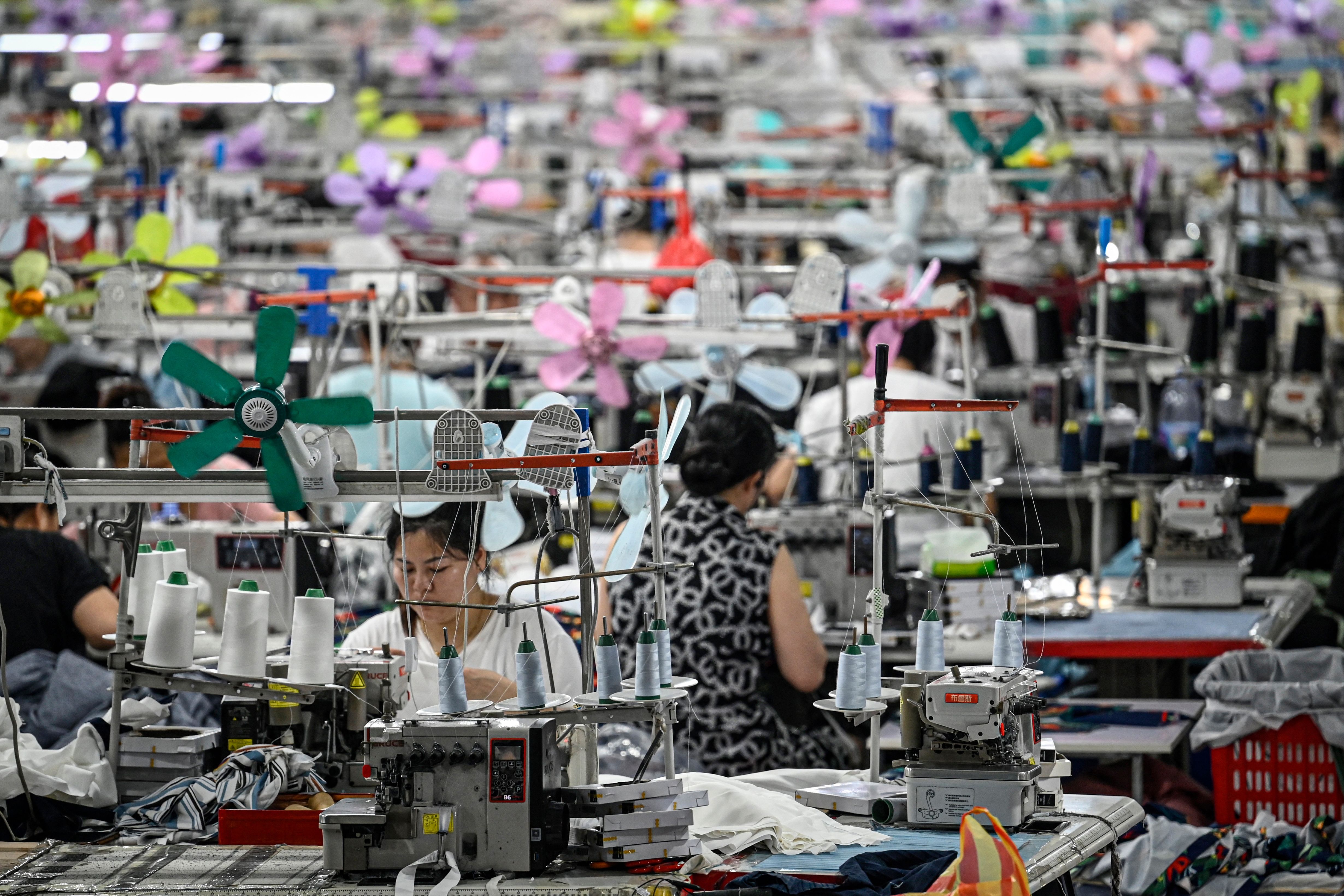
“Involution” is a new word for an old problem, and without a very different set of policies to rein it in, it is a problem that is likely to persist.

Michael Pettis
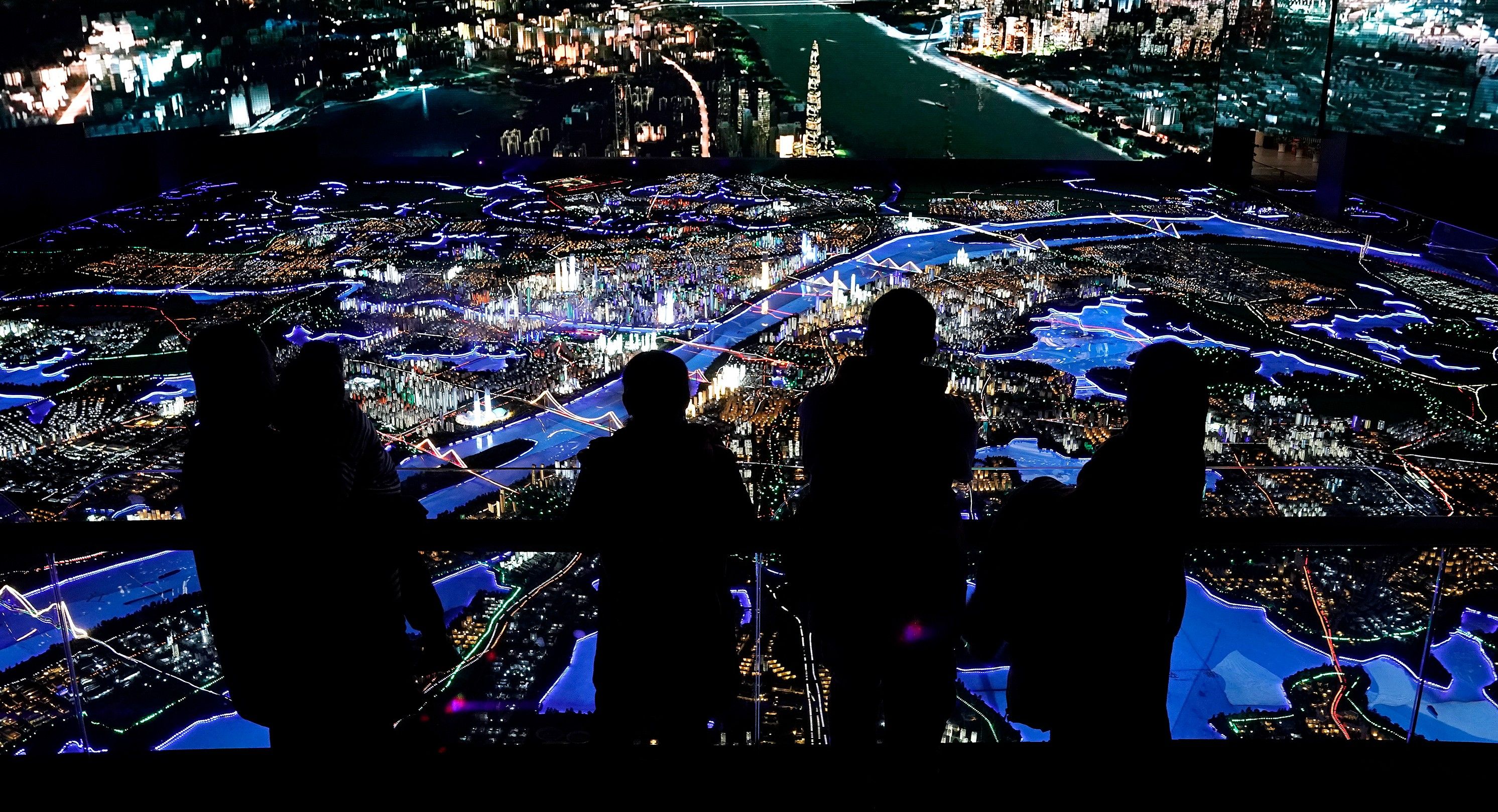
While China's investment story seems contradictory from the outside, the real answers to Beijing's high-quality growth ambitions are hiding in plain sight across the nation's cities.
Yuhan Zhang
China's stimulus addiction cannot go on forever. Beijing still has policy space to clean up the country's massive debt issue, but time is running short.
Michael Pettis