

In The Media
Vikram Nehru
{
  "authors": [
    "Vikram Nehru"
  ],
  "type": "legacyinthemedia",
  "centerAffiliationAll": "dc",
  "centers": [
    "Carnegie Endowment for International Peace",
    "Carnegie China"
  ],
  "collections": [],
  "englishNewsletterAll": "asia",
  "nonEnglishNewsletterAll": "",
  "primaryCenter": "Carnegie China",
  "programAffiliation": "AP",
  "programs": [
    "Asia"
  ],
  "projects": [],
  "regions": [
    "Southeast Asia"
  ],
  "topics": [
    "Political Reform",
    "Civil Society",
    "Security"
  ]
}
Source: Getty
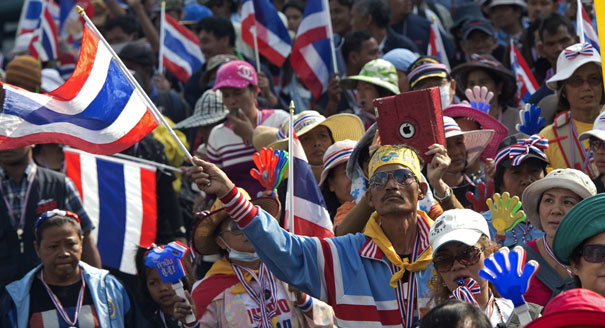
Tens of thousands have taken to the streets to protest against the government of Thailand’s prime minister. A political solution is possible, but its prospects are remote because it will take reasonableness all around to reach it.
Source: Jakarta Globe
Thailand is about to inflict considerable harm to itself. For two months now, tens of thousands have taken to the streets to protest against the government of Prime Minister Yingluck Shinawatra and are now trying to take their protest to a new level by shutting down Bangkok. The army is faced with a difficult choice – permit continued chaos and risk an escalation in violence, or engineer yet another coup (Thailand has had 18 coups since it became a constitutional monarchy in 1932). Either path would mean a setback to democracy and a body blow to the economy; neither provides a solution to the political impasse at the heart of the crisis. The tragedy is that the two protagonists in the confrontation – the opposition Democrat Party and the incumbent Pheu Thai party – have dug themselves in too deep to pull back. Ironically, a political solution is possible. But its prospects are remote because it will take reasonableness all around to reach it.
At its essence, the battle underway in the streets of Bangkok is one between elitism and populism. The Pheu Thai party has consistently trounced the Democratic Party in recent elections because of its strong support in North and Northeastern Thailand, regions which are populous, rural, and poor. Prime Minister Yingluck, and her elder brother Thaksin (the previously elected Prime Minister who was ousted in 2006 by an army coup), assiduously cultivated this vote-rich region through populist programs such as universal health insurance and rice price supports. On the other hand, the protesters, who have been on Bangkok’s streets for two months, are predominantly composed of the middle class in Bangkok and residents of Southern Thailand where the Democratic Party enjoys strong support. They are demanding electoral reforms before the elections. They claim the Pheu Thai party has consistently bought its way to electoral victory by giving handouts to poor and uneducated voters in North and Northeastern Thailand.The protesters are led by Suthep Thaugsuban, a former deputy prime minister and veteran powerbroker in the Democratic Party from the south of the country. Initially, Suthep and his protesters called for the government of Prime Minister Yingluck Shinawatra to step down, and remained undeterred when the Prime Minister won a vote of confidence from parliament. When Suthep continued the agitation, the Prime Minister ordered parliament closed and announced fresh elections for February 2, 2014.
Suthep and the Democratic Party have now vowed to boycott the elections, and have used the protests to push for the formation of an unelected council to reform the electoral process in Thailand. It is ironic that the right to protest – a right afforded by democracy – is being used to pursue an anti-democratic cause. Some observers have even suggested that the protests are being used to prod the armed forces to stage a coup.
The army chief, General Prayuth Chan-ocha, has said that he has no interest in intervening, but has not ruled it out either. Troops are stationed around Bangkok for security reasons, but could easily be used for other purposes. The army may decide it cannot allow the current situation to continue for too much longer. The economy is already hurting, tourist arrivals have plummeted, and foreign investors are understandably worried. There is a growing risk that Pheu Thai supporters (known as “red shirts”, from their attire) in the North and the Northeast – who have been lying low so far – could stage counter-demonstrations that may escalate violence in the country.
A way out of the impasse is available, but will require some political compromise from the Pheu Thai party as well as the Democratic Party – and continued restraint from the armed forces.
The Pheu Thai party will need to publicly rescind its proposal to pass an amnesty bill which had been designed with the sole purpose of paving the way for ex-Prime Minister’s return to the country. It was this proposal that had sparked the unrest initially. Thaksin, who lives in Dubai in self-imposed exile, was convicted to two years imprisonment for corruption in 2008. He arguably represents the strongest polarizing influence in the country and Pheu Thai’s efforts to grant amnesty to Thaksin and engineer his return was sufficient to galvanize a strong reaction from the Thai elite and the opposition Democratic Party.
For its part, the Democratic Party should live up to its name and agree to participate in the February snap election. It will most likely lose, but the prospect of losing an election cannot justify its efforts to scuttle democracy. The Democratic Party would be right to point to some of Pheu Thai’s fiscally ruinous populist programs favoring the rural north and northeast – such as the rice price support scheme — and offer alternative, more sustainable solutions to the region’s poor. It should also use its time in opposition to build its political support base in the north and northeast and overcome decades of benign neglect.
Finally, the army should do all it can to prevent violence and disorder, but it should also resist the temptation to take power. It knows that the international fallout would be disastrous for Thailand. The international community, including the United States (a treaty partner), should make clear that a military coup would meet with international condemnation and even sanctions.
Suthep has rejected any calls for mediation or negotiations with the Pheu Thai. So the chances of a political solution are remote and the prospect of a military coup hovers like a dark cloud over the streets of Bangkok. But the leadership of the Democratic Party and the Pheu Thai should know better. Politics is ultimately the art of compromise. If both sides were reasonable, a political solution is available to lead Thailand out of its current mess.
Former Nonresident Senior Fellow, Asia Program
Nehru was a nonresident senior fellow in the Carnegie Asia Program. An expert on development economics, growth, poverty reduction, debt sustainability, governance, and the performance and prospects of East Asia, his research focuses on the economic, political, and strategic issues confronting Asia, particularly Southeast Asia.
Recent Work
Vikram Nehru
Vikram Nehru
Carnegie does not take institutional positions on public policy issues; the views represented herein are those of the author(s) and do not necessarily reflect the views of Carnegie, its staff, or its trustees.

Malaysia’s chairmanship sought to fend off short-term challenges while laying the groundwork for minimizing ASEAN’s longer-term exposure to external stresses.

Elina Noor

For Malaysia, the conjunction that works is “and” not “or” when it comes to the United States and China.
Elina Noor

ASEAN needs to determine how to balance perpetuating the benefits of technology cooperation with China while mitigating the risks of getting caught in the crosshairs of U.S.-China gamesmanship.
Elina Noor
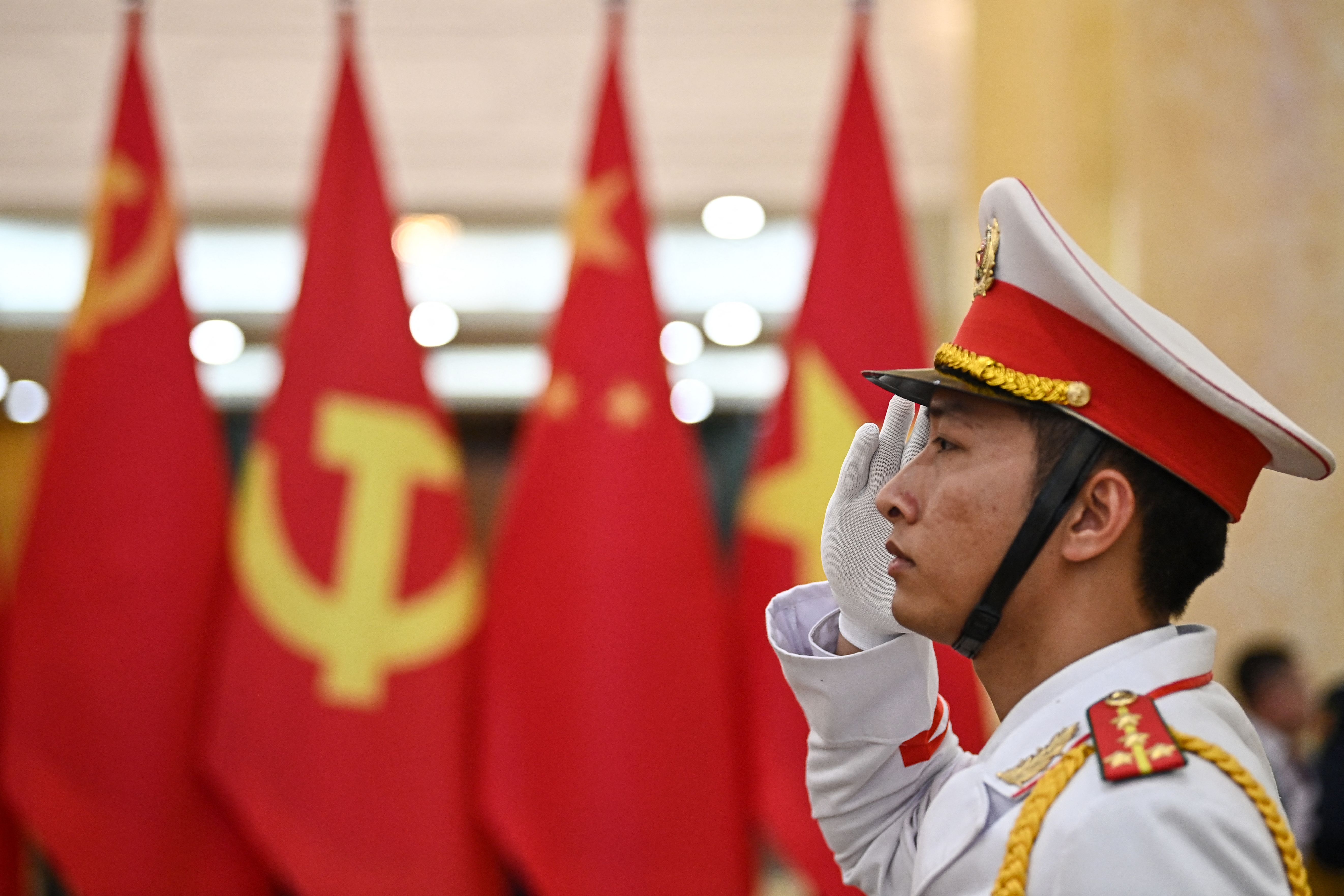
In July 2025, Vietnam and China held their first joint army drill, a modest but symbolic move reflecting Hanoi’s strategic hedging amid U.S.–China rivalry.

Nguyễn Khắc Giang
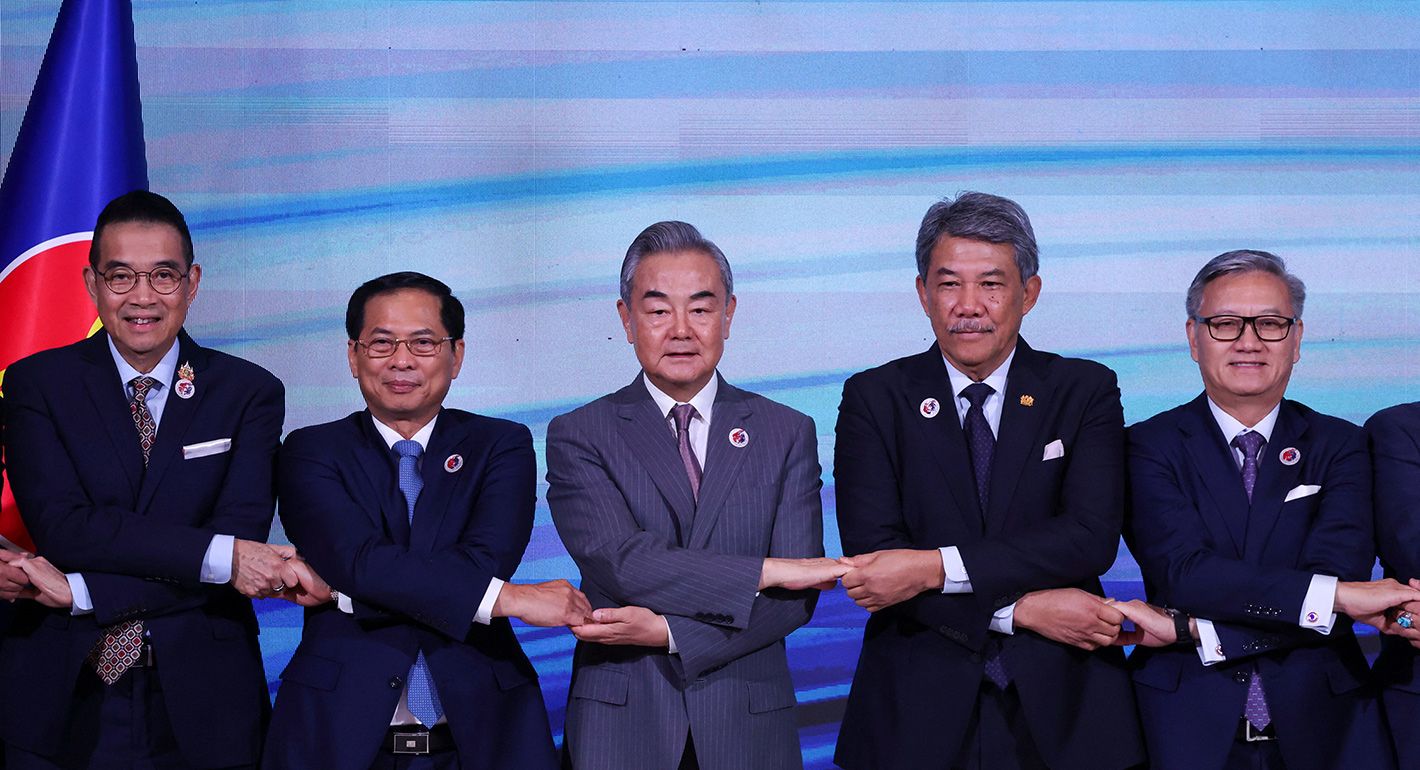
The Thai-Cambodian conflict highlights the limits to China's peacemaker ambition and the significance of this role on Southeast Asia’s balance of power.

Pongphisoot (Paul) Busbarat