
• Commentary
  • Research
  • Experts
  • Events
Carnegie China logoCarnegie lettermark logo
{
  "authors": [
    "Jessica Tuchman Mathews",
    "James M. Acton"
  ],
  "type": "other",
  "centerAffiliationAll": "dc",
  "centers": [
    "Carnegie Endowment for International Peace"
  ],
  "collections": [
    "Japan's Nuclear Crisis"
  ],
  "englishNewsletterAll": "ctw",
  "nonEnglishNewsletterAll": "",
  "primaryCenter": "Carnegie Endowment for International Peace",
  "programAffiliation": "NPP",
  "programs": [
    "Nuclear Policy"
  ],
  "projects": [],
  "regions": [
    "East Asia",
    "Japan"
  ],
  "topics": [
    "Nuclear Policy"
  ]
}

Source: Getty

Other

Review of “The Fukushima Daiichi Nuclear Power Station Disaster: Investigating the Myth and Reality”

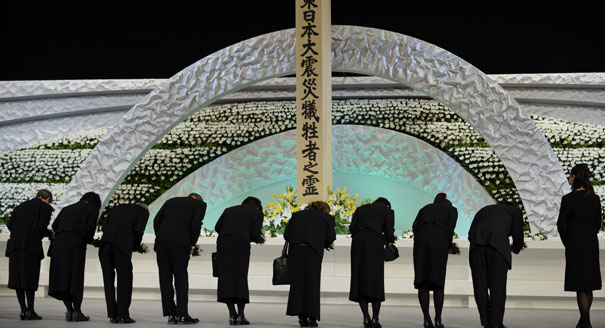
While physical aftershocks from the earthquake that struck Japan on March 11, 2011, have long ceased, societal aftershocks are still reverberating.

Link Copied
By Jessica Tuchman Mathews and James M. Acton
Published on Feb 26, 2014

Source: Independent Investigation Commission on the Fukushima Daiichi Nuclear Accident

While physical aftershocks from the earthquake that struck Japan on March 11, 2011, have long ceased, societal aftershocks are still reverberating. Most obviously, 110,000 of the evacuees forced to flee from the worst nuclear accident since Chernobyl have yet to return to their homes. For many Japanese - not just the evacuees and their famiilies - their dislocation is an open wound. 

At the same time, Japanese society has gained a new interest in its country's governance. Until the accident, it had been willing to let bureaucrats make most key policies with a minimum of interference. Now, a wave of public involvement, which was started by dissatisfaction over energy policy, is having effects in unrelated areas, such as pensions. 

A robust and engaged civil society is surely a welcome development. Japan has been in a sustained economic slump for almost two decades, partly as a result of a political system devoid of imagination and unable to innovate. (Although, hopefully, Japan's new prime minister's signature economic policy of "Abenomics" will turn out to be an exception to that rule.) It may be painful for the Kasumigaseki bureaucrats, but an injection of energy from civil society could - perhaps - be a turning point....

This book was published by Routledge. 

About the Authors

Jessica Tuchman Mathews

Distinguished Fellow

Mathews is a distinguished fellow at the Carnegie Endowment for International Peace. She served as Carnegie’s president for 18 years.

James M. Acton

Jessica T. Mathews Chair, Co-director, Nuclear Policy Program

Acton holds the Jessica T. Mathews Chair and is co-director of the Nuclear Policy Program at the Carnegie Endowment for International Peace.

Authors

Jessica Tuchman Mathews
Distinguished Fellow
Jessica Tuchman Mathews
James M. Acton
Jessica T. Mathews Chair, Co-director, Nuclear Policy Program
James M. Acton
Nuclear PolicyEast AsiaJapan

Carnegie does not take institutional positions on public policy issues; the views represented herein are those of the author(s) and do not necessarily reflect the views of Carnegie, its staff, or its trustees.

More Work from Carnegie China

  • Commentary
    The Spring and Autumn of Chinese Politics

    China’s political future will be shaped between now and next October. As the Communist Party enters its intense “campaign season” to prepare for a major political transition in 2027, reading Beijing's actions and responses may become more difficult as domestic politics weigh on its behavior more than usual.

      • Damien Ma

      Damien Ma

  • Article
    Can China Turn Its Small Modular Reactor Ambitions into Commercial Reality?

    China has showcased its engineering prowess with small modular reactor demonstration projects. But turning these technological achievements into commercial success will be a greater challenge.

      Tong Zhao

  • Commentary
    China Financial Markets
    The Plaza Accord and Its Relevance for China

    The Plaza Accord was not an externally imposed punishment of Japan but part of a broader restructuring that Japanese economists and policymakers themselves recognized was necessary. Its effects were undermined, however, when Tokyo responded to the resulting slowdown with policies that exacerbated investment, credit expansion, and the very imbalances the adjustment was intended to resolve.

      Michael Pettis

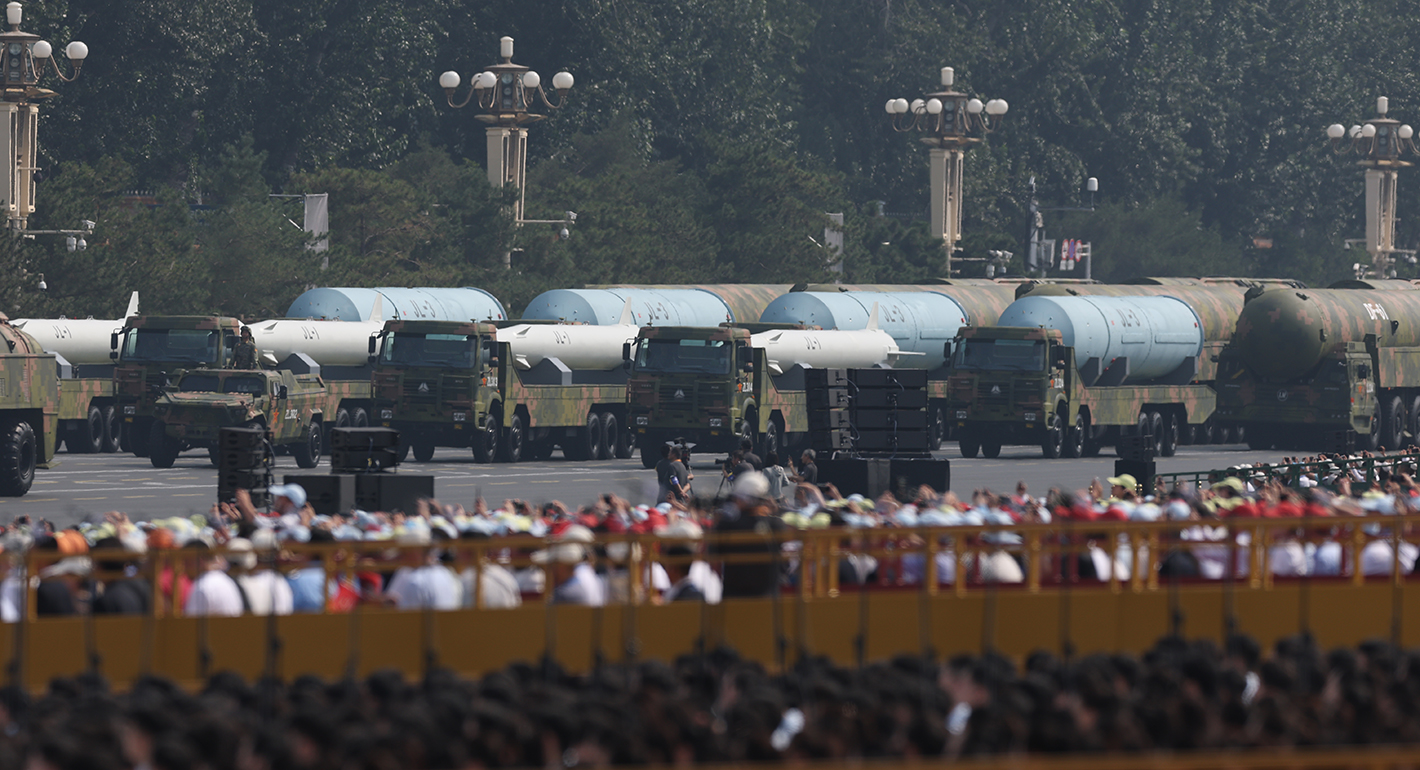
  • The nuclear missile formation passes through Tian'anmen Square during a military parade on September 3, 2025 in Beijing, China.
    Paper
    Untangling the Nuclear Knot: A Constructive Agenda for Managing China’s Nuclear Relations with the United States and Its Allies

    The nuclear relationship between China and the United States is increasingly shaped by widening perception gaps rather than deliberate strategic design.

      Tong Zhao

  • Robot arm with disposable test tube virus sampling in laboratory
    Commentary
    Caught in the Middle: Chinese Biotech Firms’ Divergent Responses to U.S. Sanctions

    Chinese biotech companies have been on the receiving end of U.S. economic coercion. Yet their responses have differed significantly because firm and state interests are not uniformly aligned. For Washington, treating all Chinese tech firms the same, irrespective of their actual interests, risks pushing them farther into Beijing’s corner.

      Xue Gong

Get more news and analysis from
Carnegie China
Carnegie China logo, white
Keck Seng Tower133 Cecil Street #10-01ASingapore, 069535Phone: +65 9650 7648
  • Research
  • About
  • Experts
  • Events
  • Contact
  • Careers
  • Privacy
  • For Media
Get more news and analysis from
Carnegie China
© 2026 Carnegie Endowment for International Peace. All rights reserved.