

Other
- +18
James M. Acton, Saskia Brechenmacher, Cecily Brewer, …
{
  "authors": [
    "James M. Acton"
  ],
  "type": "legacyinthemedia",
  "centerAffiliationAll": "dc",
  "centers": [
    "Carnegie Endowment for International Peace"
  ],
  "collections": [
    "U.S. Nuclear Policy"
  ],
  "englishNewsletterAll": "ctw",
  "nonEnglishNewsletterAll": "",
  "primaryCenter": "Carnegie Endowment for International Peace",
  "programAffiliation": "NPP",
  "programs": [
    "Nuclear Policy"
  ],
  "projects": [],
  "regions": [
    "North America",
    "United States",
    "Russia"
  ],
  "topics": [
    "Nuclear Policy"
  ]
}
Source: Getty
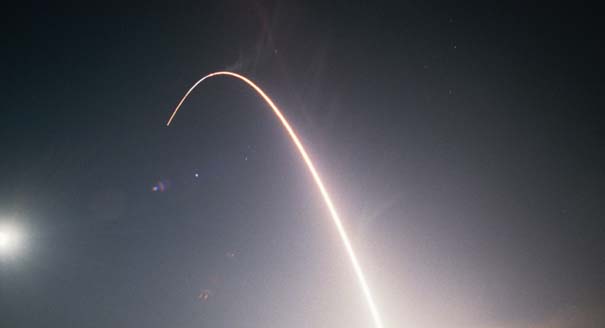
A U.S.-Russian arms race in strategic conventional weapons is an unfortunate possibility, but it is not an inevitability.
Source: Russian Council
A U.S.-Russian arms race in strategic conventional weapons is an unfortunate possibility—but it is not an inevitability. The U.S. Conventional Prompt Global Strike program is in the research and development phase. No procurement decisions have yet been taken and, if the U.S. does ultimately move forward, deployments are unlikely before the mid-2020s. Similarly, Russia also appears to be some years away from being able to field long-range, hypersonic conventional weapons.
Moreover, even if both states do deploy such weapons, cooperation could stabilize any competition. One possibility would be to make all long-range, hypersonic conventional weapons (including non-ballistic systems) accountable in a future arms control treaty. Unfortunately, given that the arms control process is stalled, Russia and the United States should focus on other forms of confidence building for the time being. To this end, reciprocal declarations of acquisition plans, data exchanges, inspections and launch notifications could all help build mutual security.The United States is not considering acquiring Conventional Prompt Global Strike weapons for use against Russia. In the final analysis, therefore, I remain hopeful that such weapons can be managed to avoid a costly and potentially dangerous arms race.
This article was originally published on the Russian Council.

Jessica T. Mathews Chair, Co-director, Nuclear Policy Program
Acton holds the Jessica T. Mathews Chair and is co-director of the Nuclear Policy Program at the Carnegie Endowment for International Peace.
Recent Work


James M. Acton, Saskia Brechenmacher, Cecily Brewer, …
James M. Acton
Carnegie does not take institutional positions on public policy issues; the views represented herein are those of the author(s) and do not necessarily reflect the views of Carnegie, its staff, or its trustees.

US unpredictability has allowed China to capitalize on its positioning as the “responsible great power”. Paradoxically, the more China wins the perception game, the more likely expectations will rise for Beijing to deliver not just words but to demonstrate with its deeds.

Chong Ja Ian

For Malaysia, the conjunction that works is “and” not “or” when it comes to the United States and China.

Elina Noor

Regulation, not embargo, allows Beijing to shape how other countries and firms adapt to its terms.
Alvin Camba

Beijing believes that Washington is overestimating its own leverage and its ability to handle the trade war’s impacts.


Rick Waters, Sheena Chestnut Greitens
Tapping our network of China experts in the region, Carnegie China offers this latest “China Through a Southeast Asian Lens” report to offer preliminary assessments of whether the U.S. effort to reshape the global trading order will lead countries in the region to tilt toward Beijing.



Selina Ho, Khin Khin Kyaw Kyee, Joseph Ching Velasco, …