

Article
C. Raja Mohan, Darshana M. Baruah
{
  "authors": [
    "C. Raja Mohan"
  ],
  "type": "legacyinthemedia",
  "centerAffiliationAll": "dc",
  "centers": [
    "Carnegie Endowment for International Peace",
    "Carnegie India"
  ],
  "collections": [],
  "englishNewsletterAll": "ctw",
  "nonEnglishNewsletterAll": "",
  "primaryCenter": "Carnegie India",
  "programAffiliation": "SAP",
  "programs": [
    "South Asia"
  ],
  "projects": [],
  "regions": [
    "Asia",
    "South Asia",
    "India",
    "East Asia",
    "China"
  ],
  "topics": [
    "Security",
    "Military",
    "Foreign Policy"
  ]
}
Source: Getty
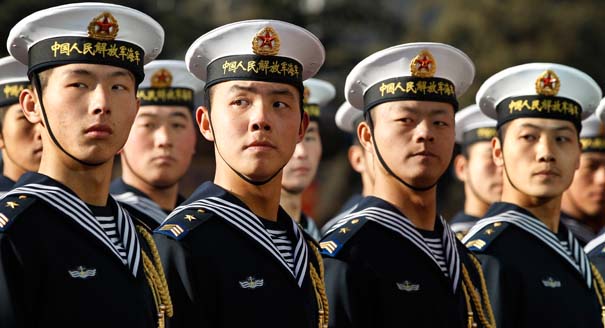
Military diplomacy has acquired much greater salience in China’s international relations in recent years.
Source: Indian Express
It is not easy to imagine that a president or prime minister would find time to meet the defence attaches posted in the country’s embassies abroad. But that precisely is what Chinese President Xi Jinping did three weeks ago. The Chinese Communist Party (CCP) brought together all the military attaches and advisors posted abroad and defence officials at home engaged in foreign relations at the end of January for a pep talk from Xi.
Addressing the gathering, Xi underlined the importance of military diplomacy in achieving Beijing’s larger national goals. A more purposeful military diplomacy, Xi suggested, is a vital necessity to buttress China’s emergence as a great power in Asia and the world.
Although CCP leaders have always valued the role of the PLA in strengthening ties with friendly nations since the founding of the People’s Republic, military diplomacy has acquired much greater salience in China’s international relations in recent years. With a clear sense of its own changing international role, Beijing has stepped up defence exchanges, high-level policy dialogues, participation in multilateral defence forums, promotion of track-two defence dialogues, joint military exercises, training foreign militaries and arms exports.For the CCP, defence diplomacy is about demonstrating Beijing’s new military capabilities, deterring its adversaries, countering the “China threat” narrative, winning friends among armed forces and civilian defence establishments around the world, building security partnerships, improving military intelligence gathering, acquiring sensitive strategic technologies, gaining operational experience in distant theatres, and strengthening the PLA’s combat capabilities by learning from others.
China has discarded the traditional emphasis on criticising the arms control agreements promoted by the Western powers and focuses instead on securing Beijing’s national interests by actively participating in international and regional military negotiations and shaping the international military norms.
At the end of 2014, the Chinese media listed out a number of advances made by the PLA in the arena of military diplomacy. One is the extraordinary energy that the Chinese military put into the search for the missing Malaysian airliner, Flight MH 370, carrying a large number of Chinese citizens.
The PLA assigned more than 2,000 men, mobilised nine naval vessels, six ship-borne helicopters and five air force plans between March and May 2014 to look for the missing plane in the South China Sea and the Indian Ocean. This was the largest search and rescue mission that the PLA had ever undertaken.
A Chinese naval task force travelled round the African continent for the time in 2014, visiting eight countries, including Tunisia, Senegal, Côte d’Ivoire, Nigeria, Cameroon, Angola and South Africa. Even more important, the PLA assigned about 300 service personnel on multiple medical missions to West Africa to fight the Ebola virus. It built observation and treatment centres in Sierra Leone and Liberia.
During 2014, the PLA launched new negotiations with the United States to build mutual military trust and reduce growing tensions on the ground in the western Pacific, where the footprints of the two armed forces intersect.
China has expanded the scale and scope of its joint exercises bilaterally with Russia and multilaterally under the rubric of the Shanghai Cooperation Organisation. China has elevated its participation in UN peacekeeping operations by sending into South Sudan a combat brigade for the first time. China is also eager to set the regional military security agenda by developing military forums with the widest possible participation. It is trying to develop the annual Xiangshan Military Forum in Beijing as a potential rival against the prestigious annual Shangri La Dialogue in Singapore organised by the International Institute for Strategic Studies, London.
Although the tradition of military diplomacy is much older in modern India, New Delhi turned somewhat isolationist after Independence. But since the early 1990s, India’s international defence engagement has grown by leaps and bounds. Yet, the effectiveness of India’s military diplomacy has been severely limited by the lack of adequate political support and insufficient coordination between the armed forces, the ministry of defence and the foreign office. While the services and the MEA see the value of leveraging India’s military strengths, the MoD has neither the aptitude nor the institutional capability to meet the growing international demand for defence cooperation with India.
Prime Minister Narendra Modi’s current emphasis on strengthening India’s defence industrial base should, over time, fill an important gap in India’s infrastructure for military diplomacy. But Delhi is a long way from building a policy framework for more effective long-term defence industrial collaboration with major powers and creating a sound basis for the export of weapons and military services to developing countries.
Meanwhile, the PM and Defence Minister Manohar Parrikar must lay out a clear set of objectives for India’s military diplomacy and create an effective mechanism in Delhi to pursue them.
Former Nonresident Senior Fellow, Carnegie India
A leading analyst of India’s foreign policy, Mohan is also an expert on South Asian security, great-power relations in Asia, and arms control.
Recent Work

C. Raja Mohan, Darshana M. Baruah


Alexander Gabuev, Paul Haenle, C. Raja Mohan, …
Carnegie does not take institutional positions on public policy issues; the views represented herein are those of the author(s) and do not necessarily reflect the views of Carnegie, its staff, or its trustees.

The Plaza Accord was not an externally imposed punishment of Japan but part of a broader restructuring that Japanese economists and policymakers themselves recognized was necessary. Its effects were undermined, however, when Tokyo responded to the resulting slowdown with policies that exacerbated investment, credit expansion, and the very imbalances the adjustment was intended to resolve.

Michael Pettis

The nuclear relationship between China and the United States is increasingly shaped by widening perception gaps rather than deliberate strategic design.

Tong Zhao
China’s banking crisis in the 2000s was resolved by transferring the costs to households through financial repression—a decision that recapitalized the banks while exacerbating the structural imbalances that continue to shape the Chinese economy today.
Michael Pettis

Chinese biotech companies have been on the receiving end of U.S. economic coercion. Yet their responses have differed significantly because firm and state interests are not uniformly aligned. For Washington, treating all Chinese tech firms the same, irrespective of their actual interests, risks pushing them farther into Beijing’s corner.

Xue Gong

China’s latest energy plan explicitly calls for integrating data centers into the electricity system, particularly connecting them to green energy. It appears Beijing wants to use compute as a source of domestic demand to absorb renewables excess capacity.

Damien Ma