

Research
- +8
William J. Burns, Michael Chertoff, Catherine Ashton, …
{
  "authors": [
    "William J. Burns"
  ],
  "type": "legacyinthemedia",
  "centerAffiliationAll": "",
  "centers": [
    "Carnegie Endowment for International Peace",
    "Malcolm H. Kerr Carnegie Middle East Center"
  ],
  "collections": [],
  "englishNewsletterAll": "",
  "nonEnglishNewsletterAll": "",
  "primaryCenter": "Carnegie Endowment for International Peace",
  "programAffiliation": "",
  "programs": [],
  "projects": [],
  "regions": [
    "North America",
    "United States",
    "Middle East",
    "North Africa",
    "East Asia",
    "Russia",
    "Eastern Europe",
    "Egypt",
    "Gulf",
    "Levant",
    "Maghreb"
  ],
  "topics": [
    "Political Reform",
    "Security",
    "Democracy",
    "Foreign Policy"
  ]
}
Source: Getty
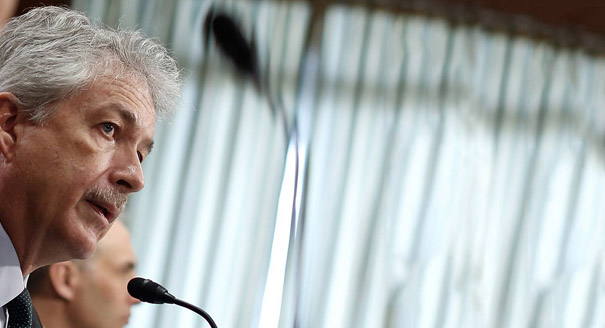
Ambassador William Burns, president of the Carnegie Endowment, discusses his diplomatic career and the issues currently impacting today’s world.
Source: NPR’s Diane Rehm Show
The late American diplomat Richard Holbrooke once said diplomacy was like jazz – “a constant improvisation on a theme.” It’s something Ambassador William J. Burns would know. He spent 33 years in the U.S. Foreign Service, playing the role of negotiator in many of the crises of our time. He was ambassador to Russia and Jordan, and he rose to become Deputy Secretary of State, only the second serving career diplomat elevated to that role. He retired from the Foreign Service recently to run the Carnegie Endowment for International Peace. Host Tom Gjelten speaks with Ambassador William Burns on his lengthy career and current issues facing today's world.
This broadcast originally appeared on NPR’s The Diane Rehm Show.
Former Carnegie President (2015-2021)
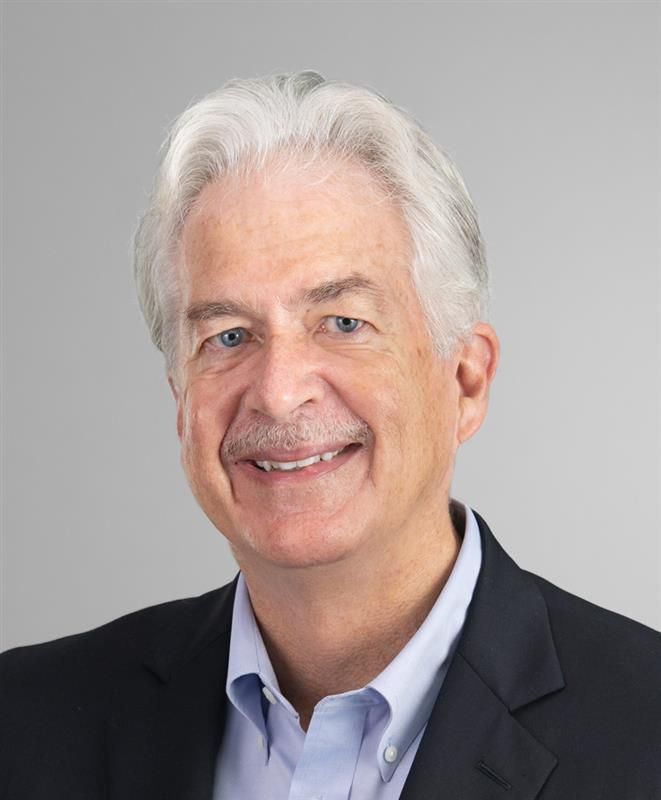
A former career diplomat, William J. Burns served as director of the CIA, deputy secretary of State, and ambassador to Russia and Jordan. Burns was also president of the Carnegie Endowment for International Peace from 2015 to 2021.
Recent Work
William J. Burns, Michael Chertoff, Catherine Ashton, …
William J. Burns
Carnegie does not take institutional positions on public policy issues; the views represented herein are those of the author(s) and do not necessarily reflect the views of Carnegie, its staff, or its trustees.

The nuclear relationship between China and the United States is increasingly shaped by widening perception gaps rather than deliberate strategic design.

Tong Zhao

Chinese biotech companies have been on the receiving end of U.S. economic coercion. Yet their responses have differed significantly because firm and state interests are not uniformly aligned. For Washington, treating all Chinese tech firms the same, irrespective of their actual interests, risks pushing them farther into Beijing’s corner.

Xue Gong

But their "principal to principal" model will only be as effective as the political strength of each leader back home.

Damien Ma

U.S. unpredictability has allowed China to capitalize on its positioning as the “responsible great power”. Paradoxically, the more China wins the perception game, the more likely expectations will rise for Beijing to deliver not just words but to demonstrate with its deeds.

Chong Ja Ian

Hanoi and Beijing have long treated each other as distant cousins rather than comrades in arms. That might be changing as both sides draw closer to hedge against uncertainty and America’s erratic behavior.

Nguyễn Khắc Giang