

Article
China has showcased its engineering prowess with small modular reactor demonstration projects. But turning these technological achievements into commercial success will be a greater challenge.
Tong Zhao
{
  "authors": [
    "C. Raja Mohan",
    "Aryaman Bhatnagar"
  ],
  "type": "other",
  "centerAffiliationAll": "dc",
  "centers": [
    "Carnegie Endowment for International Peace",
    "Carnegie India"
  ],
  "collections": [],
  "englishNewsletterAll": "ctw",
  "nonEnglishNewsletterAll": "",
  "primaryCenter": "Carnegie India",
  "programAffiliation": "SAP",
  "programs": [
    "South Asia"
  ],
  "projects": [],
  "regions": [
    "South Asia",
    "Pakistan",
    "India"
  ],
  "topics": [
    "Economy",
    "Foreign Policy",
    "Security"
  ]
}
Source: Getty
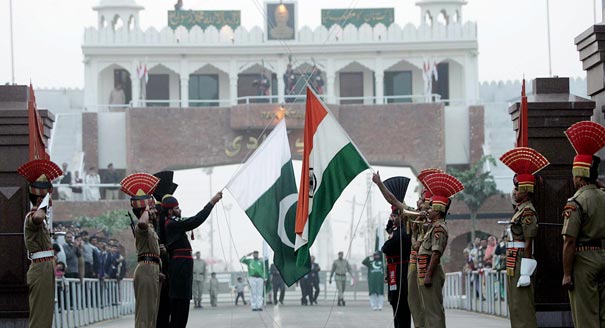
India and Pakistan have considerable scope to build on the various confidence-building measures that have been negotiated in the past decade and a half, especially in the areas of trade and economic cooperation.
Source: National Bureau of Asian Research
This essay reviews the current state of India-Pakistan relations and examines the prospects for bilateral and regional cooperation between the two South Asian neighbors.
India and Pakistan have considerable scope to build on the various confidence-building measures that have been negotiated in the past decade and a half, especially in the areas of trade and economic cooperation. Greater economic engagement has the potential to generate interdependence that could help promote the normalization of relations. However, policymakers in both countries face familiar obstacles to a normal relationship—cross-border terrorism originating from Pakistan, differences over Kashmir, and entrenched domestic opposition to broadening engagement on both sides of the border. The inability of policymakers to separate progress in one field from differences in other areas has rendered it difficult to expand and sustain cooperation. More immediately, India-Pakistan relations are further complicated by the turbulent regional dynamic centered on Afghanistan. The drawdown of foreign troops after over a decade-long international presence in Afghanistan and the challenges of producing internal stability there will make the construction of a shared vision for regional cooperation elusive.
This essay offers the following policy recommendations for limiting conflict between India and Pakistan and expanding the scope for cooperation:
This chapter is available on the National Bureau of Asian Research website.
Former Nonresident Senior Fellow, Carnegie India
A leading analyst of India’s foreign policy, Mohan is also an expert on South Asian security, great-power relations in Asia, and arms control.
Aryaman Bhatnagar
Carnegie does not take institutional positions on public policy issues; the views represented herein are those of the author(s) and do not necessarily reflect the views of Carnegie, its staff, or its trustees.

China has showcased its engineering prowess with small modular reactor demonstration projects. But turning these technological achievements into commercial success will be a greater challenge.

Tong Zhao

The Plaza Accord was not an externally imposed punishment of Japan but part of a broader restructuring that Japanese economists and policymakers themselves recognized was necessary. Its effects were undermined, however, when Tokyo responded to the resulting slowdown with policies that exacerbated investment, credit expansion, and the very imbalances the adjustment was intended to resolve.

Michael Pettis
China’s banking crisis in the 2000s was resolved by transferring the costs to households through financial repression—a decision that recapitalized the banks while exacerbating the structural imbalances that continue to shape the Chinese economy today.
Michael Pettis

But their "principal to principal" model will only be as effective as the political strength of each leader back home.

Damien Ma

U.S. unpredictability has allowed China to capitalize on its positioning as the “responsible great power”. Paradoxically, the more China wins the perception game, the more likely expectations will rise for Beijing to deliver not just words but to demonstrate with its deeds.

Chong Ja Ian