

Commentary
Sarah Chayes
{
  "authors": [
    "Sarah Chayes"
  ],
  "type": "legacyinthemedia",
  "centerAffiliationAll": "dc",
  "centers": [
    "Carnegie Endowment for International Peace"
  ],
  "collections": [
    "Anti-Corruption"
  ],
  "englishNewsletterAll": "democracy",
  "nonEnglishNewsletterAll": "",
  "primaryCenter": "Carnegie Endowment for International Peace",
  "programAffiliation": "DCG",
  "programs": [
    "Democracy, Conflict, and Governance"
  ],
  "projects": [],
  "regions": [
    "North America",
    "United States",
    "South America",
    "East Asia",
    "Russia",
    "Western Europe"
  ],
  "topics": [
    "Democracy"
  ]
}
Source: Getty
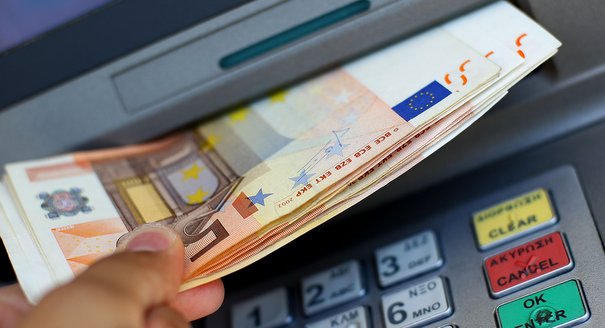
The Panama Papers leak exposes not only a global system of tax avoidance, but the corrupt networks between government officials, organized criminals, and private institutions.
Source: KCRW’s To the Point
The leak of 11.5 million documents from a Panamanian law firm has revealed a vast, deeply rooted infrastructure for hiding money and has caused embarrassment around the world. The Prime Minister of Iceland has resigned. Vladimir Putin has gone on television to deny that his assets are hidden in a shell company owned by a friend. The president of China has demanded censorship of reporting on the “Panama Papers.”
Sarah Chayes spoke to To the Point’s Warren Olney about how U.S. law and companies help foster such corrupt practices. She further explained how kleptocratic governments fuel insecurity from Afghanistan to Nigeria.
This interview was original broadcast on KCRW’s To the Point.
Former Senior Fellow, Democracy, Conflict, and Governance Program
Sarah Chayes is internationally recognized for her innovative thinking on corruption and its implications. Her work explores how severe corruption can help prompt such crises as terrorism, revolutions and their violent aftermaths, and environmental degradation.
Recent Work
Sarah Chayes
Carnegie does not take institutional positions on public policy issues; the views represented herein are those of the author(s) and do not necessarily reflect the views of Carnegie, its staff, or its trustees.

Chinese biotech companies have been on the receiving end of U.S. economic coercion. Yet their responses have differed significantly because firm and state interests are not uniformly aligned. For Washington, treating all Chinese tech firms the same, irrespective of their actual interests, risks pushing them farther into Beijing’s corner.

Xue Gong

But their "principal to principal" model will only be as effective as the political strength of each leader back home.

Damien Ma

U.S. unpredictability has allowed China to capitalize on its positioning as the “responsible great power”. Paradoxically, the more China wins the perception game, the more likely expectations will rise for Beijing to deliver not just words but to demonstrate with its deeds.

Chong Ja Ian

Across Asia, China is better positioned to withstand energy shocks from the fallout of the Iran war. Its abundant coal capacity can ensure stability in the near term. Yet at the same time, the country’s energy transition away from coal will make it even less vulnerable during the next shock.
Damien Ma
For Malaysia, the conjunction that works is “and” not “or” when it comes to the United States and China.

Elina Noor