

Paper
Renée DiResta, Rachel Kleinfeld, Margot Treadwell
{
  "authors": [
    "Rachel Kleinfeld"
  ],
  "type": "other",
  "centerAffiliationAll": "",
  "centers": [
    "Carnegie Endowment for International Peace"
  ],
  "collections": [],
  "englishNewsletterAll": "",
  "nonEnglishNewsletterAll": "",
  "primaryCenter": "Carnegie Endowment for International Peace",
  "programAffiliation": "",
  "programs": [],
  "projects": [],
  "regions": [
    "North America",
    "United States"
  ],
  "topics": [
    "Democracy",
    "Security",
    "Military",
    "Foreign Policy"
  ]
}
Source: Getty
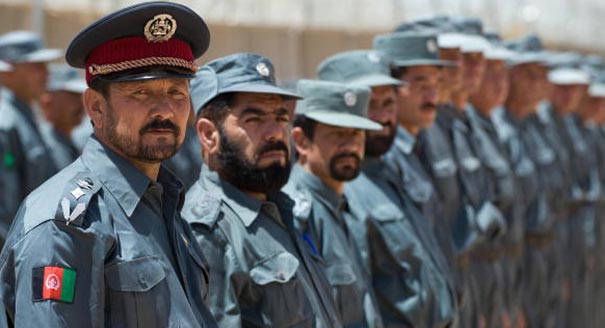
U.S. security requires building effective partnerships in fragile states. The next administration should prioritize security sector assistance improvements.
U.S. efforts to improve police and military capacity accelerated after 9/11, when the United States began to see weak, fragile, or failed states as reservoirs of insecurity and committed to helping strengthen their ability to fight internal threats before they crossed borders.1 Meanwhile, as part of a lighter-footprint approach to global engagement, building the capacity of partner states – many of them fragile – became a way for the United States to address the growing number of crises without directly committing troops.2
U.S. security assistance (the term used by civilian agencies) and security cooperation (the Department of Defense nomenclature) involves many U.S. agencies, as the most recent presidential directive on security sector assistance (SSA), PPD-23, recognizes.3 Since only 1 in 5 violent deaths worldwide is now caused by civil or interstate war, SSA encompasses law enforcement support in addition to military support.4 In Guatemala, for instance, more people die violently today than did during any year of the 36-year civil war, one of the multiple causes behind the surge of forcibly displaced Central Americans on U.S. borders.5
Proliferating actors, sprawling authorities, and conflicting objectives make it nearly impossible to render an accurate account of the scale of America’s SSA. What is clear, however, is that the United States is increasingly relying on this tool, spending an estimated $18.5 billion on SSA in 2014 – two to three times more than it did 20 years ago.6
Unfortunately, there is no correlation between increased SSA and stability in fragile states.7 Studies show that in the absence of minimal state capacity and societal inclusiveness, SSA fails. Improving SSA effectiveness requires changes to both strategy and implementation.

Senior Fellow, Democracy, Conflict, and Governance Program
Rachel Kleinfeld is a senior fellow in Carnegie’s Democracy, Conflict, and Governance Program, where she focuses on issues of rule of law, security, and governance in democracies experiencing polarization, violence, and other governance problems.
Recent Work
Renée DiResta, Rachel Kleinfeld, Margot Treadwell
Political Violence Researchers, Rachel Kleinfeld, ed., Dalya Berkowitz, ed.
Carnegie does not take institutional positions on public policy issues; the views represented herein are those of the author(s) and do not necessarily reflect the views of Carnegie, its staff, or its trustees.

But their "principal to principal" model will only be as effective as the political strength of each leader back home.

Damien Ma

U.S. unpredictability has allowed China to capitalize on its positioning as the “responsible great power”. Paradoxically, the more China wins the perception game, the more likely expectations will rise for Beijing to deliver not just words but to demonstrate with its deeds.

Chong Ja Ian

Hanoi and Beijing have long treated each other as distant cousins rather than comrades in arms. That might be changing as both sides draw closer to hedge against uncertainty and America’s erratic behavior.

Nguyễn Khắc Giang

Across Asia, China is better positioned to withstand energy shocks from the fallout of the Iran war. Its abundant coal capacity can ensure stability in the near term. Yet at the same time, the country’s energy transition away from coal will make it even less vulnerable during the next shock.
Damien Ma

Malaysia’s chairmanship sought to fend off short-term challenges while laying the groundwork for minimizing ASEAN’s longer-term exposure to external stresses.

Elina Noor