
• Commentary
  • Research
  • Experts
  • Events
Carnegie China logoCarnegie lettermark logo
{
  "authors": [],
  "type": "legacyinthemedia",
  "centerAffiliationAll": "dc",
  "centers": [
    "Carnegie Endowment for International Peace",
    "Malcolm H. Kerr Carnegie Middle East Center"
  ],
  "collections": [],
  "englishNewsletterAll": "menaTransitions",
  "nonEnglishNewsletterAll": "",
  "primaryCenter": "Carnegie Endowment for International Peace",
  "programAffiliation": "MEP",
  "programs": [
    "Middle East"
  ],
  "projects": [],
  "regions": [
    "Middle East",
    "Levant"
  ],
  "topics": [
    "Political Reform",
    "Economy"
  ]
}

Source: Getty

In The Media

On ISIL and Oil

ISIL's oil production maybe in decline but that does not mean the group will simply disappear.

Link Copied
Published on Sep 12, 2016

Source: CCTV America

 
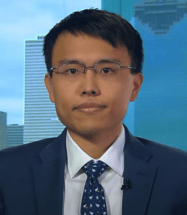
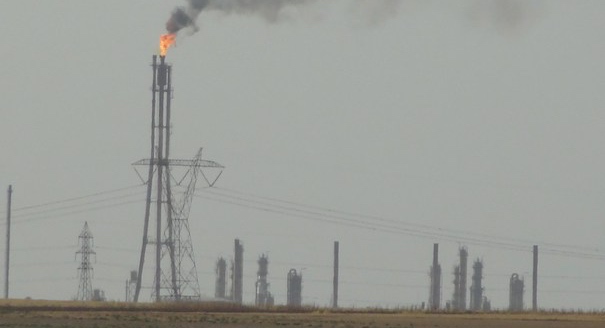
Carnegie Middle East Center's Carole Nakhle joined CCTV America's Mike Walter to discuss ISIL's oil producing capabilities. Nakhle argued that we can only speculate how much oil ISIL is producing and for how much the group is selling it for on the black market.  The group's revenue is decreasing due to a decrease in production and the continued bombing of allied forces. According to Nakhle, ISIL's oil was only sought after on the black market and now the group is focusing more on refined oil products like heating oil or diesel. She stated that allied bombings had an impact on the drilling for and selling of oil but not on its refinement.  She also argued that the oil is not ISIL's but the people of Syria and Iraq and America cannot seize it.  Nakhle finally noted that even if ISIL lost its oil supplies, it would not spell the end of the group as its ideology still attracts followers. 
 
This interview was originally broadcast on CCTV America. 
Political ReformEconomyMiddle EastLevant

Carnegie does not take institutional positions on public policy issues; the views represented herein are those of the author(s) and do not necessarily reflect the views of Carnegie, its staff, or its trustees.

More Work from Carnegie China

  • Commentary
    How China’s Growth Model Determines Its Climate Performance

    Rather than climate ambitions, compatibility with investment and exports is why China supports both green and high-emission technologies.

      Mathias Larsen

  • Overproduction in China
    Commentary
    What’s New about Involution?

    “Involution” is a new word for an old problem, and without a very different set of policies to rein it in, it is a problem that is likely to persist.

      Michael Pettis

  • Commentary
    The Chinese Investment Riddle: What Cities Reveal

    While China's investment story seems contradictory from the outside, the real answers to Beijing's high-quality growth ambitions are hiding in plain sight across the nation's cities.

      Yuhan Zhang

  • Commentary
    Using China’s Central Government Balance Sheet to “Clean up” Local Government Debt Is a Bad Idea

    China's stimulus addiction cannot go on forever. Beijing still has policy space to clean up the country's massive debt issue, but time is running short.

      Michael Pettis

  • Image of Chinese Yuan
    Commentary
    Why China Should Revalue the Renminbi—And Why It Can’t Easily Do So

    A quick look at the complexities behind Beijing’s enduring Catch-22 situation with revaluing the Renminbi, despite advantages of a stronger currency.

      Michael Pettis

Get more news and analysis from
Carnegie China
Carnegie China logo, white
  • Research
  • About
  • Experts
  • Events
  • Contact
  • Careers
  • Privacy
  • For Media
Get more news and analysis from
Carnegie China
© 2026 Carnegie Endowment for International Peace. All rights reserved.