

Paper
The nuclear relationship between China and the United States is increasingly shaped by widening perception gaps rather than deliberate strategic design.
Tong Zhao
{
  "authors": [
    "Deborah Gordon",
    "David Livingston"
  ],
  "type": "legacyinthemedia",
  "centerAffiliationAll": "dc",
  "centers": [
    "Carnegie Endowment for International Peace"
  ],
  "collections": [],
  "englishNewsletterAll": "ctw",
  "nonEnglishNewsletterAll": "",
  "primaryCenter": "Carnegie Endowment for International Peace",
  "programAffiliation": "SCP",
  "programs": [
    "Sustainability, Climate, and Geopolitics"
  ],
  "projects": [],
  "regions": [
    "North America",
    "United States"
  ],
  "topics": [
    "Climate Change"
  ]
}
Source: Getty
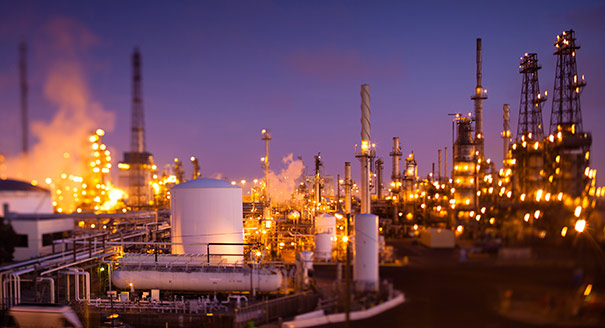
California has an opportunity to pioneer economically and environmentally responsible solutions to the nation’s most vexing short-term pollution and long-term climate challenges when the national government won’t.
Source: Sacramento Bee
As the new administration moves to roll back environmental regulations and increase domestic production of fossil fuels, there is an increasing divide between national and certain state agendas. Nowhere is this more salient than in California.
Decades of leadership from the world’s sixth-largest economy have resulted in more venture capital invested, more brainpower committed and more policy creativity employed to address climate change than almost any country on earth. But even for a global climate leader, there is still room for growth.
California uses an array of tools to decarbonize its economy, with more to come, as the Air Resources Board considers a new strategy for achieving 2030 climate goals. The new frontier of California’s climate policy innovation is focused on reducing oil refinery emissions 20 percent by 2030.
That may sound straightforward enough, but it’s trickier than you might think. California is the country’s third-largest oil-producing state, with the third-largest refining capacity. Despite historic commitments to expand low-carbon energy and clean transportation, some of the oil extracted and refined in California is paradoxically among the dirtiest in the world.
Barrel for barrel, oil varies to an astonishing degree; there’s an estimated 60 percent gap in total emissions between the state’s least- and most-intensive oils. California extracts and refines heavy oils as thick as peanut butter whose greenhouse gas emissions can be higher than Canada’s oil sands. The state’s gassy, light oils can have similarly high – or low – emissions, depending on how their methane is controlled.
This complicated reality gives California a golden opportunity to pioneer effective management tools to mitigate climate damage. By creating targeted incentives to extract the cleanest oils, refine them in the cleanest way and send them to the highest-value uses, California can go a long way in reducing its own petroleum sector emissions – and create global-first market signals that could lead the next chapter of climate change mitigation.
Consider the state’s largest oil field: Midway Sunset, near Bakersfield – the most polluted city in America. First tapped in 1894, Midway Sunset remains the state’s top producer at 70,000 barrels a day. Significant steam is needed to recover this very heavy oil, resulting in high emissions.
This complex field has immensely diverse oils, some more like oil sands. Total greenhouse-gas emissions are estimated to be extremely high. Greater oil data transparency is needed to assess, compare and manage such Californian oil fields with elevated climate risks.
Proper management starts with proper measurement, but measuring the full life-cycle emissions of petroleum pathways, from the initial extraction to refining to the final combustion of all end products, is an involved task.
A useful starting point would be for California to begin collecting crude-oil assays – tests that analyze the chemical “fingerprint” of different petroleum resources – in a systematic way that still maintains protections for private competitive information. Tools like the Oil-Climate Index – an open-source web tool that estimates greenhouse gases through the oil supply chain – can be used to compare various oils. Working together with academia, NGOs and the private sector, there is much that the ARB can do to advance our collective oil intelligence.
As oil-sector transparency laws are being repealed and methane emission controls and other climate- and energy-related policies are under attack in Washington, D.C., California has an opportunity and responsibility to lead. Uniquely positioned to innovate, the Golden State can pioneer economically and environmentally responsible solutions to the nation’s most vexing short-term pollution and long-term climate challenges when our national government won’t.

Former Director and Senior Fellow, Energy and Climate Program
Gordon was director of Carnegie’s Energy and Climate Program, where her research focuses on oil and climate change issues in North America and globally.
Former Associate Fellow, Energy and Climate Program
Livingston was an associate fellow in Carnegie’s Energy and Climate Program, where his research focuses on emerging markets, technologies, and risks.
Carnegie does not take institutional positions on public policy issues; the views represented herein are those of the author(s) and do not necessarily reflect the views of Carnegie, its staff, or its trustees.

The nuclear relationship between China and the United States is increasingly shaped by widening perception gaps rather than deliberate strategic design.

Tong Zhao

But their "principal to principal" model will only be as effective as the political strength of each leader back home.

Damien Ma

U.S. unpredictability has allowed China to capitalize on its positioning as the “responsible great power”. Paradoxically, the more China wins the perception game, the more likely expectations will rise for Beijing to deliver not just words but to demonstrate with its deeds.

Chong Ja Ian

For Malaysia, the conjunction that works is “and” not “or” when it comes to the United States and China.

Elina Noor
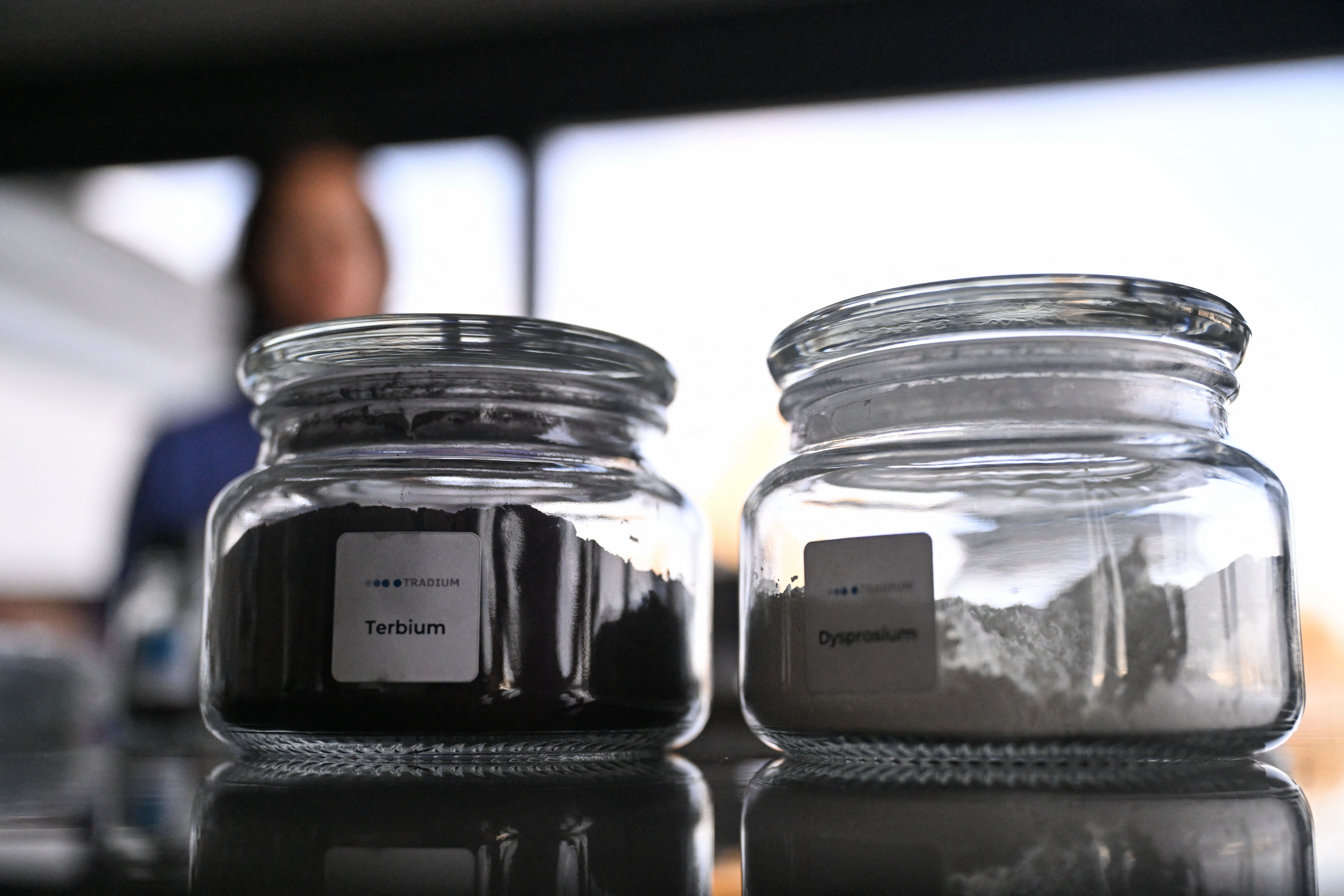
Regulation, not embargo, allows Beijing to shape how other countries and firms adapt to its terms.

Alvin Camba