

Article
C. Raja Mohan, Darshana M. Baruah
{
  "authors": [
    "C. Raja Mohan"
  ],
  "type": "legacyinthemedia",
  "centerAffiliationAll": "dc",
  "centers": [
    "Carnegie Endowment for International Peace",
    "Carnegie India"
  ],
  "collections": [],
  "englishNewsletterAll": "",
  "nonEnglishNewsletterAll": "",
  "primaryCenter": "Carnegie India",
  "programAffiliation": "SAP",
  "programs": [
    "South Asia"
  ],
  "projects": [],
  "regions": [
    "United States",
    "Asia",
    "South Asia",
    "India",
    "North America",
    "East Asia",
    "China"
  ],
  "topics": [
    "Foreign Policy"
  ]
}
Source: Getty
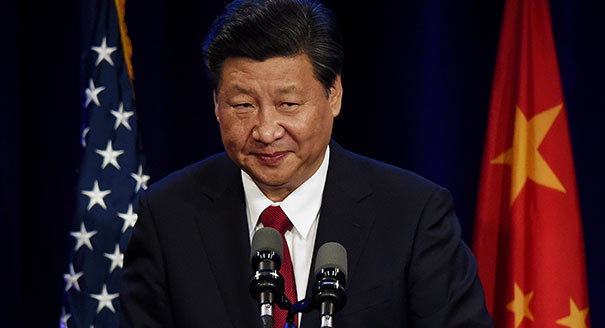
The first diplomatic encounter between Trump and Xi is bound to set the tone for Asian geopolitics in the near term.
Source: Indian Express
If the world had expected that the US’s relations with China would be most contentious under the new administration, it is now preparing to cope with a potential deal between Presidents Donald Trump and Xi Jinping when they meet this week at Mar-a-Lago, Palm Beach, Florida.
The story of the unlikely turnaround of Sino-US relations from a head-on collision into a grand bargain comes with a special twist. Reports from Washington say the Chinese have opened a productive channel of negotiation with Trump’s influential son-in-law, Jared Kushner, who has apparently taken charge of America’s most important bilateral relationship in the 21st century. Few countries invited the kind of wrath that China did during Trump’s presidential campaign in 2016. Candidate Trump accused China of raping the American economy and stealing its jobs. He had promised to impose massive tariffs on the import of goods from China. If China wanted to call it a “trade war”, Trump seemed to say, “so be it”.
Although Trump has held back from taking those extreme economic steps until now, he surprised Beijing by departing from the well-established “One China” policy of the United States by taking a congratulatory call from the president of Taiwan, Tsai Ing-wen. But not too long after, Trump seemed to reverse himself by reaffirming the One China policy in a telephonic conversation with President Xi. There were signs of further thaw during Secretary of State Rex Tillerson’s visit to China last month. Tillerson publicly endorsed the Chinese terms for a productive relationship with the United States — “no-conflict, no-confrontation, mutual respect and win-win cooperation.”
Expectations from the Florida summit on April 6 and 7 range from predictions of a train wreck to a sweeping agreement that could turn global politics inside out. The uncertainty stems in part from the very different diplomatic style of the two leaders. Although he fancies himself an artful negotiator, Trump may not be as well prepared as Xi for playing poker in Florida. Xi does not like surprises and would want all outcomes pre-scripted. If Chinese leaders excel at bringing relentless pressure and purpose to their diplomacy, Trump is impulsive and revels in brinkmanship. Recall Trump’s refusal to shake hands in front of the cameras with the German Chancellor, Angela Merkel, at their meeting last month.
On the day the Florida summit was announced, Trump tweeted that the talks with Xi would be “very difficult” and that the US “can no longer have massive trade deficits”. In an interview to the Financial Times over the weekend, Trump raised expectations by saying, “I would not be at all surprised if we did something that would be very dramatic and good for both countries.”
Trump and Xi can live with an ambiguous outcome or one that focuses on declarations without crafting any specific agreements. They have every reason to avoid any public perception that the Mar-a-Lago summit was a gamble that failed.
In Washington, Trump is having trouble settling down to govern effectively. His bold attempt at repealing the healthcare legislation he inherited from his predecessor, Barack Obama, ended in failure amidst opposition from his own Republican Party. In Beijing, Xi has consolidated his hold over the Chinese Communist Party, but would not want to be seen as having been insulted or shortchanged in any way in the run-up to the party’s 19th Congress later this year. The quinquennial gathering is all set to confer a second term for Xi at the helm of the party-state in Beijing.
The outlines of a grand bargain between Trump and Xi are not impossible to visualise. This would involve each side addressing the main interests of the other. Trump’s main focus is on reducing the trade deficit with China and creating jobs in America. Xi could announce impressive commitments on future Chinese investments in America, promise more market access for American goods and agree to address the US corporate concerns about Chinese theft of intellectual property and cyber security.
Xi, in turn, will want Trump to reaffirm the One China policy, agree to respect Beijing’s primacy in the Asia Pacific, and lift US high-technology sanctions. The two sides could also agree to work together in resolving the North Korean problem, and outline a set of cooperative measures on regional and global issues. But the devil, as always, is in the detail. It is not easy to believe, that one man, even the allegedly very bright son-in-law of the US president, can structure a complex deal with China in a short while.
Whatever the outcome from the Florida summit, the first diplomatic encounter between Trump and Xi is bound to set the tone for Asian geopolitics in the near term. India, like most other Asian nations, wants neither a confrontation nor a collusion between America and China. But if Delhi and other leading regional capitals see America cutting a deal with China at the expense of Asia, they will have no option but to start re-doing their strategic sums.
This article was originally published in the Indian Express.
Former Nonresident Senior Fellow, Carnegie India
A leading analyst of India’s foreign policy, Mohan is also an expert on South Asian security, great-power relations in Asia, and arms control.
Recent Work

C. Raja Mohan, Darshana M. Baruah


Alexander Gabuev, Paul Haenle, C. Raja Mohan, …
Carnegie does not take institutional positions on public policy issues; the views represented herein are those of the author(s) and do not necessarily reflect the views of Carnegie, its staff, or its trustees.

Malaysia’s chairmanship sought to fend off short-term challenges while laying the groundwork for minimizing ASEAN’s longer-term exposure to external stresses.

Elina Noor

For Malaysia, the conjunction that works is “and” not “or” when it comes to the United States and China.
Elina Noor

ASEAN needs to determine how to balance perpetuating the benefits of technology cooperation with China while mitigating the risks of getting caught in the crosshairs of U.S.-China gamesmanship.
Elina Noor
In July 2025, Vietnam and China held their first joint army drill, a modest but symbolic move reflecting Hanoi’s strategic hedging amid U.S.–China rivalry.

Nguyễn Khắc Giang

Regulation, not embargo, allows Beijing to shape how other countries and firms adapt to its terms.
Alvin Camba