

Article
C. Raja Mohan, Darshana M. Baruah
{
  "authors": [
    "C. Raja Mohan"
  ],
  "type": "legacyinthemedia",
  "centerAffiliationAll": "dc",
  "centers": [
    "Carnegie Endowment for International Peace",
    "Carnegie India"
  ],
  "collections": [],
  "englishNewsletterAll": "ctw",
  "nonEnglishNewsletterAll": "",
  "primaryCenter": "Carnegie India",
  "programAffiliation": "SAP",
  "programs": [
    "South Asia"
  ],
  "projects": [],
  "regions": [
    "United States",
    "South Asia",
    "Afghanistan",
    "Pakistan",
    "India",
    "North America",
    "Middle East",
    "Saudi Arabia"
  ],
  "topics": [
    "Foreign Policy"
  ]
}
Source: Getty
As Trump generates a new round political turbulence in India’s western neighborhood, India must embark on a more activist policy in the Middle East that goes beyond its hollow rhetoric.
Source: Indian Express
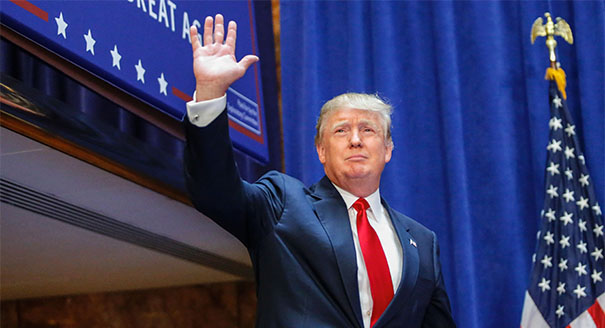
US President Donald Trump is promising to produce cognitive dissonance as he calls for a military alliance, which is being dubbed as “Sunni NATO”, at an Arab-Muslim summit in Saudi Arabia on Sunday. Trump wants a regional military bloc that will wage war against the Islamic State and vigorously challenge the growing regional influence of Shia Iran in the Middle East.
As Trump’s military escalation threatens to unravel the old order in the Middle East, India needs to act purposefully to limit the potential negative consequences for the Subcontinent. Among the fifty odd leaders attending the Arab-Muslim summit in Riyadh are the President of Afghanistan, Ashraf Ghani, the Prime Minister of Bangladesh, Sheikh Hasina and the Pakistani premier Nawaz Sharif.
India will need to specially guard against renewing dual international standards on terrorism — one for the Middle East and another for the Subcontinent.
For Delhi, the biggest concern is that Sunni NATO’s focus on fighting the Islamic State would lead to painting the Afghan Taliban in moderate colours and condoning Pakistan’s support for it. If Pakistan is rebranded as a critical player in the renewed war on terror and a ‘frontline state’ against Shia Iran, the current limited external pressures on Pakistan to stop supporting anti-India terror groups are likely to diminish further.
That Trump has chosen Saudi Arabia as the first foreign destination is in itself remarkable. His decision to travel to Israel and Vatican on the same trip has been projected as a major effort by the US President to engage the Abrahamic religions in countering terrorism in the Middle East. Trump also plans to unveil a mega arms deal with Saudi Arabia and others in the region worth nearly $350 billion over the next decade. Put another way, Trump’s reinvigorated war on terror is the flip side of his domestic agenda of creating more jobs.
Trump is also discarding past American rhetoric on promoting democracy in the Middle East. Unlike his predecessor, Barack Obama, who was eager to talk directly to the people of the Middle East,
Trump is happy doing deals with the regimes. In the last few weeks Trump has hosted a number of strongmen from the region, including Abdel Fatah al Sisi of Egypt and Recep Tayyip Erdogan of Turkey.
Meanwhile, expressing solidarity with the Arab world was supposed to be one of the main pillars of independent India’s foreign policy; implicit in that expression was supposed to be an unflinching opposition Western imperialism and Zionism. This construct never had much foundation in the real world, but has long exercised enormous influence on mainstream foreign policy thinking in India.
In the aftermath of the Cold War, India had made considerable adjustments to its policy towards the Middle East, but could never get rid of the inertia of the past. Meanwhile in the region, the old Arab-Israeli fault line has yielded to a new one dividing Saudi Arabia and Iran whose all encompassing rivalry is now reshaping the region. For many in India though, seeing an American president promoting “Arab unity” in partnership with Israel against Iran does produce some cognitive dissonance.
If there were any doubts that viewing the Middle East and more broadly the Muslim world through an anti-Western prism was unproductive, they are likely to be shattered by the new bonhomie in Riyadh between Trump and Saudi Arabia. Few US presidents have come to the White House, with such vehement anti-Islamic rhetoric that Trump has. Throughout his presidential campaign in 2016, Trump attacked Obama for refusing to use the term “Islamic terrorism” and finessing it with such phrases as “violent extremism”.
One of the first things that Trump did in office was to impose extreme vetting of visa applications from some Muslim nations. Even as the US media pilloried Trump for “Islamophobia”, we are now told that the President’s advisers, including his son-in-law Jared Kushner, were in close contact with Saudi leaders—especially Mohammed bin Salman, the young and ambitious crown prince of Saudi Arabia.
If Saudi Arabia was angry that Obama had abandoned traditional US allies in pursuit of a nuclear rapprochement with Iran, it now betting that it can reset relations with America and rolling out the red carpet for Trump. The quiet negotiations between US and Saudi Arabia has produced a three tiered summit in Riyadh this week.
First, a bilateral engagement between Trump and King Salman of Saudi Arabia. After that Trump will meet the leaders of the Arab Gulf that will form the core of the new alliance against Iran. In the third ring of the spectacle, Trump will meet the larger group of Arab and Muslim leaders. Trump will also make a major speech on combating Islamist extremism and inaugurate the Global Centre for Combatting Extremist Ideology. To cap it all, the Twitter-obsessed Trump will participate in a social media forum.
Trump is not the first one to talk of an Arab military alliance. Many Arab leaders have dreamt of it in the past. Despite the empathy for the idea in the East and the West, Arab unity has been notoriously elusive. While the Saudis would like to fight Islamic State, that objective does not square with the goal of ousting Syria’s Bashar al-Assad, who has survived with the backing of Iran and Russia. The multiple regional contradictions make it impossible to construct coherent coalitions in the Middle East.
The hollowness of India’s grand rhetoric in the Middle East has always been exposed by its timid policies in the region. As Trump generates a new round political turbulence in India’s western neighbourhood, India must embark on a more activist policy in the Middle East. This will necessarily involve taking some risks.
Former Nonresident Senior Fellow, Carnegie India
A leading analyst of India’s foreign policy, Mohan is also an expert on South Asian security, great-power relations in Asia, and arms control.
Recent Work

C. Raja Mohan, Darshana M. Baruah


Alexander Gabuev, Paul Haenle, C. Raja Mohan, …
Carnegie does not take institutional positions on public policy issues; the views represented herein are those of the author(s) and do not necessarily reflect the views of Carnegie, its staff, or its trustees.

The nuclear relationship between China and the United States is increasingly shaped by widening perception gaps rather than deliberate strategic design.

Tong Zhao

But their "principal to principal" model will only be as effective as the political strength of each leader back home.

Damien Ma

U.S. unpredictability has allowed China to capitalize on its positioning as the “responsible great power”. Paradoxically, the more China wins the perception game, the more likely expectations will rise for Beijing to deliver not just words but to demonstrate with its deeds.

Chong Ja Ian

Hanoi and Beijing have long treated each other as distant cousins rather than comrades in arms. That might be changing as both sides draw closer to hedge against uncertainty and America’s erratic behavior.

Nguyễn Khắc Giang

Across Asia, China is better positioned to withstand energy shocks from the fallout of the Iran war. Its abundant coal capacity can ensure stability in the near term. Yet at the same time, the country’s energy transition away from coal will make it even less vulnerable during the next shock.
Damien Ma