

Commentary
But their "principal to principal" model will only be as effective as the political strength of each leader back home.
Damien Ma
{
  "authors": [
    "James L. Schoff",
    "David Song"
  ],
  "type": "legacyinthemedia",
  "centerAffiliationAll": "dc",
  "centers": [
    "Carnegie Endowment for International Peace"
  ],
  "collections": [],
  "englishNewsletterAll": "asia",
  "nonEnglishNewsletterAll": "",
  "primaryCenter": "Carnegie Endowment for International Peace",
  "programAffiliation": "AP",
  "programs": [
    "Asia"
  ],
  "projects": [],
  "regions": [
    "East Asia",
    "Japan",
    "North Korea"
  ],
  "topics": [
    "Security",
    "Foreign Policy"
  ]
}
Source: Getty
The Japanese debate over acquiring missile strike capabilities needs to consider the broader alliance framework.
Source: Diplomat
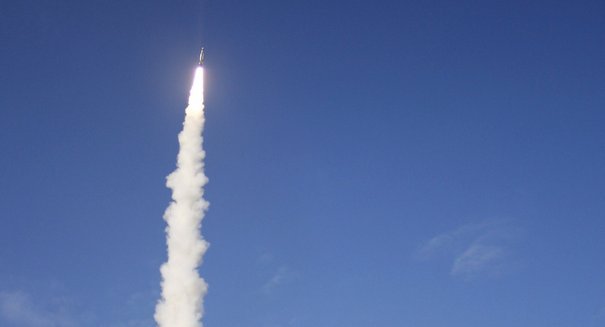
With North Korea continuing to ramp up ballistic missile tests in 2017, American and Japanese policy actors face new pressure to address the growing North Korean nuclear missile threat. In fact, former Japanese Defense Minister Itsunori Onodera of the ruling Liberal Democratic Party (LDP) spent the May (Golden Week) holiday in Washington explaining his LDP study group recommendation for Japan to consider acquiring for the first time counterattack capabilities against enemy targets, in addition to expanding missile defenses.
This could be a major step for Prime Minister Shinzo Abe—who has been seeking to reinterpret and revise Japan’s post-war pacifist constitution—as well as a boon for U.S. policymakers looking for new avenues to pressure North Korea. But is it worth the potentially high political and fiscal costs for the Japanese government to pursue missile strike capabilities and enabling infrastructure?
Both U.S. and Japanese policymakers should realize that while Japan’s acquisition of long-range strike capabilities is not a silver bullet to deter North Korean aggression, such acquisition can play a positive role when considered within the larger context of the U.S.-Japan security alliance. With this in mind, the question must go beyond the North Korea issue and be reframed as part of a broader discussion on Japan’s security role in the Asia-Pacific.
Although the U.S.-Japan alliance traditionally delegated the “spear” role of offensive capability to the United States and the “shield” role of self-defense to Japan, the nuclear threat from North Korea is causing Tokyo to consider some adjustments to this division of labor.
Since the 1950s, some Japanese politicians and bureaucrats have argued that offensive strikes are constitutional as long as they were for self-defense and there was no other way to defend against an attack. From this perspective (especially after years of missile defense investments), Japan must wait to be attacked before it could strike back in an effort to limit additional enemy launches....

Former Senior Fellow, Asia Program
James L. Schoff was a senior fellow in the Carnegie Asia Program. His research focuses on U.S.-Japan relations and regional engagement, Japanese technology innovation, and regional trade and security dynamics.
David Song
Former James C. Gaither Junior Fellow, Asia Program
Carnegie does not take institutional positions on public policy issues; the views represented herein are those of the author(s) and do not necessarily reflect the views of Carnegie, its staff, or its trustees.

But their "principal to principal" model will only be as effective as the political strength of each leader back home.

Damien Ma

U.S. unpredictability has allowed China to capitalize on its positioning as the “responsible great power”. Paradoxically, the more China wins the perception game, the more likely expectations will rise for Beijing to deliver not just words but to demonstrate with its deeds.

Chong Ja Ian

Hanoi and Beijing have long treated each other as distant cousins rather than comrades in arms. That might be changing as both sides draw closer to hedge against uncertainty and America’s erratic behavior.

Nguyễn Khắc Giang

Across Asia, China is better positioned to withstand energy shocks from the fallout of the Iran war. Its abundant coal capacity can ensure stability in the near term. Yet at the same time, the country’s energy transition away from coal will make it even less vulnerable during the next shock.
Damien Ma

Malaysia’s chairmanship sought to fend off short-term challenges while laying the groundwork for minimizing ASEAN’s longer-term exposure to external stresses.

Elina Noor