

Commentary
John Kerry
{
  "authors": [
    "John Kerry"
  ],
  "type": "legacyinthemedia",
  "centerAffiliationAll": "",
  "centers": [
    "Carnegie Endowment for International Peace"
  ],
  "collections": [],
  "englishNewsletterAll": "",
  "nonEnglishNewsletterAll": "",
  "primaryCenter": "Carnegie Endowment for International Peace",
  "programAffiliation": "",
  "programs": [],
  "projects": [],
  "regions": [
    "North America",
    "United States"
  ],
  "topics": [
    "Political Reform",
    "Economy",
    "Climate Change",
    "Security",
    "Foreign Policy",
    "Technology"
  ]
}
Source: Getty
The world needs a new plan for investing in the 21st century—one that starts by recognizing the reality that no one government in the world has the ability to move fast enough. America can’t opt-out of a networked world. To succeed, all of us have to opt-in.
Source: TIME
This is not a normal time.
It is not normal to see a President of the United States decrying “so-called judges.” It is not normal for the leader of the country that invented what is our First Amendment to degrade and even threaten journalists. And it is not normal to see the head of the FBI fired summarily because he was investigating connections between Russia and the presidential campaign of the very man who fired him.
No, there is nothing normal about this moment, and there is nothing American about it, either.
But I’m old enough to have seen a movie like this, maybe a time or two. And that’s why, about this part of the story at least, I’m actually an optimist.
I remember watching the Army-McCarthy hearings. I remember the hysteria. But eventually, people in both parties, and people who could care less about party label, stood up and said “enough.”
I also remember returning from war in 1970 to a country at war with itself, where people were attacked for speaking their minds, and years later, watching Watergate on a little black-and-white television screen. But in 1974, a new wave of people was elected to Congress to clean up the corruption and put the country back on course.
So, with respect to the short-term, the things we’re fighting over every day — count me as an optimist. Our institutions usually work best when we need them most. America’s got a pretty good, almost 241-year record of figuring things out.
It’s the long-term and the challenges we aren’t confronting where we need to shake the free world out of its slumber and wrestle with what’s really coming at us.
For one, much of the world is witnessing a wave of technological transformation that is on the scale of the industrial revolution, but happening at a digital pace. The only thing that isn’t coming at us faster and faster is the ability of governance worldwide to respond. Technology — not trade — is the principal reason we lost 85% of the 5.6 million manufacturing jobs hemorrhaged in the first decade of this century.
It’s bad enough that we haven’t yet solved the jobs crisis in West Virginia and parts of Ohio. But if our institutions can’t build consensus and respond to the demand of Americans for jobs today, how will we ever do it in a time when artificial intelligence and robotics kick in and five times that number of jobs disappear twice as fast?
Our gridlock and willful denial are even more dangerous and economically costly in the fight to correct the perilous course our planet has been on for far too long. Make no mistake: If the United States retreats from our commitments made as a leader in the Paris Agreement negotiations, it would have enormous negative reverberations around the equator and from pole to pole.
But even here, I believe that if we make the right choices, we don’t have to be pessimistic. The question, at this point, isn’t whether we will get to the global, low-carbon economy that we need. We will. The question is whether we’re going to do it fast enough to prevent the worst of what the changing climate could inflict on every corner of the world.
This week also reinforced the need for yet another better focus of our energies. The attack in Manchester, England, angers all people of conscience.
But we’ve spent more time debating what to call extremism than we have discussing a long-term strategy for defeating it. If we don’t wrestle with the long-term, every four years a different president and a different foreign minister will be facing a different terror group with a different acronym.
So how are we going to do all this?
We need a new plan for investing in the 21st century — one that starts by recognizing the reality that no one government in the world has the ability to move fast enough. America can’t opt-out of a networked world. To succeed, all of us have to opt-in.
From $12–13 trillion now sits in net negative interest status around the world. Working with governments, investment funds, international financial institutions and philanthropies, we could leverage this money to build a partnership between developed and near-developed countries that will facilitate investments into education, health care, clean energy, connectivity and infrastructure of all kinds.
Americans and people around the world can and should embrace such a strategy for prosperity. But we can’t solve the long-term if we aren’t talking about the long-term — with truth.
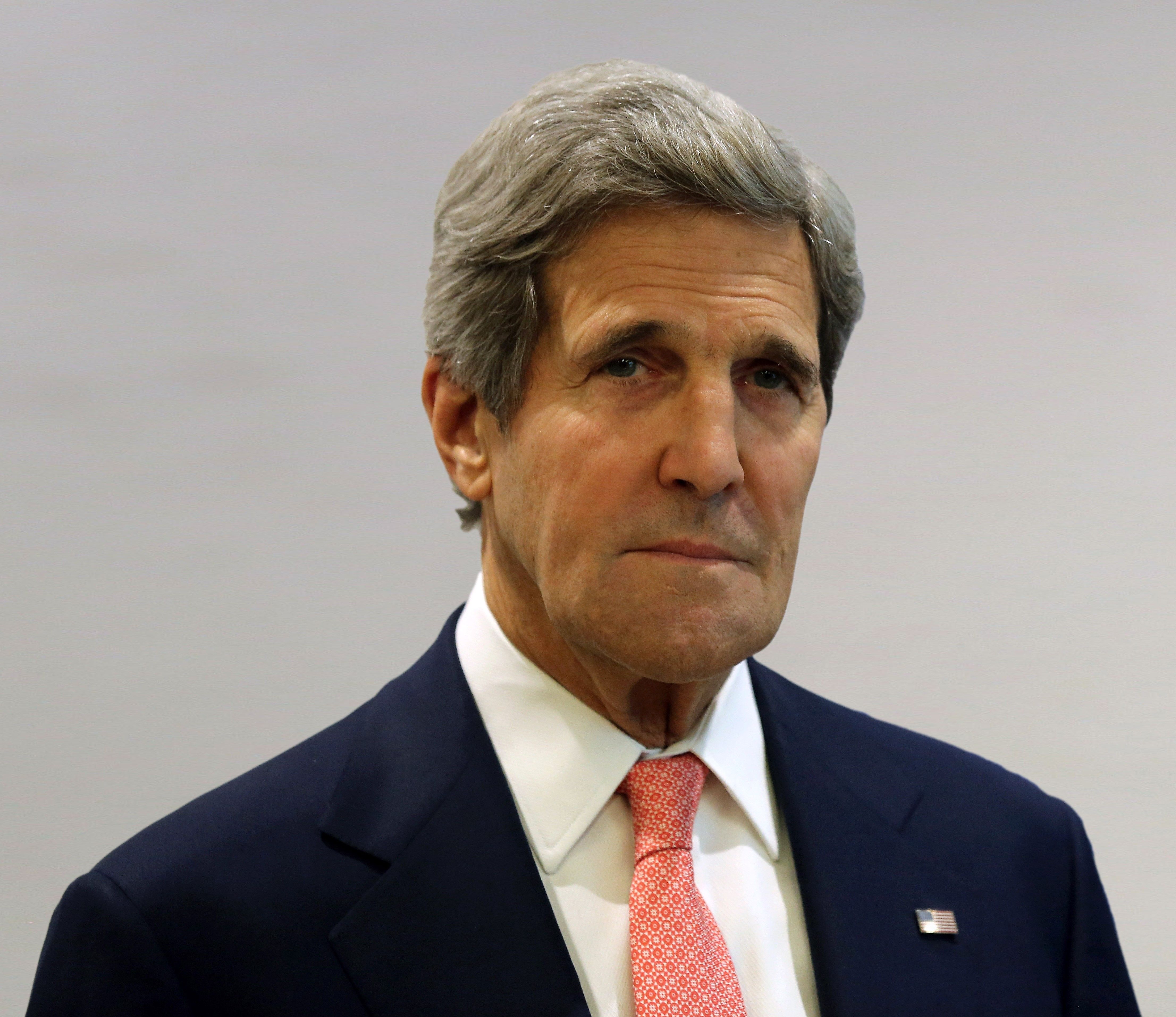
Nonresident Scholar, Sustainability, Climate, and Geopolitics Program
John Kerry is a nonresident scholar the Carnegie Endowment for International Peace.
Recent Work
John Kerry
John Kerry
Carnegie does not take institutional positions on public policy issues; the views represented herein are those of the author(s) and do not necessarily reflect the views of Carnegie, its staff, or its trustees.

The Plaza Accord was not an externally imposed punishment of Japan but part of a broader restructuring that Japanese economists and policymakers themselves recognized was necessary. Its effects were undermined, however, when Tokyo responded to the resulting slowdown with policies that exacerbated investment, credit expansion, and the very imbalances the adjustment was intended to resolve.

Michael Pettis

The nuclear relationship between China and the United States is increasingly shaped by widening perception gaps rather than deliberate strategic design.

Tong Zhao
China’s banking crisis in the 2000s was resolved by transferring the costs to households through financial repression—a decision that recapitalized the banks while exacerbating the structural imbalances that continue to shape the Chinese economy today.
Michael Pettis

Chinese biotech companies have been on the receiving end of U.S. economic coercion. Yet their responses have differed significantly because firm and state interests are not uniformly aligned. For Washington, treating all Chinese tech firms the same, irrespective of their actual interests, risks pushing them farther into Beijing’s corner.

Xue Gong

China’s latest energy plan explicitly calls for integrating data centers into the electricity system, particularly connecting them to green energy. It appears Beijing wants to use compute as a source of domestic demand to absorb renewables excess capacity.

Damien Ma