


Malaysia’s chairmanship sought to fend off short-term challenges while laying the groundwork for minimizing ASEAN’s longer-term exposure to external stresses.
Elina Noor
{
"authors": [
"Richard Sokolsky",
"Aaron David Miller"
],
"type": "legacyinthemedia",
"centerAffiliationAll": "",
"centers": [
"Carnegie Endowment for International Peace"
],
"collections": [],
"englishNewsletterAll": "",
"nonEnglishNewsletterAll": "",
"primaryCenter": "Carnegie Endowment for International Peace",
"programAffiliation": "",
"programs": [],
"projects": [],
"regions": [
"North America",
"United States",
"East Asia",
"North Korea"
],
"topics": [
"Foreign Policy",
"Nuclear Policy",
"Arms Control"
]
}Source: Getty
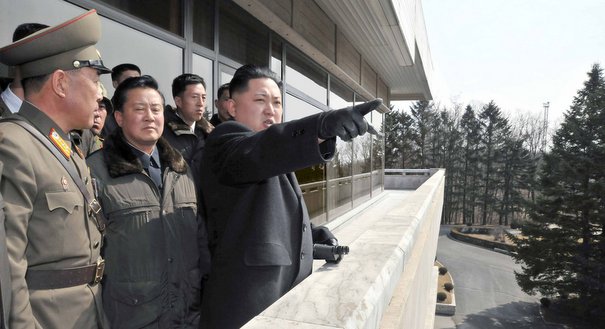
Trump has correctly put the North Korea crisis at the top of the international agenda, but on almost every other aspect of Crisis Management 101, he is failing the course—and the consequences could be deadly.
Source: USA Today
We give President Trump high marks for putting the North Korea nuclear challenge at the top of the international agenda, and injecting urgency into coping with a serious threat that has defied the efforts of three previous administrations. Let’s call it “strategic impatience,” the opposite of the Obama administration’s policy of strategic patience. But on almost every other aspect of Crisis Management 101, Trump is failing the course — and the consequences could be deadly.
Trump said this week that his goal is “complete denuclearization” of North Korea. Maybe this is the well-known Trump tactic of staking out an extreme position that he will eventually abandon. But if it is his real objective, we might as well plan on a military option.
For decades the Kim family has defined getting nuclear weapons as crucial to its survival — to deter U.S. efforts at regime change and to preserve its independence toward China. Pyongyang also probably harbors the goal of using nuclear weapons to coerce South Korea to end its alliance with the United States and expel U.S. forces from South Korea — and possibly even to force South Korea to achieve unification of the peninsula on North Korean terms...
Nonresident Senior Fellow, Russia and Eurasia Program
Richard Sokolsky is a nonresident senior fellow in Carnegie’s Russia and Eurasia Program. His work focuses on U.S. policy toward Russia in the wake of the Ukraine crisis.
Senior Fellow, American Statecraft Program
Aaron David Miller is a senior fellow at the Carnegie Endowment for International Peace, focusing on U.S. foreign policy.
Carnegie does not take institutional positions on public policy issues; the views represented herein are those of the author(s) and do not necessarily reflect the views of Carnegie, its staff, or its trustees.
Malaysia’s chairmanship sought to fend off short-term challenges while laying the groundwork for minimizing ASEAN’s longer-term exposure to external stresses.
Elina Noor
For Malaysia, the conjunction that works is “and” not “or” when it comes to the United States and China.
Elina Noor
In July 2025, Vietnam and China held their first joint army drill, a modest but symbolic move reflecting Hanoi’s strategic hedging amid U.S.–China rivalry.
Nguyễn Khắc Giang
Regulation, not embargo, allows Beijing to shape how other countries and firms adapt to its terms.
Alvin Camba
The Thai-Cambodian conflict highlights the limits to China's peacemaker ambition and the significance of this role on Southeast Asia’s balance of power.
Pongphisoot (Paul) Busbarat