
• Commentary
  • Research
  • Experts
  • Events
Carnegie China logoCarnegie lettermark logo
{
  "authors": [
    "Vipin Narang",
    "Ankit Panda"
  ],
  "type": "other",
  "centerAffiliationAll": "dc",
  "centers": [
    "Carnegie Endowment for International Peace"
  ],
  "collections": [
    "Korean Peninsula"
  ],
  "englishNewsletterAll": "ctw",
  "nonEnglishNewsletterAll": "",
  "primaryCenter": "Carnegie Endowment for International Peace",
  "programAffiliation": "NPP",
  "programs": [
    "Nuclear Policy"
  ],
  "projects": [],
  "regions": [
    "East Asia",
    "North Korea"
  ],
  "topics": [
    "Nuclear Policy"
  ]
}

Source: Getty

Other

Deadly Overconfidence: Trump Thinks Missile Defenses Work Against North Korea, and That Should Scare You

Could a president’s overconfidence in U.S. defensive systems lead to deadly miscalculation and nuclear armageddon? Yes, it could.

Link Copied
By Vipin Narang and Ankit Panda
Published on Oct 17, 2017

Source: War on the Rocks

Could a president’s  overconfidence in U.S. defensive systems lead to deadly miscalculation and nuclear armageddon? Yes. Yes, it could. Last Wednesday, referring to potential American responses to North Korea’s missile and nuclear program, President Donald Trump told Sean Hannity “We have missiles that can knock out a missile in the air 97 percent of the time, and if you send two of them it’s gonna get knocked out.” If Trump believes — or is being told — that American missile defenses are that accurate, not only is he factually wrong, he is also very dangerously wrong. This misperception could be enough to lead the United States into a costly war with devastating consequences.

Here’s why: If Trump believes U.S. missile defenses work this effectively, he might actually think a first strike attempt to disarm North Korea of its missile and nuclear forces would successfully spare U.S. cities from North Korean nuclear retaliation. They probably wouldn’t. Believing that each ground-based midcourse missile defense (GMD) interceptor can provide anything close to a 97 percent interception rate against retaliation raises the temptation to attempt a so-called “splendid first strike” based on the assumption that missile defenses can successfully intercept any leftover missiles North Korea could then fire at the United States.

In this article, we first lay out the complexity of American missile defenses and explain why it’s way off the mark to believe U.S. ground-based missile defense interceptors are even close to as effective as Trump suggested. We then explain how overconfidence in national missile defense may tempt the president to consider a first strike with no actual guarantee that it can spare an American city — or multiple cities — from potential North Korean thermonuclear retaliation. For a president who has already expressed an inclination to visit “fire and fury” on Kim Jong Un and threatened to “totally destroy” his country, we’re obligated to take Trump’s misplaced confidence in GMD very seriously. His attraction to attempting a first strike will only grow if he is blind to an important gap in U.S. defenses. Not only might he still want to denuclearize North Korea by force, he might think it is actually possible to do so without putting the U.S. homeland at risk.

This article was originally published in War on the Rocks

Read the article

About the Authors

Vipin Narang

Former Nonresident Scholar, Nuclear Policy Program

Vipin Narang was a nonresident scholar in the Nuclear Policy Program at the Carnegie Endowment for International Peace.

Ankit Panda

Stanton Senior Fellow in the Nuclear Policy Program at the Carnegie Endowment for International Peace

Ankit Panda is the Stanton Senior Fellow in the Nuclear Policy Program at the Carnegie Endowment for International Peace.

Authors

Vipin Narang
Former Nonresident Scholar, Nuclear Policy Program
Ankit Panda
Stanton Senior Fellow in the Nuclear Policy Program at the Carnegie Endowment for International Peace
Ankit Panda
Nuclear PolicyEast AsiaNorth Korea

Carnegie does not take institutional positions on public policy issues; the views represented herein are those of the author(s) and do not necessarily reflect the views of Carnegie, its staff, or its trustees.

More Work from Carnegie China

  • An aerial view shows containers stacked at a port in Taicang, in eastern China's Jiangsu province on May 18, 2025.
    Commentary
    How to Predict China’s Economic Performance for 2025: A Sectoral Approach

    GDP growth means something fundamentally different in China than in most countries.

      Michael Pettis

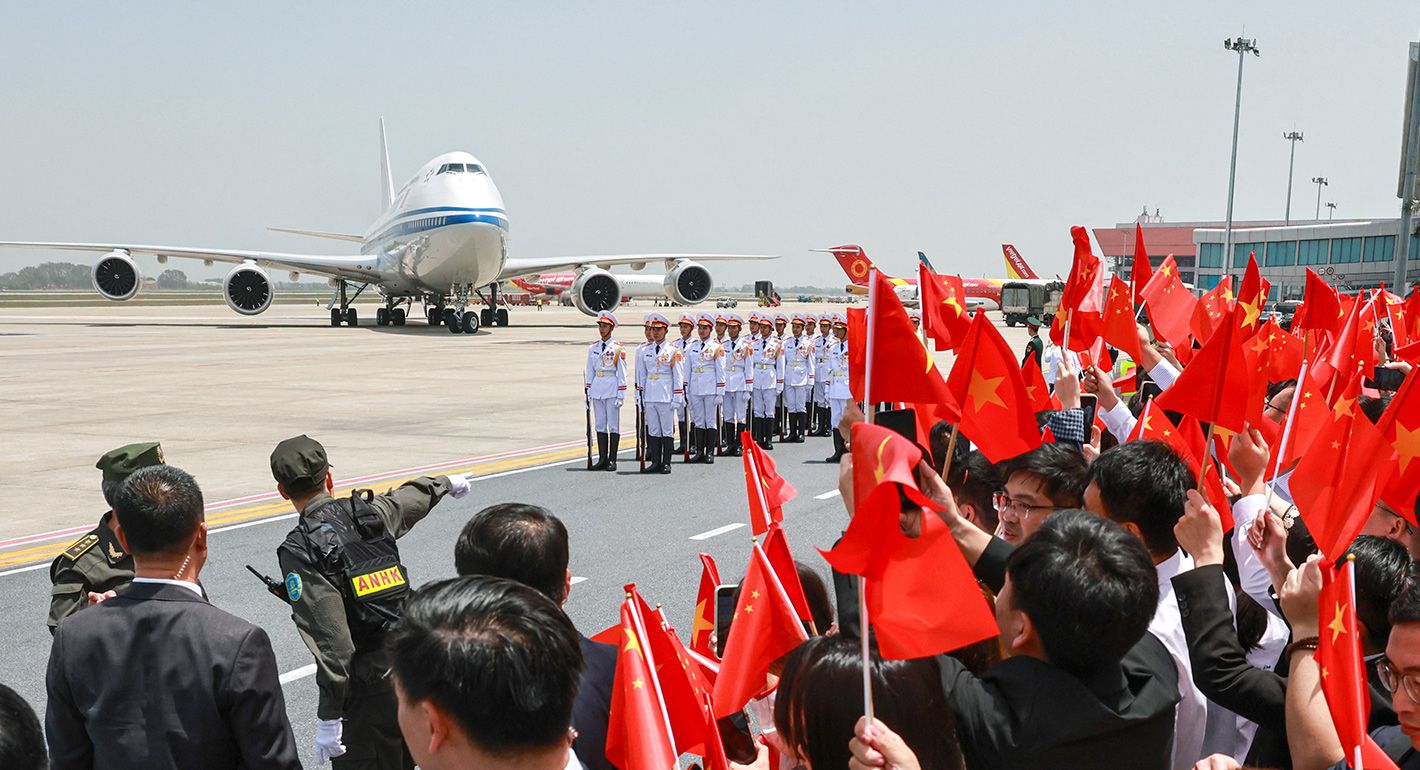
  • People wave Chinese flags as the plane carrying Chinese President Xi Jinping arrives for a two-day state visit at Hanoi's Noi Bai International Airport in Hanoi on April 14, 2025
    Article
    How Southeast Asia Sees Xi Jinping’s Regional Push Amid U.S.-China Tensions

    The Trump administration’s effort to reshape the global trading system and reset overseas security commitments is creating an historic inflection point.  Less clear is how far China will be able to capitalize on these dynamics.

      • +1

      Li Mingjiang, Le Hong Hiep, Ngeow Chow Bing, …

  • Article
    Northeast Asia Is for Deterrence and Southeast Asia Is (Mostly) for Freeriding: Appreciating Divergent East Asian Approaches to Order, Uncertainty, and Contestation

    Most Southeast Asian states behave as if the actions of their Northeast Asian neighbors and the Philippines will be sufficient to maintain a regional status quo from which they can benefit.

      Chong Ja Ian

  • Commentary
    Beyond the Putin-Kim Alliance: How Can the International Community Engage China to Contain Nuclear Risks Over the Korean Peninsula?

    Faced with an increase in strategic maneuvering by Moscow and Pyongyang, Beijing will not sit idly by and allow Putin and Kim to shape the security environment on its behalf.

      Tong Zhao

  • Collection
    China Through a Southeast Asian Lens

    A Q&A series where we ask scholars from Southeast Asia for their insights on China’s influence and relations with the region. 

Get more news and analysis from
Carnegie China
Carnegie China logo, white
  • Research
  • About
  • Experts
  • Events
  • Contact
  • Careers
  • Privacy
  • For Media
Get more news and analysis from
Carnegie China
© 2026 Carnegie Endowment for International Peace. All rights reserved.