

Paper
James L. Schoff, Douglas E. Rake, Joshua Levy
{
  "authors": [
    "James L. Schoff"
  ],
  "type": "other",
  "centerAffiliationAll": "dc",
  "centers": [
    "Carnegie Endowment for International Peace"
  ],
  "collections": [
    "The United States and Japan in Asia"
  ],
  "englishNewsletterAll": "asia",
  "nonEnglishNewsletterAll": "",
  "primaryCenter": "Carnegie Endowment for International Peace",
  "programAffiliation": "AP",
  "programs": [
    "Asia"
  ],
  "projects": [],
  "regions": [],
  "topics": [
    "Foreign Policy",
    "Global Governance"
  ]
}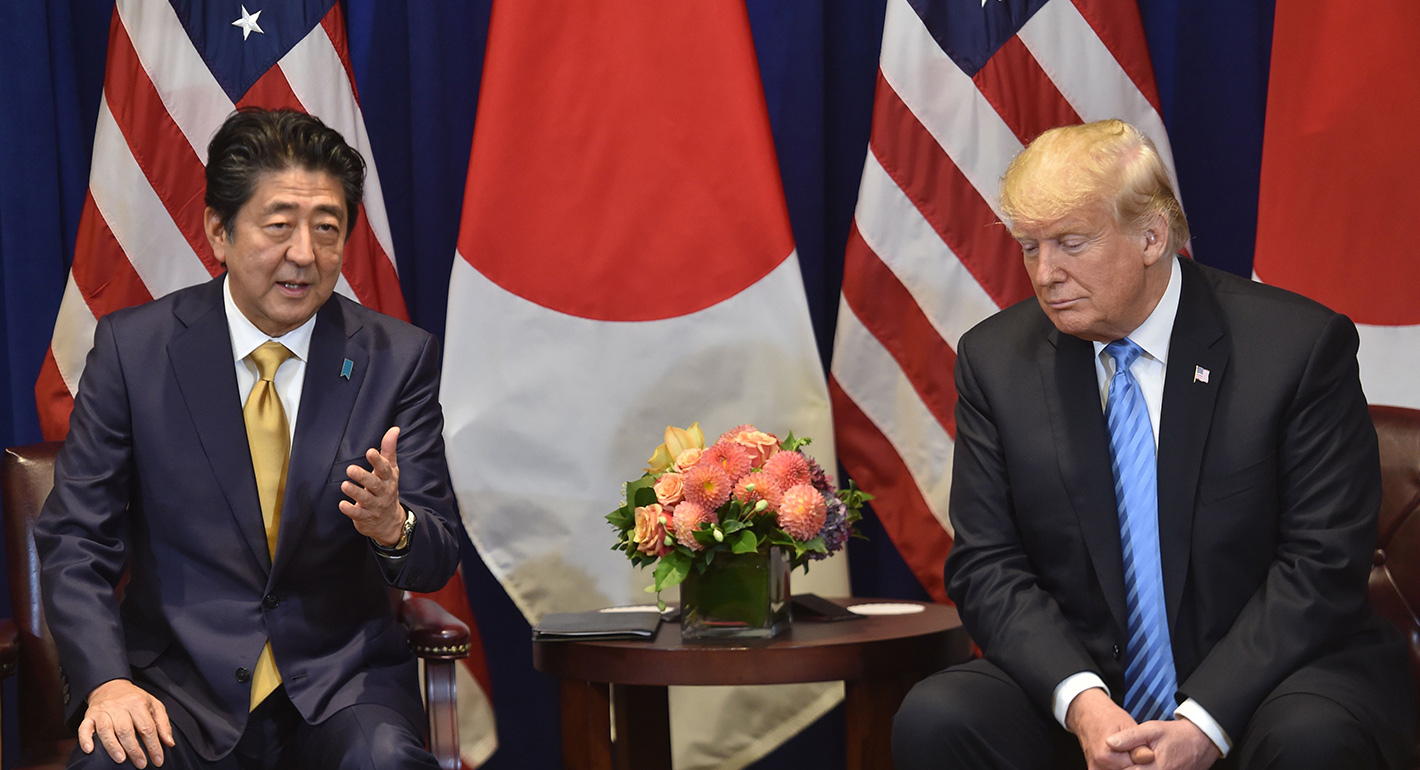
Source: Getty
The political base for Trump’s trade protectionism and apparent indifference to allies has roots stretching back into U.S. history.
Source: Asia-Pacific Review
This article examines the domestic political dynamics behind US president Donald Trump’s “America First” approach to trade and foreign policy, to understand better how long this strain of American economic nationalism might last and what it means for Japan’s national security strategy. The political base for Trump’s trade protectionism and apparent indifference to allies has roots stretching back into American history, but this movement has strengthened in recent years due to a combination of growing economic inequality in the United States, demographic changes, and the impact of fast-paced technology development and economic globalization. These political trends are likely to persist beyond Trump’s presidency, although some potential negative effects on Japan and the US-Japan alliance in the medium-to-longer term can be mitigated by Japan’s proactive foreign policy and other steps. The alliance still offers a great deal of value to both countries—now and into the future—but Japan should consider a slightly larger global leadership role in concert with others, even as the allies work to enhance their continued cooperation on shared interests.
This article was originally published by Asia-Pacific Review.

Former Senior Fellow, Asia Program
James L. Schoff was a senior fellow in the Carnegie Asia Program. His research focuses on U.S.-Japan relations and regional engagement, Japanese technology innovation, and regional trade and security dynamics.
Recent Work
James L. Schoff, Douglas E. Rake, Joshua Levy
James L. Schoff
Carnegie does not take institutional positions on public policy issues; the views represented herein are those of the author(s) and do not necessarily reflect the views of Carnegie, its staff, or its trustees.

But their "principal to principal" model will only be as effective as the political strength of each leader back home.

Damien Ma

U.S. unpredictability has allowed China to capitalize on its positioning as the “responsible great power”. Paradoxically, the more China wins the perception game, the more likely expectations will rise for Beijing to deliver not just words but to demonstrate with its deeds.

Chong Ja Ian

Hanoi and Beijing have long treated each other as distant cousins rather than comrades in arms. That might be changing as both sides draw closer to hedge against uncertainty and America’s erratic behavior.

Nguyễn Khắc Giang

Across Asia, China is better positioned to withstand energy shocks from the fallout of the Iran war. Its abundant coal capacity can ensure stability in the near term. Yet at the same time, the country’s energy transition away from coal will make it even less vulnerable during the next shock.
Damien Ma

Malaysia’s chairmanship sought to fend off short-term challenges while laying the groundwork for minimizing ASEAN’s longer-term exposure to external stresses.

Elina Noor