

Paper
Eugene Rumer, Richard Sokolsky
{
  "authors": [
    "Richard Sokolsky"
  ],
  "type": "other",
  "centerAffiliationAll": "",
  "centers": [
    "Carnegie Endowment for International Peace"
  ],
  "collections": [],
  "englishNewsletterAll": "",
  "nonEnglishNewsletterAll": "",
  "primaryCenter": "Carnegie Endowment for International Peace",
  "programAffiliation": "",
  "programs": [],
  "projects": [],
  "regions": [
    "North America",
    "United States",
    "East Asia",
    "South Korea"
  ],
  "topics": [
    "Security",
    "Foreign Policy"
  ]
}
Source: Getty
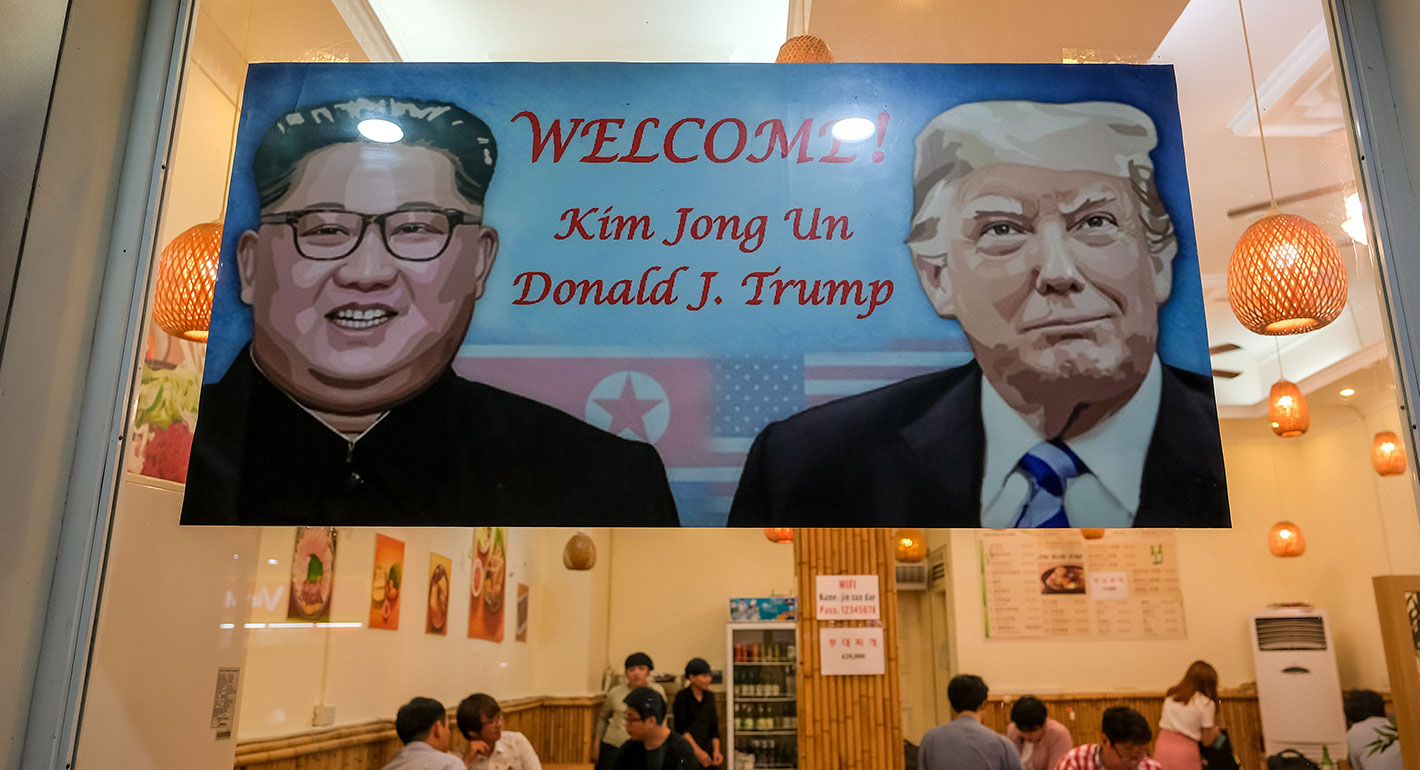
Washington and Seoul must agree on the purpose of their alliance if it is no longer needed to deter aggression by a hostile North Korea. Reaching a consensus on this question will not be easy.
Source: 38 North
Further progress toward building a permanent peace and security regime for the Korean Peninsula will require, at least in the short-run, heavy lifting from North and South Korea if the Trump administration continues to thwart progress on a declaration officially ending the Korean War and other steps to lower tensions and build trust on the peninsula.1 If the two Koreas are successful in moving toward a peace treaty, or if the Trump administration decides to pull US troops out of South Korea, Washington and Seoul will need to take a hard look at adapting the US-South Korean alliance to changing geopolitical dynamics in the region. In the event that US troops leave South Korea, there are alternative security and military arrangements the two countries can and should adopt if North Korea ceases to be a military threat and enduring North-South reconciliation is achieved. These changes are feasible and affordable and would maintain stability and the balance of power in Northeast Asia. Before they are implemented, however, Washington and Seoul must first agree on the purpose of their alliance if it is no longer needed to deter aggression by a hostile North Korea. Reaching a consensus on this question will not be easy.
1 This report is adapted from a previous article by the author and Daniel R. DePetris published on 38 North on November 15, 2018, entitled, “Imagining a New US-South Korean Security Architecture.”

Nonresident Senior Fellow, Russia and Eurasia Program
Richard Sokolsky is a nonresident senior fellow in Carnegie’s Russia and Eurasia Program. His work focuses on U.S. policy toward Russia in the wake of the Ukraine crisis.
Recent Work
Eugene Rumer, Richard Sokolsky
Eugene Rumer, Richard Sokolsky
Carnegie does not take institutional positions on public policy issues; the views represented herein are those of the author(s) and do not necessarily reflect the views of Carnegie, its staff, or its trustees.

U.S. unpredictability has allowed China to capitalize on its positioning as the “responsible great power”. Paradoxically, the more China wins the perception game, the more likely expectations will rise for Beijing to deliver not just words but to demonstrate with its deeds.

Chong Ja Ian

Hanoi and Beijing have long treated each other as distant cousins rather than comrades in arms. That might be changing as both sides draw closer to hedge against uncertainty and America’s erratic behavior.

Nguyễn Khắc Giang

Across Asia, China is better positioned to withstand energy shocks from the fallout of the Iran war. Its abundant coal capacity can ensure stability in the near term. Yet at the same time, the country’s energy transition away from coal will make it even less vulnerable during the next shock.

Damien Ma

Malaysia’s chairmanship sought to fend off short-term challenges while laying the groundwork for minimizing ASEAN’s longer-term exposure to external stresses.

Elina Noor

For Malaysia, the conjunction that works is “and” not “or” when it comes to the United States and China.
Elina Noor