

Paper
- +4
George Perkovich, Ariel (Eli) Levite, Lyu Jinghua, …
{
  "authors": [
    "Lyu Jinghua"
  ],
  "type": "legacyinthemedia",
  "centerAffiliationAll": "dc",
  "centers": [
    "Carnegie Endowment for International Peace",
    "Carnegie China"
  ],
  "collections": [
    "Major Power Tech Relations"
  ],
  "englishNewsletterAll": "ctw",
  "nonEnglishNewsletterAll": "",
  "primaryCenter": "Carnegie Endowment for International Peace",
  "programAffiliation": "TIA",
  "programs": [
    "Technology and International Affairs"
  ],
  "projects": [],
  "regions": [
    "Iran",
    "East Asia",
    "China"
  ],
  "topics": [
    "Technology",
    "Economy",
    "Security"
  ]
}
Source: Getty
With the potential of enabling not only significant economic growth but also the innovation of critical technologies in various fields, both the United States and China view 5G as one of the key influencing factors in the “great power competition.”
Source: Italian Institute for International Political Studies
With the potential of enabling not only significant economic growth but also the innovation of critical technologies in various fields, both the US and China view 5G as one of the key influencing factors in the “great power competition”. While the US believes that “the race to 5G is a race America must win”, China views it as representing the major leapfrog of its position in ICTs by describing the progress as “1G behind, 2G follow, 3G breakthrough, 4G synchronization, 5G leading”. Differently from competition in other traditional areas, companies rather than governments – the Chinese company Huawei as the most noticeable one – have played a significant role and become the pawns of the geopolitical game. Despite the obvious benefits such as lower costs and higher efficiency in using Huawei’s products, the company is now under huge pressure of being excluded from 5G networks by more and more Western economies – especially following Britain’s reversal of its decision.
All the declared concerns supporting the ban of Huawei, including the risks of surveillance and data collection and the potential vulnerabilities to cyberattacks or installed kill switches, sound reasonable at first. However, it is fair to say that these are inherent risks embedded in all ICT products. Why is Huawei so alarming, then? The frequently heard answer is that Huawei has much closer relations with the Chinse government than the usual ones, with three main accusations. Are they convincing enough?
This article was originally published in the Italian Institute for International Political Studies.
Former Visiting Scholar, Cyber Policy Initiative
Lyu Jinghua was a visiting scholar with Carnegie’s Cyber Policy Initiative. Her research focuses primarily on cybersecurity and China-U.S. defense relations.
Recent Work


George Perkovich, Ariel (Eli) Levite, Lyu Jinghua, …

Jon Bateman, Lyu Jinghua

The Plaza Accord was not an externally imposed punishment of Japan but part of a broader restructuring that Japanese economists and policymakers themselves recognized was necessary. Its effects were undermined, however, when Tokyo responded to the resulting slowdown with policies that exacerbated investment, credit expansion, and the very imbalances the adjustment was intended to resolve.

Michael Pettis

The nuclear relationship between China and the United States is increasingly shaped by widening perception gaps rather than deliberate strategic design.

Tong Zhao
China’s banking crisis in the 2000s was resolved by transferring the costs to households through financial repression—a decision that recapitalized the banks while exacerbating the structural imbalances that continue to shape the Chinese economy today.
Michael Pettis

Chinese biotech companies have been on the receiving end of U.S. economic coercion. Yet their responses have differed significantly because firm and state interests are not uniformly aligned. For Washington, treating all Chinese tech firms the same, irrespective of their actual interests, risks pushing them farther into Beijing’s corner.

Xue Gong
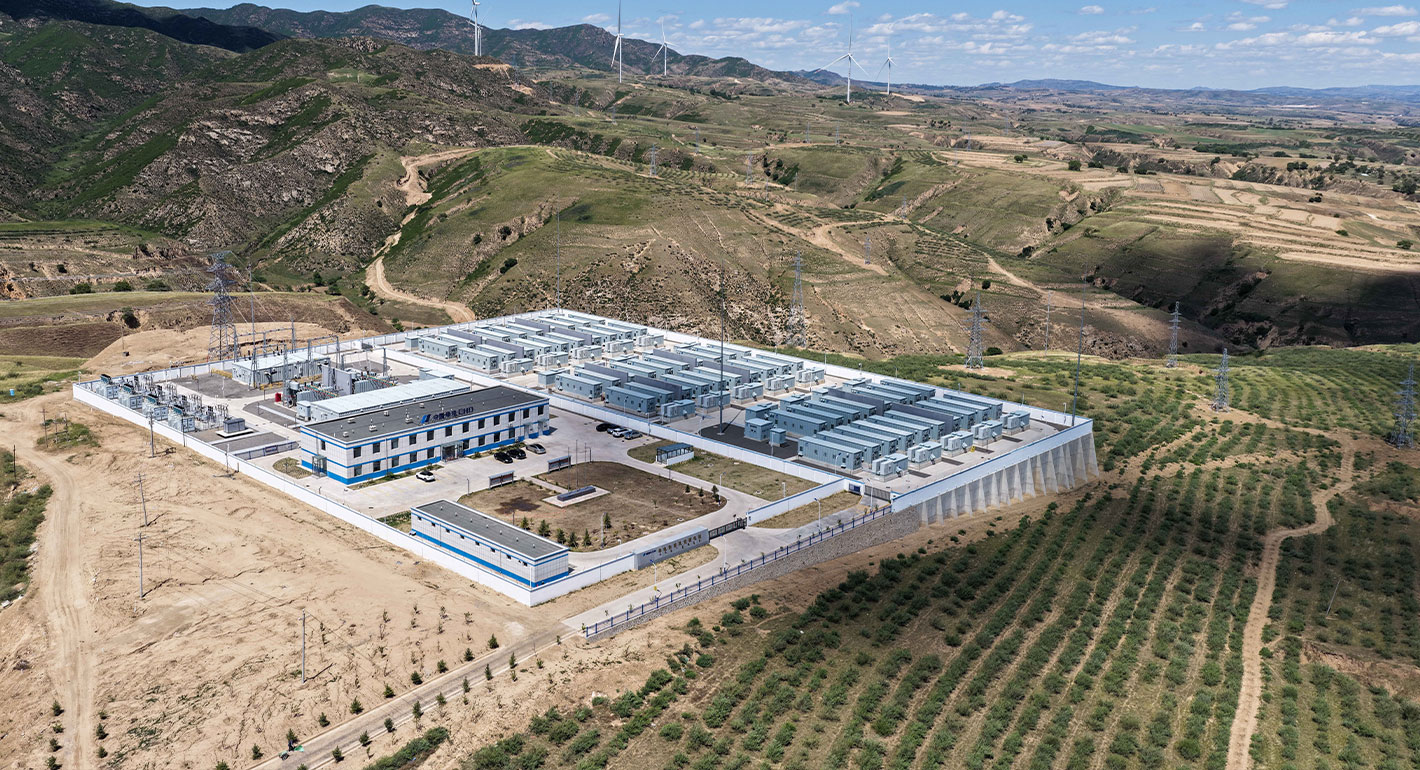
China’s latest energy plan explicitly calls for integrating data centers into the electricity system, particularly connecting them to green energy. It appears Beijing wants to use compute as a source of domestic demand to absorb renewables excess capacity.

Damien Ma