

Commentary
But their "principal to principal" model will only be as effective as the political strength of each leader back home.
Damien Ma
{
  "authors": [
    "Aaron David Miller",
    "Richard Sokolsky"
  ],
  "type": "legacyinthemedia",
  "centerAffiliationAll": "",
  "centers": [
    "Carnegie Endowment for International Peace"
  ],
  "collections": [
    "Foreign Policy Strategy"
  ],
  "englishNewsletterAll": "",
  "nonEnglishNewsletterAll": "",
  "primaryCenter": "Carnegie Endowment for International Peace",
  "programAffiliation": "",
  "programs": [],
  "projects": [],
  "regions": [
    "North America",
    "United States"
  ],
  "topics": [
    "Foreign Policy"
  ]
}
Source: Getty
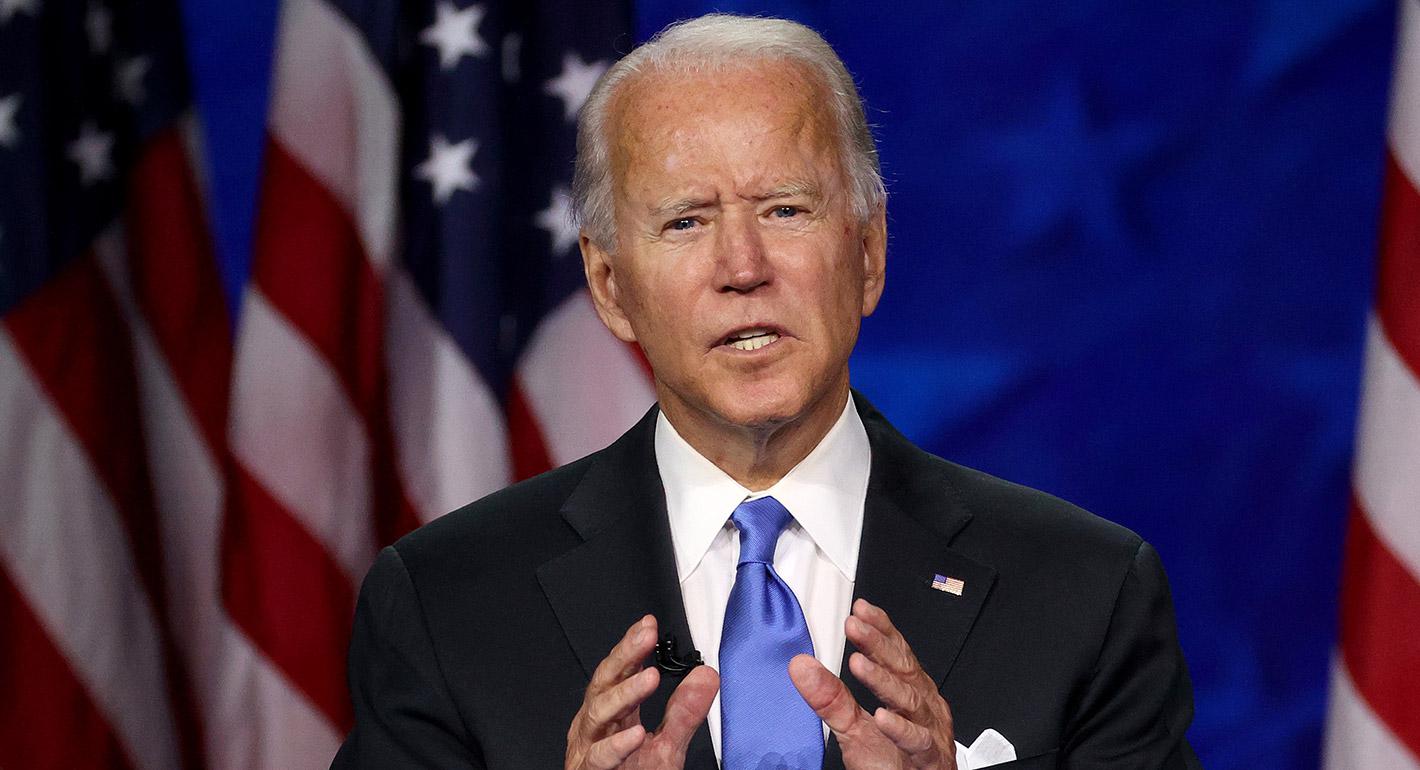
The world Biden will inherit is a far cry from the one he occupied when he was the vice-president and during the 1990s when he chaired the Senate Foreign Relations Committee. America’s unipolar moment has long been relegated to the dustbin of history.
Source: Politico
And Joe Biden means it, tethered as he is to a romanticized view of America as the world’s greatest power destined to lead and to do good. The new president will have much going for him. He’s the anti-Trump. And after four years of norm-busting disruption, expectations for Biden are so low that Europeans might be inclined to give him a Nobel Peace Prize for just showing up.
But the world Biden will inherit is a far cry from the one he occupied when he was the vice-president and during the 1990s when he chaired the Senate Foreign Relations Committee. America’s unipolar moment has long been relegated to the dustbin of history. China, in the Pentagon’s parlance, is a peer competitor. Other powers, both large and small, including Russia, Iran and North Korea, can easily frustrate U.S. ambitions. Rarely has the environment for international cooperation seemed more challenging.
The president-elect has said repeatedly that his primary goal abroad is to put American back at “the head of the table” because “the world won’t organize itself.” But the shape of that table has changed profoundly. A global pandemic has laid bare the limits of globalization and multilateral diplomacy and accelerated the demise of the liberal international order that America created and that sustained its primacy; it has also exacerbated preexisting trends toward renewed geopolitical competition and heightened sensitivities about national sovereignty on issues from border security to the economy and health care. A powerful China and a declining yet still determined Russia have conspired successfully to oppose Pax Americana.
So how can Biden create a foreign policy that is both effective and designed to meet the new world realities he’ll confront? The new administration should focus on three objectives.

Senior Fellow, American Statecraft Program
Aaron David Miller is a senior fellow at the Carnegie Endowment for International Peace, focusing on U.S. foreign policy.

Nonresident Senior Fellow, Russia and Eurasia Program
Richard Sokolsky is a nonresident senior fellow in Carnegie’s Russia and Eurasia Program. His work focuses on U.S. policy toward Russia in the wake of the Ukraine crisis.
Carnegie does not take institutional positions on public policy issues; the views represented herein are those of the author(s) and do not necessarily reflect the views of Carnegie, its staff, or its trustees.

But their "principal to principal" model will only be as effective as the political strength of each leader back home.

Damien Ma

U.S. unpredictability has allowed China to capitalize on its positioning as the “responsible great power”. Paradoxically, the more China wins the perception game, the more likely expectations will rise for Beijing to deliver not just words but to demonstrate with its deeds.

Chong Ja Ian

Hanoi and Beijing have long treated each other as distant cousins rather than comrades in arms. That might be changing as both sides draw closer to hedge against uncertainty and America’s erratic behavior.

Nguyễn Khắc Giang

Across Asia, China is better positioned to withstand energy shocks from the fallout of the Iran war. Its abundant coal capacity can ensure stability in the near term. Yet at the same time, the country’s energy transition away from coal will make it even less vulnerable during the next shock.
Damien Ma

Malaysia’s chairmanship sought to fend off short-term challenges while laying the groundwork for minimizing ASEAN’s longer-term exposure to external stresses.

Elina Noor