

Commentary
Jamie Kwong, Toby Dalton
{
  "authors": [
    "Toby Dalton"
  ],
  "type": "legacyinthemedia",
  "centerAffiliationAll": "dc",
  "centers": [
    "Carnegie Endowment for International Peace"
  ],
  "collections": [
    "Korean Peninsula",
    "Future of Arms Control"
  ],
  "englishNewsletterAll": "ctw",
  "nonEnglishNewsletterAll": "",
  "primaryCenter": "Carnegie Endowment for International Peace",
  "programAffiliation": "NPP",
  "programs": [
    "Nuclear Policy"
  ],
  "projects": [],
  "regions": [],
  "topics": []
}
REQUIRED IMAGE
The consolidation of nuclear and missile capabilities by North Korea points to the need for a new strategy to mitigate the potential for conflict: to pursue progress toward peace and denuclearization simultaneously.

Senior Fellow and Co-director, Nuclear Policy Program
Toby Dalton is a senior fellow and co-director of the Nuclear Policy Program at the Carnegie Endowment. An expert on nonproliferation and nuclear energy, his work addresses regional security challenges and the evolution of the global nuclear order.
Recent Work

Jamie Kwong, Toby Dalton

Ariel (Eli) Levite, Toby Dalton
Carnegie does not take institutional positions on public policy issues; the views represented herein are those of the author(s) and do not necessarily reflect the views of Carnegie, its staff, or its trustees.
There are three guiding principles that can help make future arms control dialogues more successful.


Andrey Baklitskiy, Alexandra Bell, Tong Zhao
The United States and China must cooperate on arms control. But to do so, the two countries need an innovative approach.
Tong Zhao
To better understand the prospects for U.S.-China arms control, The Diplomat’s senior editor, Ankit Panda, spoke to Tong Zhao, a senior fellow in the Nuclear Policy Program at the Carnegie Endowment for International Peace, based at the Carnegie-Tsinghua Center for Global Policy in Beijing.
Tong Zhao
The Nuclear Weapons States (NWS) are under-utilizing the P5 Process, endangering global efforts to promote disarmament through transparency and confidence-building measures. If reinvigorated, however, the Process has the potential to make greater contributions to arms control.
Tong Zhao
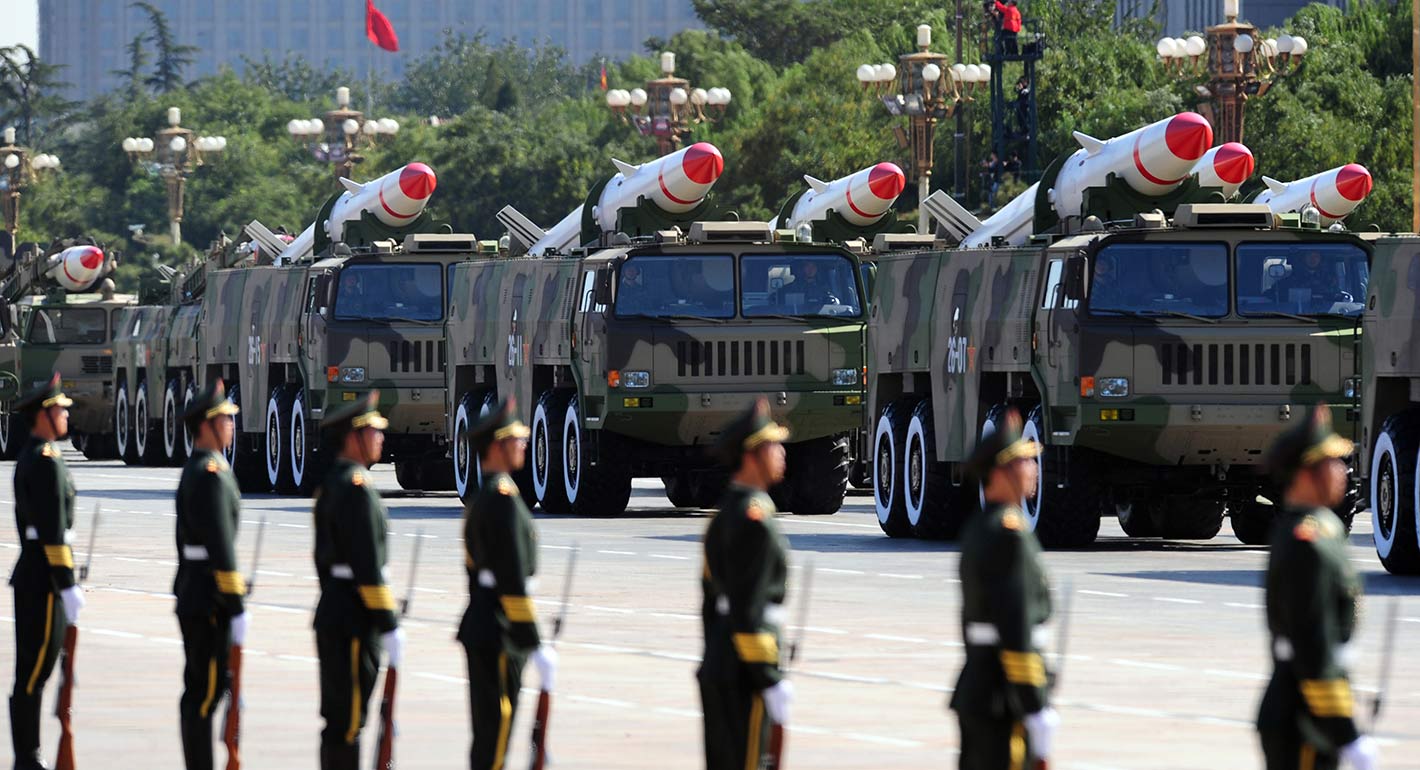
While China may not think it has an interest in participating in major-power arms control now, pressures are building for it to do so. If Washington wants to engage constructively with Beijing, it should focus on concrete proposals to manage competition.
Tong Zhao