

Commentary
Beijing is trying to navigate the overall situation regarding Ukraine, especially the substance of interactions between Washington and Moscow.
- +1
Ellen Nakashima, Zhao Long, Pavlo Klimkin, …
{
  "authors": [
    "Andrea Charron"
  ],
  "type": "commentary",
  "centerAffiliationAll": "",
  "centers": [
    "Carnegie Endowment for International Peace",
    "Carnegie Russia Eurasia Center"
  ],
  "collections": [],
  "englishNewsletterAll": "",
  "nonEnglishNewsletterAll": "",
  "primaryCenter": "Carnegie Endowment for International Peace",
  "programAffiliation": "",
  "programs": [],
  "projects": [],
  "regions": [
    "North America",
    "Russia"
  ],
  "topics": []
}
Source: Getty
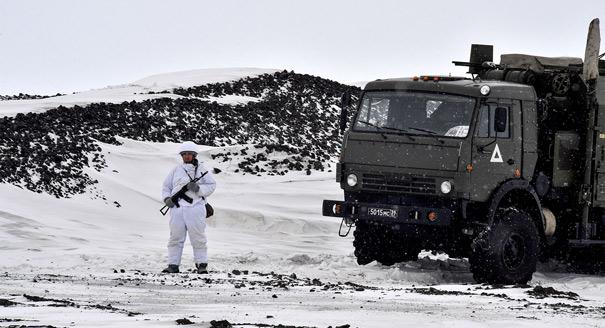
As the largest Arctic states, Canada and Russia have the most to lose if we allow differences to stymie cooperation.
Of all the Arctic states, Canada and Russia’s Arctics are the most similar in terms of geography, climate, and development potential. Very large, founded on ancient basement rocks, holding record temperatures (at both ends of the thermometer), and with an abundance of natural resources, there is much that Canada and Russia can learn from each other. But there are also differences that are stark, concerning, and growing in intensity. Now is the time to seize common ground.
In terms of what they have in common, Canada and Russia are firm supporters of fora and institutions that have promoted good governance in the Arctic, from the Arctic Environmental Protection Strategy to the Arctic Council and its subsidiaries, the Arctic Economic Council and the Arctic Coast Guard Forum. That said, the mining and resource extraction industries have had a poor environmental record in both countries’ Arctics, and Climate Action Tracker currently ranks Russia’s efforts to reduce greenhouse gas emissions as “critically insufficient,” and Canada’s as “insufficient.”
Canada and Russia’s Arctics are sparsely populated: Russia has approximately 2.5 million people in the Arctic, while Canada has just 150,000. Russian Arctic cities and Canadian hamlets are often isolated, with fewer services available and lower life expectancy than in other parts of the countries. This is directly linked to the concentration of Indigenous peoples in the Arctic, who have suffered from the harmful policies of both governments and the marginalization of residents in both nations. Canada is only just starting the painful process of coming to terms with the devastation it has wrought, while Russia has not had such a reckoning, and delaying it will only harm Russia and her peoples more. Indigenous knowledge, for example, is key to operating in the Arctic successfully, and consultation with Indigenous peoples on issues that directly involve them is codified in the UN Declaration on Indigenous Peoples. Canada originally voted against it (but reversed that decision in 2017), while Russia abstained. Yet Canada and Russia have also supported and acceded to the Agreement on Enhancing Arctic International Scientific Cooperation, which enshrines the importance and vital contribution of Indigenous knowledge. Both Canada and Russia could become stronger by changing their behavior toward their Indigenous populations.
Finally, continued respect for processes enshrined in the UN Convention on the Law of the Sea, as well as curbing illegal fishing, are very important to both Canada and Russia, which have the largest Exclusive Economic Zones in the Arctic. Both have signed the International Agreement to Prevent Unregulated High Seas Fisheries in the Central Arctic Ocean, which came into force on June 25, 2021. This agreement is historic, as it preemptively bans commercial fishing until there is a better understanding of the area’s ecosystems and adequate scientific information is available to inform future management measures.
In other ways, the Russian and Canadian Arctics are very different. For Russia, the Arctic is an economic driver: it currently accounts for 10 percent of Russia’s GDP and 20 percent of its exports, and major investment is helping to commercialize the Northern Sea Route. Canada’s Arctic is not a driver of national economic growth, though Inuit art and tourism are promising. In 2015, for example, a report found that Canadian “Inuit artists producing visual arts and crafts for income earned over $33 million net of all costs, and through their purchases of inputs and the expenditure of their earned income they generated an additional $12.5 million in spin-off impacts.” The lack of infrastructure in Canada’s Arctic is stark, and acts as a brake on large-scale investment. Furthermore, Canada’s Northwest Passage is not suited for commercial traffic, and is primarily used by Canadian vessels to supply Arctic hamlets.
The great power competition between Russia, China, and the United States is growing and creating a rift between Russia and Canada. Following World War II, the Soviet Union and Canada signed the Charter of the United Nations, pledging to save succeeding generations from the scourge of war by respecting international laws. In recent years, many international laws have been broken. The list of flagrant violations by Russia, from the annexation of Crimea to poisonings, cyber attacks, and the detention of opposition figures, is too long a list to ignore, and both Canada and Russia have sanctioned each other. Given Canada’s steadfast alliance with the United States and NATO allies, Canada is wary of Russia’s opaque intentions in the world, which could compromise present and future cooperation in the Arctic.
Now, with the U.S. army, navy, air force, and coast guard all releasing Arctic strategies, there will be more military activity in the Arctic. This means rules of conduct need to be respected. A good starting point would be for all Arctic states to reaffirm the importance of the Open Skies Treaty, and for the United States and Russia to rejoin it. Open Skies allows unarmed surveillance flights over member countries. All Arctic states must allow observers to monitor military exercises, thereby limiting the potential for misunderstandings, misperceptions, accidents, and unwanted escalation. This is particularly important for Arctic exercises, which can be especially dangerous. More confidence-building discussions—via the Arctic Coast Guard Forum, which Russia now chairs—would be welcome. While it is highly unlikely that the Arctic Chiefs of Defense Staff meetings will resume so long as Crimea remains annexed, dialogue within the Arctic Coast Guard Forum and the NATO-Russia Council takes on increased significance and importance.
As the largest Arctic states, Canada and Russia have the most to lose if we allow differences to stymie cooperation. There are approximately 622,000 Canadians of Russian descent today, and both Canada and Russia are enriched by the student and scientific exchanges they have with one another. Both countries are proud to be Arctic nations, and both have used the Arctic as a domestic and foreign political tool to distract from other issues. As we reflect on Russia’s Arctic Council chairmanship agenda, there is much that Canada can help to champion: especially the focus on youth and “responsible governance for a sustainable Arctic.” There are many opportunities for each nation to learn from the other, improve governance, and promote Arctic economic empowerment.
Andrea Charron
Carnegie does not take institutional positions on public policy issues; the views represented herein are those of the author(s) and do not necessarily reflect the views of Carnegie, its staff, or its trustees.
Beijing is trying to navigate the overall situation regarding Ukraine, especially the substance of interactions between Washington and Moscow.



Ellen Nakashima, Zhao Long, Pavlo Klimkin, …
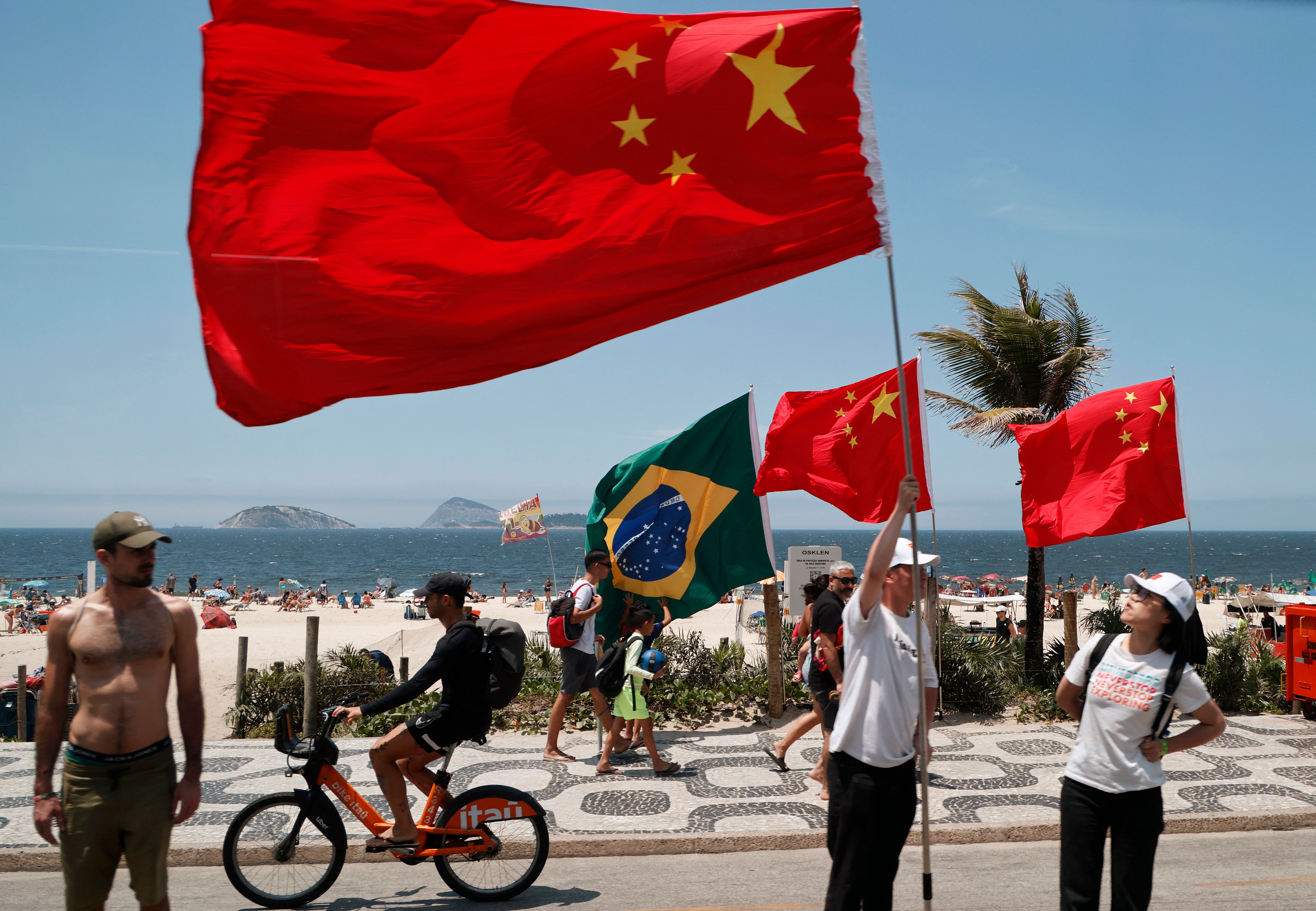
While China will remain a significant political and economic force in the Global South, its ambition to leverage the Global South as a counterbalance to the United States and the Global North is far from assured.

Xue Gong
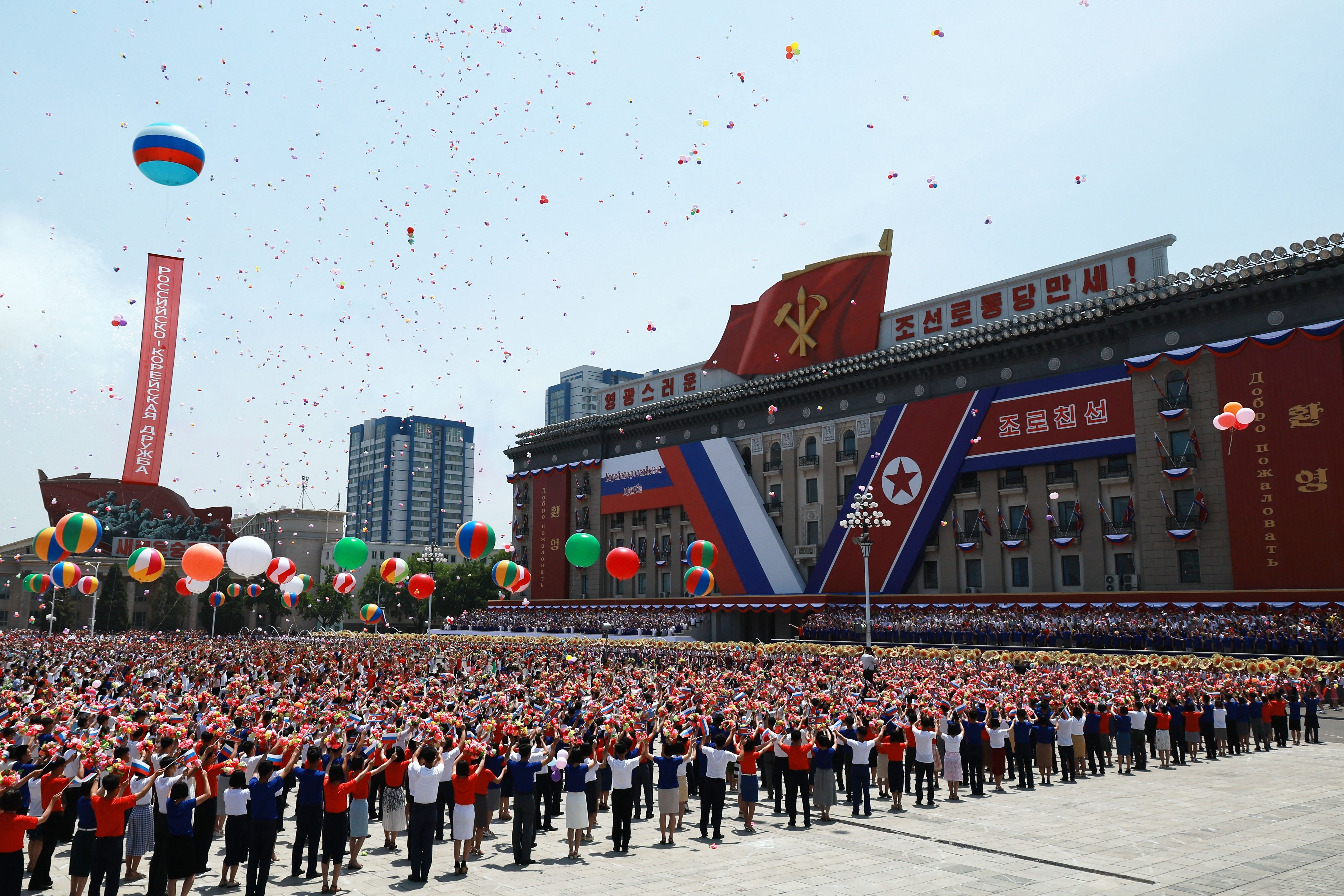
Faced with an increase in strategic maneuvering by Moscow and Pyongyang, Beijing will not sit idly by and allow Putin and Kim to shape the security environment on its behalf.

Tong Zhao
China’s growing attention to Central Asia is perceived as a harbinger of tectonic shifts in regional geopolitics.

Temur Umarov
The Russian invasion of Ukraine is a turning point in the EU-China relationship, and evolution of the China-Russia relationship will continue to impact EU-China relations.


Yifan Ding, Alice Ekman