• Commentary
  • Research
  • Experts
  • Events
Carnegie China logoCarnegie lettermark logo
{
  "authors": [
    "Paul Haenle",
    "Sharon Seah"
  ],
  "type": "questionAnswer",
  "centerAffiliationAll": "",
  "centers": [
    "Carnegie Endowment for International Peace",
    "Carnegie China"
  ],
  "collections": [
    "Carnegie China Commentaries"
  ],
  "englishNewsletterAll": "",
  "nonEnglishNewsletterAll": "",
  "primaryCenter": "Carnegie China",
  "programAffiliation": "",
  "programs": [],
  "projects": [],
  "regions": [
    "East Asia",
    "China",
    "Southeast Asia"
  ],
  "topics": []
}

Source: Getty

Q&A
Carnegie China

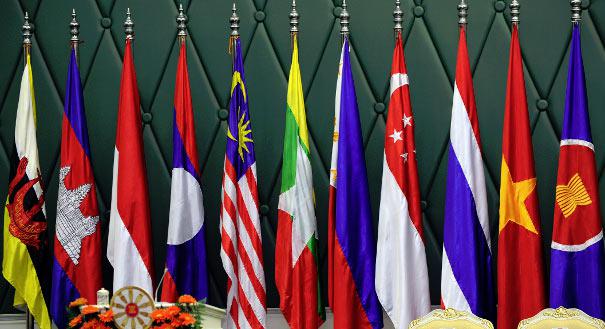
ASEAN’s Response to China’s New Foreign Policy Initiatives

All of China’s hard infrastructure in Southeast Asia hasn’t translated into an increase in soft power.

Link Copied
By Paul Haenle and Sharon Seah
Published on Jun 1, 2023

On a recent episode of the China in the World podcast, Paul Haenle spoke with Sharon Seah, senior fellow at the ISEAS-Yusof Ishak Institute, about Association of Southeast Asian Nation (ASEAN)’s views of China. A portion of their conversation, which has been edited and condensed for clarity, is below.

Paul Haenle: You wrote recently that ASEAN leaders are unlikely to subscribe to China’s new Global Security Initiative and Global Development Initiative, especially if it leads to a loss of autonomy and independence for their own foreign policy priorities. What do you think China needs to do to persuade ASEAN countries to join these initiatives or, at least, to not push back? How will these initiatives impact the power balance between the United States and China?

Sharon Seah: I think for this region, anything that will force them to take a side is not welcome. Whether it is the United States or China knocking on the door to ask the region to take their offerings, their response will be the same. We saw this when AUKUS was announced two years ago, and the reception was cold. It was seen as a way to force sides.

In the same way, on the Global Security Initiative, it has been met with a kind of a polite reception. I think ASEAN leaders will be wary that they might have to trade something in order to get Chinese security guarantees. The question is what that trade will be. This also shows up in parts of the State of Southeast Asia 2023 Survey. Tools that are used to coerce or to cause a loss of autonomy and independence are always viewed negatively, so China needs to address this.

Despite what China has done in the region for decades—building infrastructure and bringing the Belt and Road Initiative—China’s soft power is still relatively low, and this is something that perhaps Chinese policymakers can think about improving. All of that hard infrastructure hasn’t translated into an equal increase in soft power. How will it impact the power balance? I think it will continue to be in a state of push-and-pull and the dynamics will keep evolving. I think that the tightrope ASEAN must walk is only going to get harder.

The region has always cast an eye on China and an eye on the United States in the prism of U.S.-China rivalry. What really surprised me in this year’s survey is that even though the worry over China’s economic and political influence has always been present, the level of concern decreased this year, whereas in the past there was always an increase. So that shows that maybe the needle is moving. Where people had been wary, they are a little bit more embracing of the kind of political influence that China has in this region.

To listen to the full episode, use the player below, or subscribe in your favorite podcast app.

About the Authors

Paul Haenle

Former Maurice R. Greenberg Director’s Chair, Carnegie China

Paul Haenle held the Maurice R. Greenberg Director’s Chair at the Carnegie Endowment for International Peace and is a visiting senior research fellow at the East Asian Institute, National University of Singapore. He served as the White House China director on the National Security Council staffs of former presidents George W. Bush and Barack Obama.

Sharon Seah

Sharon Seah is a senior fellow and coordinator of the ASEAN Studies Centre and the Climate Change in Southeast Asia Programme at the ISEAS-Yusof Ishak Institute.

Authors

Paul Haenle
Former Maurice R. Greenberg Director’s Chair, Carnegie China
Paul Haenle
Sharon Seah

Sharon Seah is a senior fellow and coordinator of the ASEAN Studies Centre and the Climate Change in Southeast Asia Programme at the ISEAS-Yusof Ishak Institute.

Sharon Seah
East AsiaChinaSoutheast Asia

Carnegie does not take institutional positions on public policy issues; the views represented herein are those of the author(s) and do not necessarily reflect the views of Carnegie, its staff, or its trustees.

More Work from Carnegie China

  • Commentary
    Malaysia’s Year as ASEAN Chair: Managing Disorder

    Malaysia’s chairmanship sought to fend off short-term challenges while laying the groundwork for minimizing ASEAN’s longer-term exposure to external stresses.

      Elina Noor

  • Commentary
    When It Comes to Superpower Geopolitics, Malaysia Is Staunchly Nonpartisan

    For Malaysia, the conjunction that works is “and” not “or” when it comes to the United States and China.

      Elina Noor

  • Commentary
    ASEAN-China Digital Cooperation: Deeper but Clear-Eyed Engagement

    ASEAN needs to determine how to balance perpetuating the benefits of technology cooperation with China while mitigating the risks of getting caught in the crosshairs of U.S.-China gamesmanship.

      Elina Noor

  • Commentary
    Neither Comrade nor Ally: Decoding Vietnam’s First Army Drill with China

    In July 2025, Vietnam and China held their first joint army drill, a modest but symbolic move reflecting Hanoi’s strategic hedging amid U.S.–China rivalry.

      • Nguyen-khac-giang

      Nguyễn Khắc Giang

  • Commentary
    Today’s Rare Earths Conflict Echoes the 1973 Oil Crisis — But It’s Not the Same

    Regulation, not embargo, allows Beijing to shape how other countries and firms adapt to its terms.

      Alvin Camba

Get more news and analysis from
Carnegie China
Carnegie China logo, white
Keck Seng Tower133 Cecil Street #10-01ASingapore, 069535Phone: +65 9650 7648
  • Research
  • About
  • Experts
  • Events
  • Contact
  • Careers
  • Privacy
  • For Media
Get more news and analysis from
Carnegie China
© 2026 Carnegie Endowment for International Peace. All rights reserved.