

Article
China has showcased its engineering prowess with small modular reactor demonstration projects. But turning these technological achievements into commercial success will be a greater challenge.
Tong Zhao
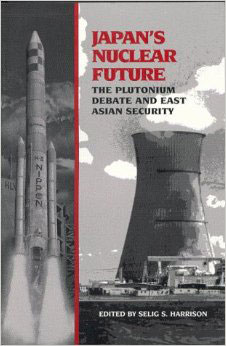
Japan's policy of basing its nuclear power program on reprocessed plutonium has aroused widespread suspicion, especially in neighboring East Asian countries, that Japan is secretly planning to develop nuclear weapons.
Source: Washington, DC: Carnegie Endowment for International Peace, 1996

Summary
Japan's policy of basing its nuclear power program on reprocessed plutonium has aroused widespread suspicion, especially in neighboring East Asian countries, that Japan is secretly planning to develop nuclear weapons. This book presents the views of a leading Japanese proponent of the reprocessing policy, Atsuyuki Suzuki, Professor of Nuclear Engineering at Tokyo University; a leading critic, Jinzaburo Takagi, Director of the Citizens Nuclear Information Center; and Taewoo Kim, a South Korean specialist who warns that the Japanese nuclear program could lead Seoul to pursue a reprocessing capability of its own.
An introductory essay by Selig S. Harrison analyzes the history of the domestic debate in Japan over the acquisition of nuclear weapons and assesses the possibility of a Japanese nuclear weapons program.
This unique and important book provides the international community with unprecedented access to a range of sophisticated Asian views on the possibility that Japan may convert its nuclear-energy programme to a nuclear-weapons programme... Harrison pulls no punches [and] no one has been as ambitiously comprehensive in offering policy options to enhance nuclear safety in the region.
-Survival, The IISS Quarterly
Carnegie does not take institutional positions on public policy issues; the views represented herein are those of the author(s) and do not necessarily reflect the views of Carnegie, its staff, or its trustees.

China has showcased its engineering prowess with small modular reactor demonstration projects. But turning these technological achievements into commercial success will be a greater challenge.

Tong Zhao

The Plaza Accord was not an externally imposed punishment of Japan but part of a broader restructuring that Japanese economists and policymakers themselves recognized was necessary. Its effects were undermined, however, when Tokyo responded to the resulting slowdown with policies that exacerbated investment, credit expansion, and the very imbalances the adjustment was intended to resolve.

Michael Pettis

The nuclear relationship between China and the United States is increasingly shaped by widening perception gaps rather than deliberate strategic design.
Tong Zhao

Chinese biotech companies have been on the receiving end of U.S. economic coercion. Yet their responses have differed significantly because firm and state interests are not uniformly aligned. For Washington, treating all Chinese tech firms the same, irrespective of their actual interests, risks pushing them farther into Beijing’s corner.

Xue Gong

Across Asia, China is better positioned to withstand energy shocks from the fallout of the Iran war. Its abundant coal capacity can ensure stability in the near term. Yet at the same time, the country’s energy transition away from coal will make it even less vulnerable during the next shock.

Damien Ma